























Imagine being an Ole Miss fan at the beginning of the 2025 season and a time traveler comes up and says that Lane Kiffin, who led Ole Miss to multiple New Year’s Six bowl games, will not finish the season as head coach. Pete Golding, who has never been a head coach, will now lead the program. Trinidad Chambliss, who never started a Division I game in his career, will be the Rebels’ star quarterback for most of the season.
The average Ole Miss fan in August would assume all of that information would lead to one of the worst, most devastating seasons in the history of Rebel football; yet, that was the opposite of true. This season of Ole Miss Football will go down in the history books in so many ways. College football historians will speak of the Lane Kiffin-Ole Miss-LSU drama forever, but Ole Miss fans will always remember the season for what it was: one of the greatest rides in program history. Here is a breakdown of the events of the 2025-26 season.
Weeks 1-4: a new dawn for the QB room
Ole Miss was coming off a solid, but ultimately disappointing, 2024-25 season that saw the Rebels miss the College Football Playoff with a 10-3 record. Quarterback Jaxson Dart and defensive tackle Walter Nolen headlined eight Rebel draftees to the NFL following last season’s campaign.
By all accounts, Rebel fans thought 2025-26 would be a rebuilding year after the team lost so much talent in the offseason. Indeed, in the first few games, the Rebels looked good but not great. Starting quarterback Austin Simmons and Ole Miss began the season at home against Georgia State, trouncing the Panthers 63-7. In his first collegiate start, Simmons threw for 341 yards and three touchdowns but also threw two interceptions. The offensive line allowed two sacks.
Ole Miss fans got their first look at former Missouri running back Kewan Lacy, who scored three times and ran for 108 yards. Penn State transfer wide receiver Harrison Wallace III also showed out for the fans with five receptions for 130 yards and a score.
In Week 2, the Rebels began SEC play against Kentucky. Unlike in 2024, when it started conference play in Week 5, Ole Miss had the chance to face higher quality teams early on.
It was not the team’s best game, but the Rebels left Lexington, Ky., with a 30-23 win. Simmons threw two picks again and was injured in the game.
Ole Miss came home to face Arkansas in Week 3. With Simmons injured, backup quarterback Chambliss got the start — and the former DII national champion shined. He went 21-of-29 for 353 yards and three total touchdowns.
It was a far-from-perfect game for the No. 17 Rebels. They won by only six points, 41-35, in a shootout at home. Moreover, the Razorbacks were marching down the field at the end of the fourth quarter and might have scored a game-winning touchdown if not for linebacker TJ Dottery’s game-saving forced fumble.
The defense was a significant concern in this game. The unit allowed quarterback Taylen Green to throw for 305 yards and run for 115. Arkansas outgained Ole Miss in total yards, 526 to 475. The Rebels also did not record a sack in this game.
Ole Miss followed the close win up with a 45-10 thumping of Tulane. Receivers Deuce Alexander and De’Zhaun Stribling — transfers from Wake Forest and Oklahoma State, respectively — fielded strong outings with 94 and 62 yards, respectively. Chambliss, once again, shined with over 400 yards of offense.
Weeks 5-9: battle testing
This was the most important stretch of games for the Rebels in the regular season, facing three then-Top 15 teams. They hosted No. 4 LSU, then visited No. 9 Georgia and No. 13 Oklahoma.
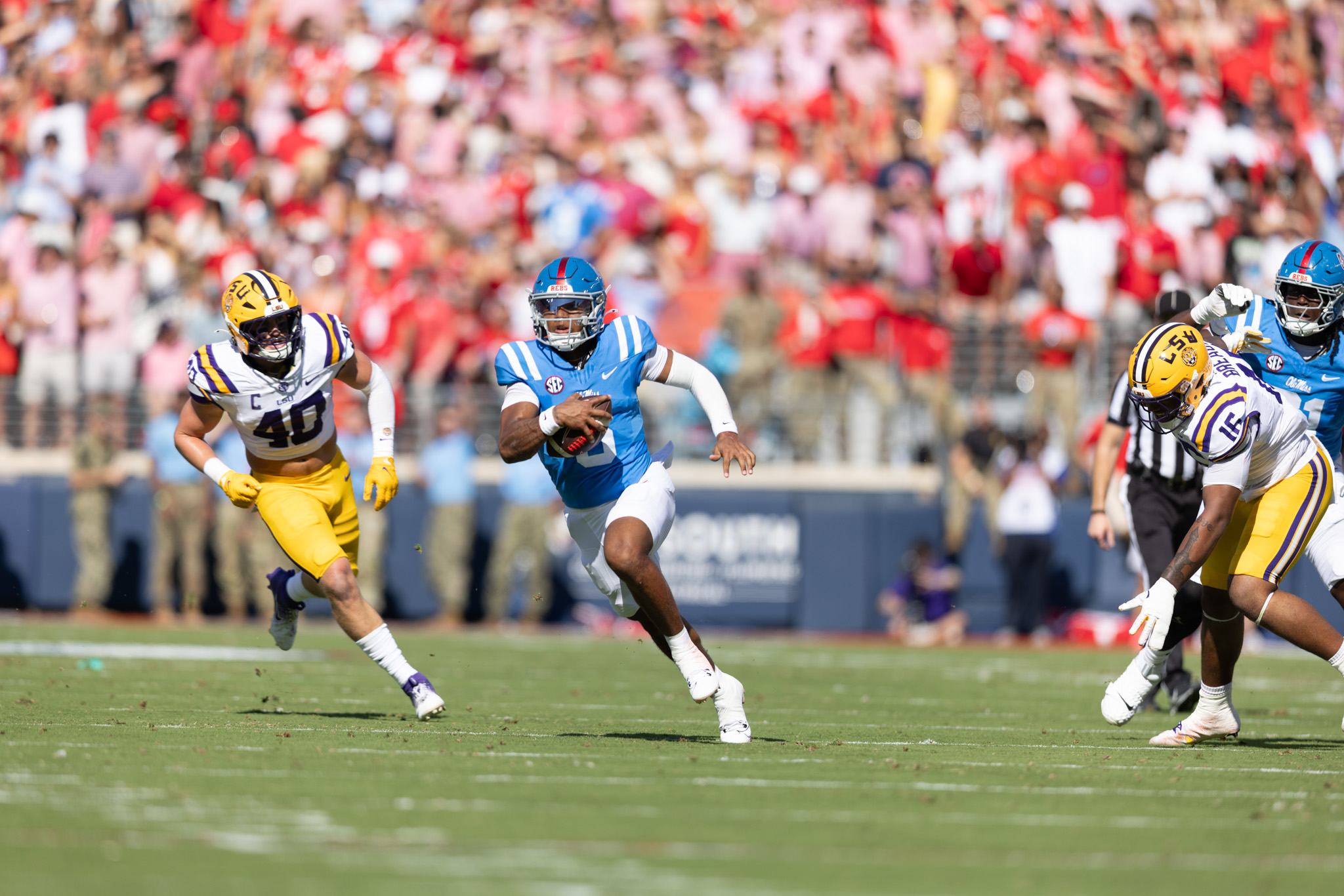
The Magnolia Bowl between Ole Miss and LSU has been a spectacular match the past several years, and 2025 was no different. LSU struck first with a touchdown, and Ole Miss followed with a field goal. Lacy pushed the Rebels ahead with a 15-yard touchdown run, and wide receiver Cayden Lee widened the lead to 10 with a touchdown reception. Ole Miss would continue to lead for the rest of the game.
Chambliss threw for 314 yards, and Lacy ran for 87, but what stood out most was the defense. The Rebels held LSU to 2-of-11 on third down along with only 254 total yards, while the Ole Miss offense had 480 total yards.
The win catapulted Ole Miss to No. 4 in the country — the team’s highest ranking since 2015 — going into its first bye week. Spirits were high in Oxford; at the time, college football fans and analysts widely regarded LSU as one of the best teams in the country.
After the break, though, Ole Miss came out flat footed against Washington State and narrowly won 24-21. The Rebels dropped only one spot in the rankings, to No. 5, but this stumble against the Cougars was concerning for many fans — especially since Ole Miss had to play against the No. 9 Bulldogs in Athens, Ga., the next week.
Yet, unlike the previous week, the Rebels started out fast against Georgia. Chambliss and the Ole Miss offense turned over a new leaf, scoring a touchdown on their first drive of the game. The Rebels did not slow down; they built a 35-26 lead heading into the fourth quarter. They scored touchdowns on all five of their possessions.
That was when the collapse began. The Rebels totaled only 13 yards in the entire fourth quarter and went scoreless across three drives.
This game marked another lackluster performance by the Ole Miss defense. Georgia’s offense scored points on every possession, which became an issue when the Rebel offense floundered late in the game. Ole Miss lost 43-35, falling to 6-1 on the season.
The Rebels did not have time to wallow, though. The next week, they were slated to visit Norman, Okla., to face the No. 13 Sooners. A second loss would put their playoff hopes in jeopardy.
This week also marked a milestone for this season when, ahead of the Oklahoma game, Florida fired head coach Billy Napier and was now on the hunt for a replacement, with Kiffin at the top of Florida fans’ dreamboards.
The Rebels managed to tune out the noise and defeat the Sooners 34-26. This was a breakout game for true freshman wide receiver Winston “Winnie” Watkins, who totaled four catches for 111 yards.
Weeks 10-14: consistency through the fire
This final stretch of the 2025 regular season consisted of some of the most crucial and nerve-wracking weeks for Rebel fans. Playoff brackets and projections began to form — which universally included Ole Miss — all while rumors about a potential Kiffin departure continued to swirl, especially after LSU fired head coach Brian Kelly.
Despite all of this drama, Chambliss and Lacy led the team to a pair of dominant home wins in Weeks 10 and 11. The Rebels beat South Carolina 30-14 and, a week later, trounced The Citadel 49-0.
By Week 12, Ole Miss was No. 7 in the country. The weekly College Football Playoff projections placed Ole Miss safely within the 12-team field.
As the Kiffin situation continued to swell, the Rebels prepared for their final home game of the season against Florida. Many speculated that the game’s outcome could be a deciding factor for whether Kiffin stayed in Oxford or relocated to Gainesville, Fla.
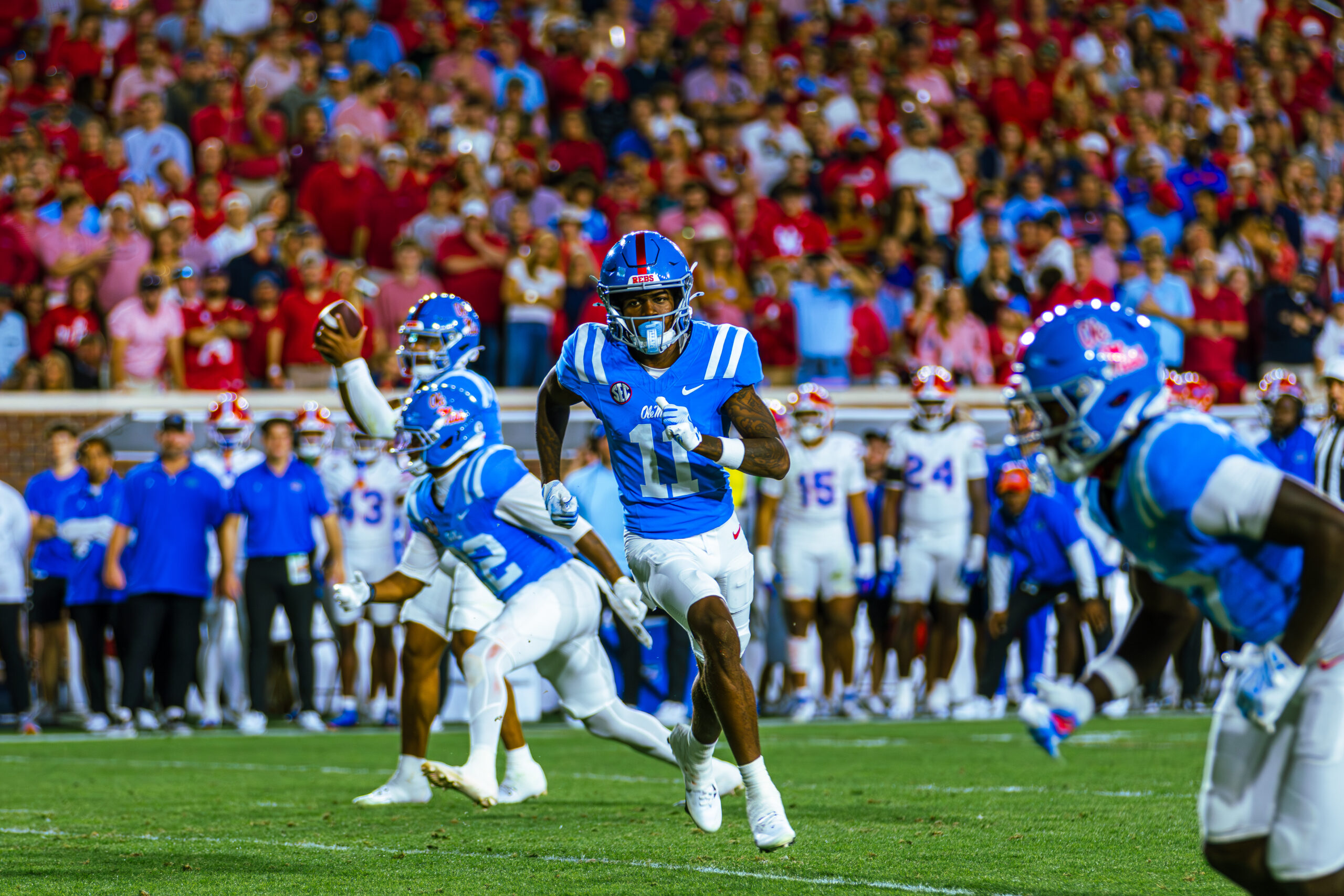
Ole Miss won 34-24, and as the clock hit zero, Vaught-Hemingway Stadium roared. Lacy rushed for 224 yards and three touchdowns, giving him the most all purpose touchdowns in a single season by a Rebel in program history.
With just one game remaining, the Rebels had their sights set on two major points to wrap up their season. The first, and most important, was finishing the season 11-1 with a win against their biggest rival Mississippi State in the 122nd annual Egg Bowl. In doing so, they would solidify their playoff bid.
Kiffin’s future with the team remained uncertain heading into the matchup. In the week leading up to the game, Vice Chancellor for Intercollegiate Athletics Keith Carter announced that Kiffin’s decision would come the day after the Egg Bowl. Even though Florida was out of the picture, the LSU job was still open.
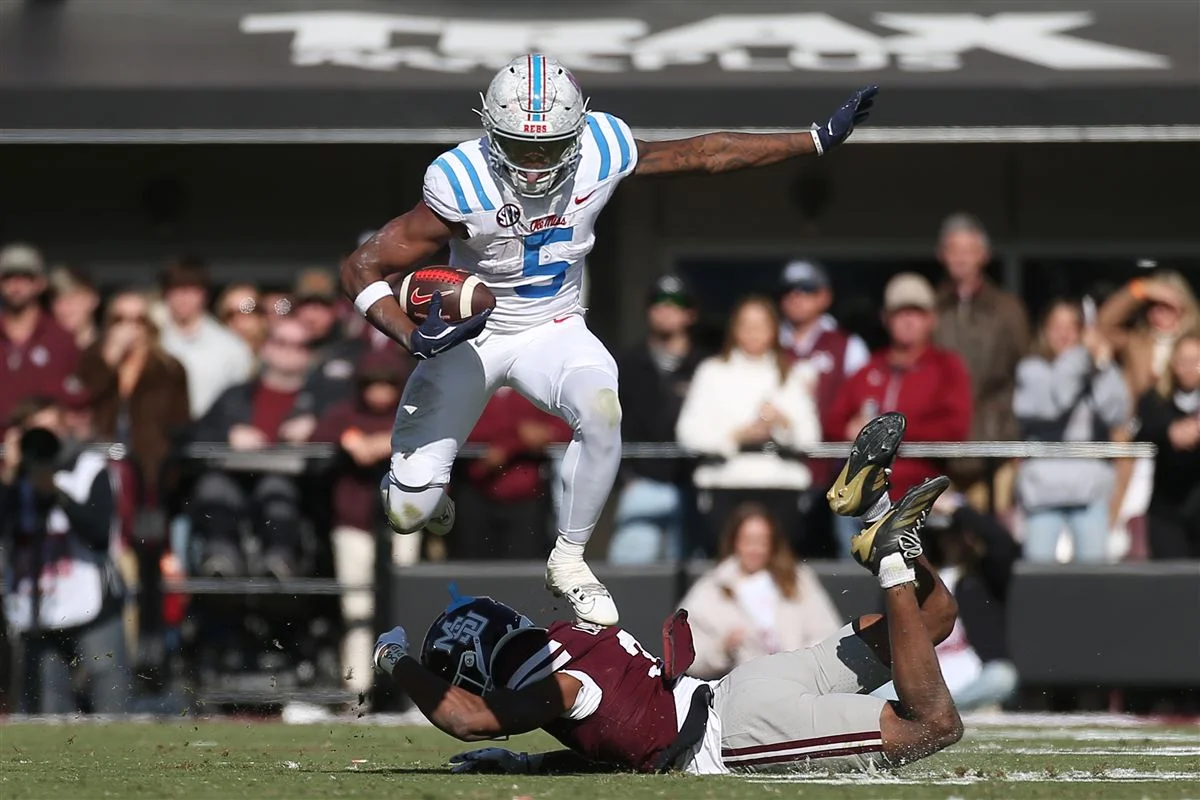
The Rebels took care of business in the Egg Bowl. Chambliss threw for 359 yards and four touchdowns, leading the Rebels to a 38-19 victory — the Rebels’ third straight win in the rivalry. Ole Miss closed the chapter on a historic season; the program recorded its first 11-win season in school history and had all but secured its first playoff appearance.
But the celebrations were short-lived. On Nov. 29, sources confirmed that Kiffin had accepted the head coaching position at LSU. Worse, he planned on taking most of his offensive staff with him, leaving Ole Miss in the lurch ahead of the playoffs. In response, Ole Miss quickly elevated defensive coordinator Golding to permanent head coach.
Don’t let the Rebs get hot
Ole Miss refused to let this turmoil ruin one its best regular season in history. In the aftermath of Kiffin’s less-than-ideal exit, LSU allowed and Carter permitted offensive coordinator Charlie Weis Jr., as well as the other offensive coaches who planned to follow Kiffin to LSU, to coach at Ole Miss in the playoffs.
In a surprising turn of events, the selection committee moved the Rebels up one spot. At No. 6, they were slated to host the No. 11 Tulane, whom they had beat handily in Week 4.
Leading up to the game, the program rallied behind Golding. Fraternity houses on campus posted banners with messages such as “PETE FLEET 2026” and “GOLDING ERA.” Players voiced their support of the new head coach in press conferences.
In the first round of the playoffs, Ole Miss put the nation on notice with a 41-10 win over Tulane. Even without Kiffin, the team had not lost a step. The Rebels totaled almost 500 yards and advanced to the Allstate Sugar Bowl in New Orleans, where they would face No. 3 Georgia, who had handed them their only loss of the season.
In the Sugar Bowl, the Rebels matched the Bulldogs’ physicality from the opening kickoff, trading punches in a fast-paced and hard-hitting contest.
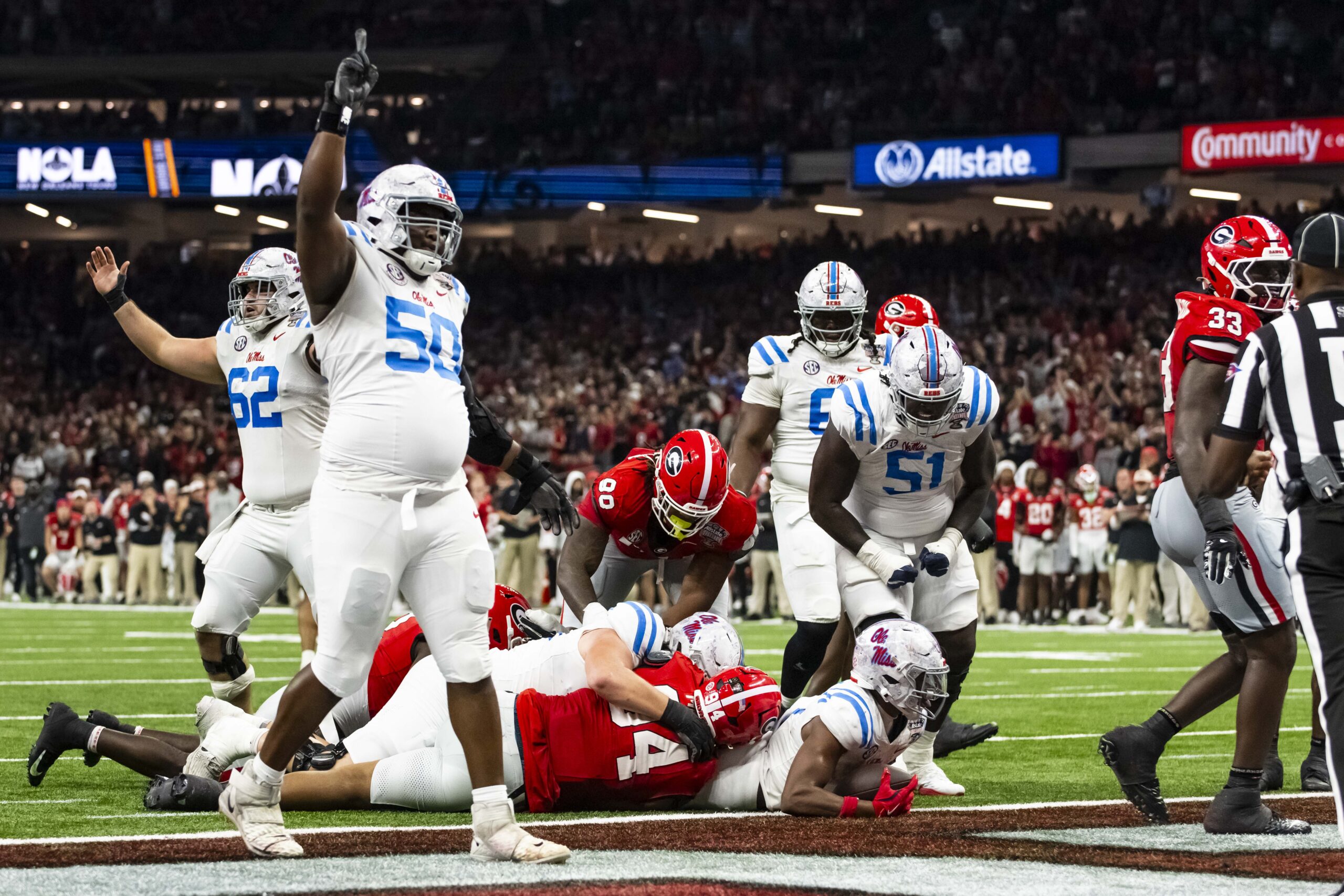
At halftime, the game was beginning to look out of reach, though. Georgia, up 21-12 after its defense returned a Lacy fumble for a touchdown and set to receive the opening kickoff of the second half, was in command. Ole Miss’ poor clock management in its last drive of the half — amplified by tight end Dae’Quan Wright’s mistake of getting tackled in bounds — was a deflating way to head into the locker room.
During this tough stretch, it was the defense that kept Ole Miss alive. The unit forced a three-and-out on Georgia at the end of the first half and another at the start of the second half; even though the Rebel offense continued to struggle, the defense kept the Bulldogs off the scoreboard and provided the offense with chance after chance.
Finally, Chambliss and the offense surged. Against the Georgia defense stacked with NFL talent, Chambliss delivered in critical moments, breaking tackles, extending drives and delivering spotless throws on the run. The Rebels gained a 34-24 lead early with nine minutes to play in the fourth quarter.
Georgia came storming back, tying the game at 34 with less than a minute to play. On third-and-medium, Chambliss delivered a 40-yard strike to Stribling to put the Rebels in field goal range. Ole Miss won 39-34, earning the Rebels a spot in CFP semifinals at the VRBO Fiesta Bowl.
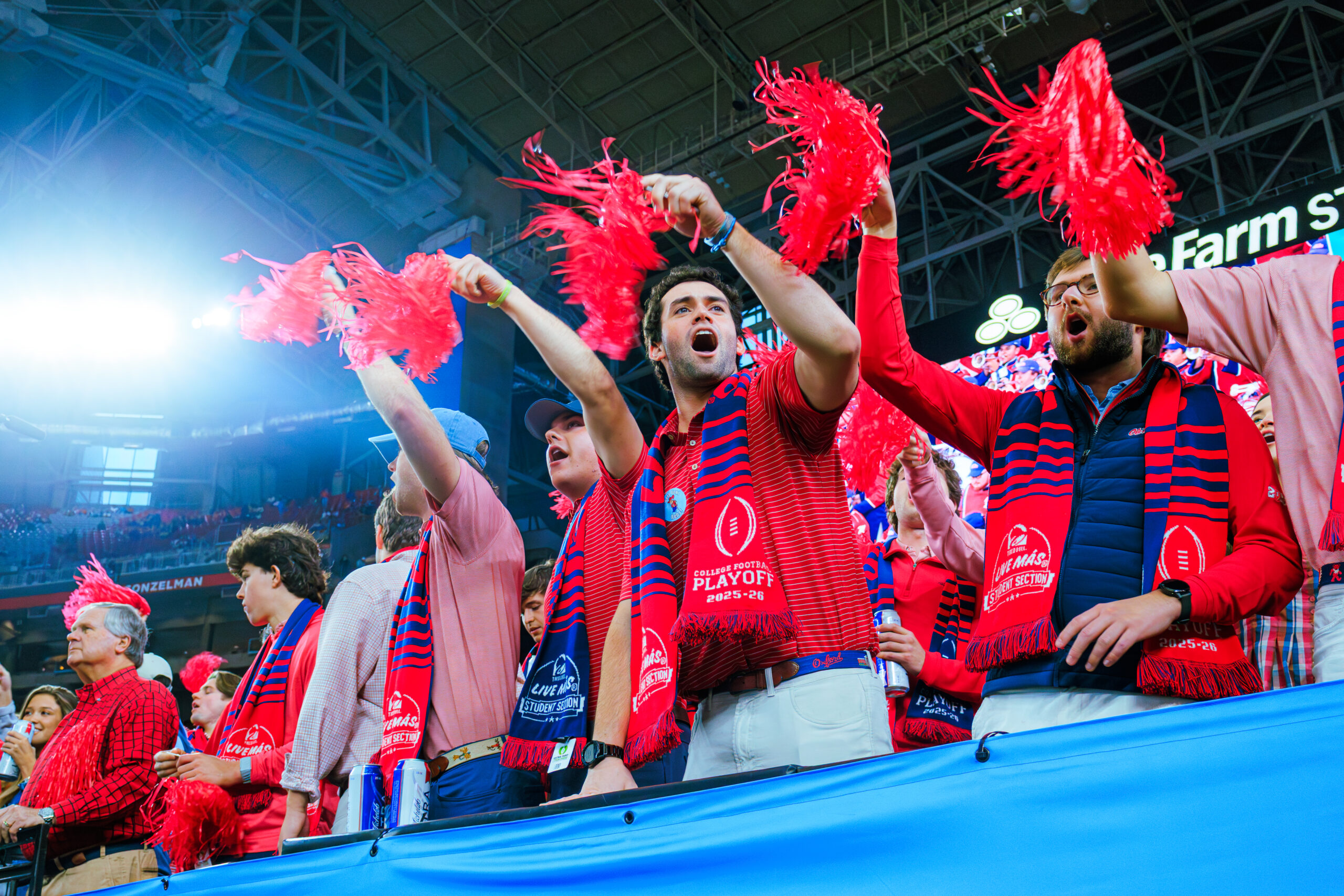
In the final game of their season, the Rebels battled hard. Lacy suffered a muscle strain on a 73-yard touchdown run in the first quarter, which stunted the Rebels’ run game. Though Chambliss’ performance was a step down from the statline he posted in the Sugar Bowl, his 277 yards and one touchdown were still enough to put the Rebels up 27-24 with about three minutes to play.
Miami quarterback Carson Beck led the Hurricanes on what turned out to be a game-winning touchdown drive. Down 31-27 with only 18 seconds, Chambliss managed to get the Rebels within throwing distance of the end zone, but his last-ditch heave to Stribling fell incomplete, and the Rebels lost.
The end of a season-long roller coaster
Though only one team can finish the season on top of the world, Ole Miss ended up where no one thought possible: a game away from the national championship. The program’s best regular season in school history turned into a playoff ride that much of Rebel nation will not forget. Fans, players and coaches experienced the highest of highs and the lowest of lows. Ole Miss started with one coach and finished with a new one; the Rebels began the season thinking one quarterback would head the team, but after an injury to the team’s starter, a relatively unknown DII product commanded the respect of the entire college football landscape as the new leading guy in Oxford.
Ole Miss Football was in the shadows for a long time, but this season provided a sense of joy, excitement and promise that made the Rebel faithful believe. It was once said that Ole Miss could not compete on the national stage. Now, the Rebels will, in all likelihood, finish the season ranked in the Top 4.