





























On Oct. 2, 1962, James Meredith became the first Black student at the University of Mississippi after a prolonged political clash involving then-Gov. Ross Barnett, U.S. Attorney General Robert Kennedy and President John F. Kennedy.
Meredith’s fight to enroll amidst institutional injustice represents a remarkable flashpoint in the history of our university. In the 63 years since Meredith’s start at UM, minority enrollment has increased significantly. This is not only a symbol of diverse opportunity but also the promise of a student population that fully represents the Magnolia State.
Students have discussed the increase in the campus population excitedly and extensively. With this growth comes more Black students on campus, and as a Black student myself, I find this to be an incredible opportunity for further enrichment of Black involvement on campus.
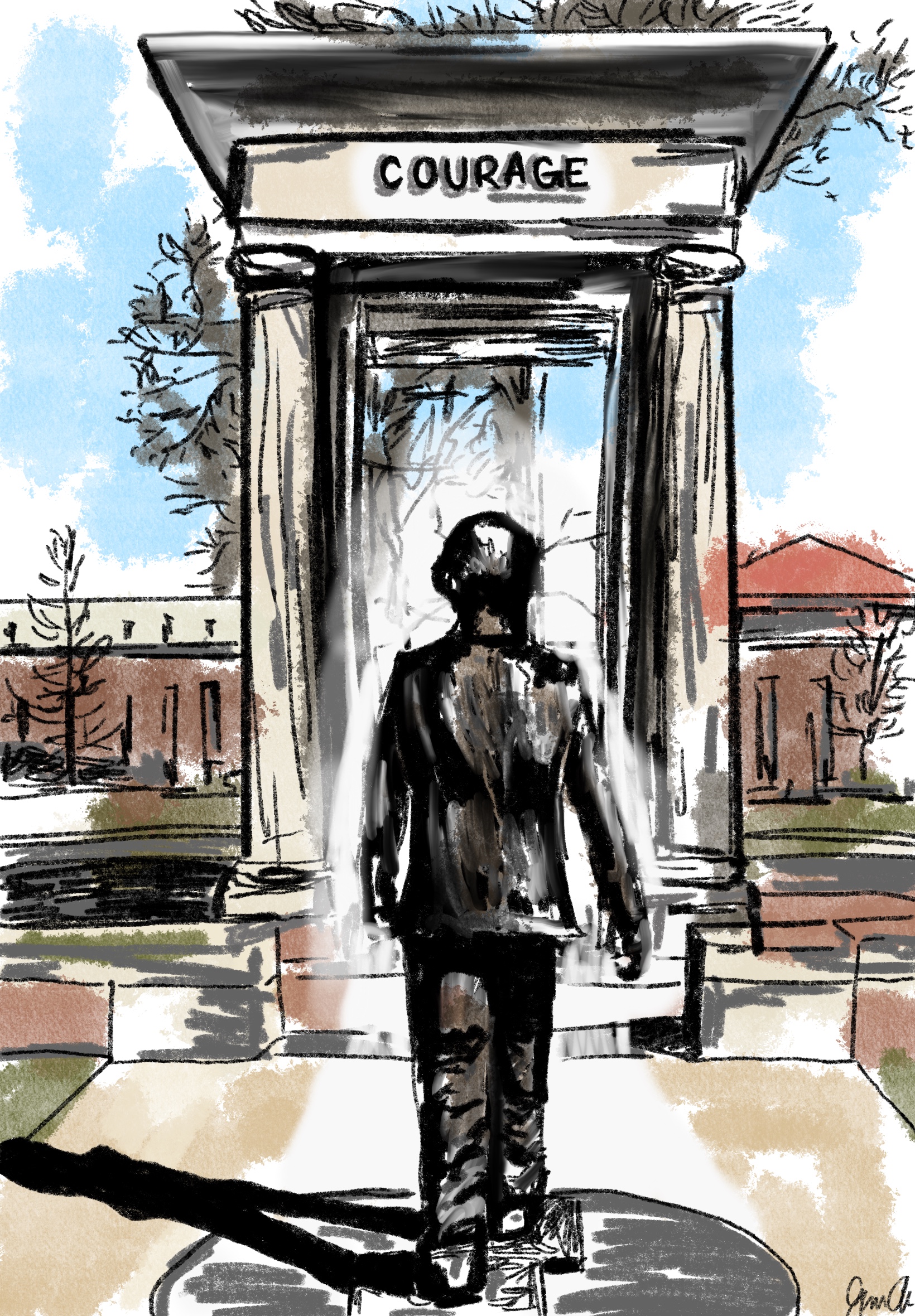
I enthusiastically welcome this development. Walking around campus, I am often reminded of the university’s history. Its violent, cruel past, however, rears its ugly head every now and then: take, for example, the vitriolic counter-protestors that drew national news attention in May 2024.
Meredith was, at his time, a lonesome pioneer. As of 2026, roughly 11% of students at the university are Black, a testament to the strides made by the Civil Rights Movement in shifting popular culture and reversing institutional injustice.
I am proud to see students and faculty that look like me. I feel more at home on campus. I feel like I belong.
Many see UM as a historic landmark in need of preservation without changes. Others view it as an institution culminating the racism and prejudice that is so prevalent in the South. I believe UM has a chance to deviate from this latter narrative, but the necessary work must originate from genuine care rather than perceived obligation.
The importance of increased minority enrollment cannot be undermined, but it certainly does not overwrite the university’s at-times cruel history. In 2014, university officials commenced an effort to provide historical context on campus for the sake of making a diverse student body feel more welcome. In 2018, six plaques were unveiled across campus, one of which explains that 10 of the university’s original buildings were constructed with the labor of enslaved Black people.
In September 2025, the university erected a plaque in front of Fulton Chapel honoring the Ole Miss 8, a group of eight Black students who in 1970 were expelled from the university for leading a peaceful protest at Fulton Chapel to demand racial equality.
But are these physical acknowledgements enough, especially considering that the legacies of racist figures in Mississippi history continue to decorate campus buildings?
Take, for example, Vardaman Hall, named after James K. Vardaman, Mississippi’s governor from 1904 to 1908 and later a U.S senator who once called for the lynching of Black Americans to maintain white supremacy. His name remains on the campus building despite remarks in 2017 by Chancellor Jeffrey Vitter that the university would seek approval from the state Institutions of Higher Learning (IHL) for renaming it.
Though racism is not only limited to our school, it is uniquely entangled in such a difficult history.
The increasing enrollment of Black students at the university is a cause for celebration. However, rejoicing cannot be a catalyst for complacency. Good news must compel further action by students and administration.
Ole Miss must commemorate the increasingly diverse nature of its student body by continuing efforts to facilitate the growth of minority enrollment, requiring students to take an African American studies class, redesigning or removing offensive monuments and paving the path for a future of institutional opportunity for all.
Then, and only then, will the university be the hegemon of liberal education it strives to be.
Lamarcus Lenoir is a sophomore English major from Tupelo, Miss.