













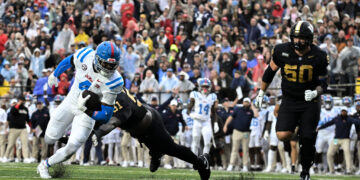















Ole Miss returned from the bye week to take on the Vanderbilt Commodores in Nashville on Oct. 10. After the disappointing loss against Florida in Week 4, the Rebels put together a complete performance and defeated the Commodores, 52-17. Here are three takeaways from the matchup.
Defensive disruption
After giving up 300 rushing yards, 52 points and forcing no turnovers against Florida, the Ole Miss defense responded to their critics in a big way on Saturday.
The Rebels came into Nashville with only two forced turnovers over the entire season. They surpassed that number in Week 6, forcing three against the Commodores. Antonio Kite and Nick Cull both recorded interceptions. Suntarine Perkins recovered a fumble and took it to the end zone for six.
The defensive improvements did not come as a result of schematic change. In his postgame press conference, Golding attributed the success to effort and intensity.
“There wasn’t one new call that we put in for this game that wasn’t already part of the system. … The execution was a little better and we played harder,” Golding said in his postgame press conference.
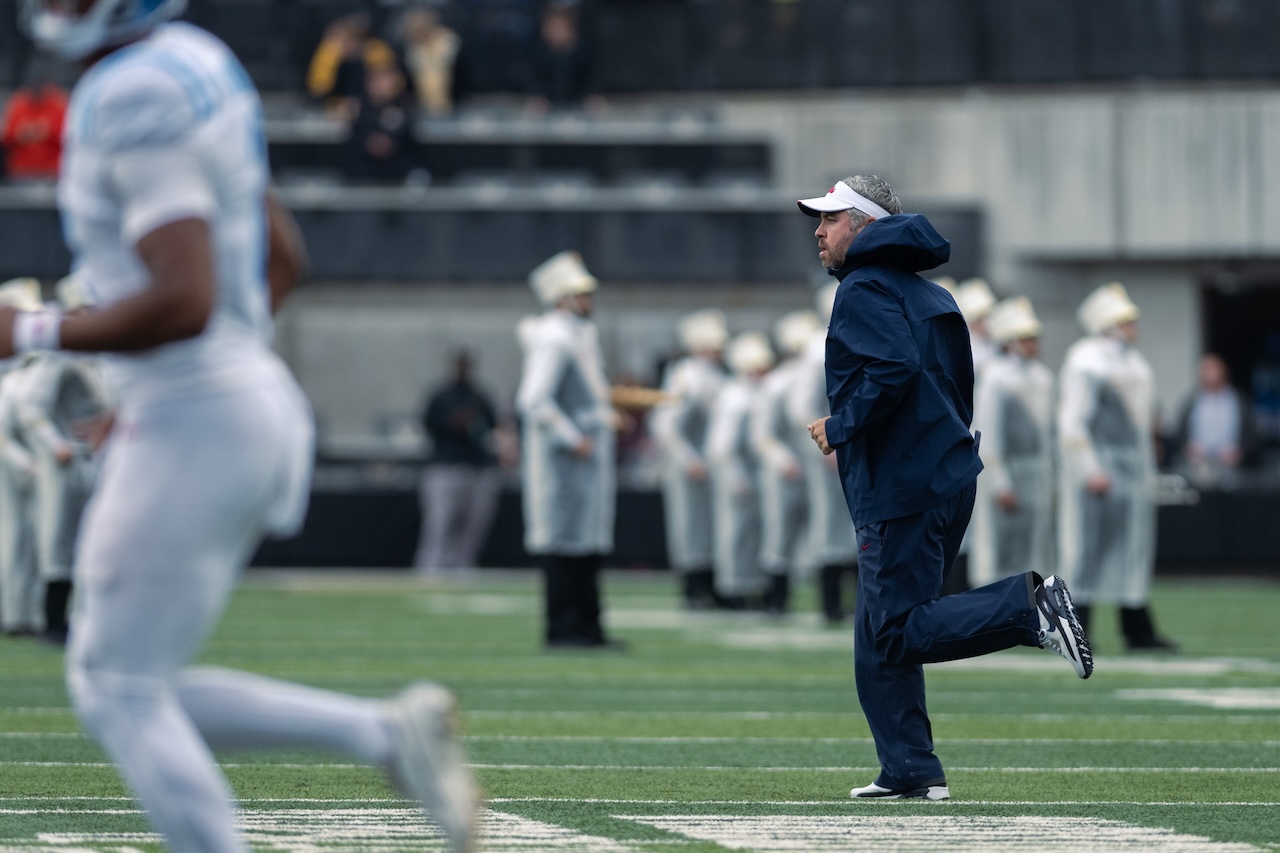
The intensity that Golding spoke of was evident on Saturday afternoon. Even outside of the takeaways and sacks, the Rebels held Vanderbilt to 103 rushing yards. The low total is a direct example of the team’s increased physicality.
Ole Miss will need to maintain the level of havoc and violence it displayed against the Commodores going forward against higher quality SEC teams in order to have more success.
Fast starts on offense lead to success
The first drive of the game resulted in a three-and-out for the Rebels. After that, Ole Miss scored on four consecutive series. The next time they punted was late in the second quarter with the score 28-3 in their favor.
The Rebels put together a 15-play drive at the beginning of the second quarter. On that drive, offensive coordinator, John David Baker, showed impressive creativity. The drive culminated in a 2-yard touchdown pass from quarterback Trinidad Chambliss to nose tackle Jamarious Brown out of the jumbo package.
“I think the opportunity presented itself,” Golding said. “It’s a great design (and) great execution.”
Ole Miss fans were critical of Baker’s play-calling during the Florida game. They felt like he was rather timid and took too long to let Chambliss loose.
Against Vanderbilt, Baker came out of the gates hot with shot plays and creative running schemes. These calls allowed the Rebels to claim a large lead early and take some pressure off the defense.
In Ole Miss’ two SEC wins so far this season, it has started fast and taken early leads. In the loss, they were the ones playing from behind. Going forward, Baker should look to open up the playbook early as it has correlated to success for the Rebels.
Kewan Lacy’s presence is a game changer
Running back Kewan Lacy was unable to play against Florida in Week 4 due his lingering left shoulder injury. He returned to the gridiron against Vanderbilt, albeit in a limited role. Even with less playing time, he rushed for 39 yards on seven carries and a touchdown.
Lacy’s talent for running the football completely changes the way that Ole Miss can operate its offense. He runs the football with such tenacity that a typical 3-yard run turns into an 8-yard gain.
Lacy came into the season with sky-high expectations, but his health has prevented him from living up to them. If Ole Miss wants to maximize its full potential as a team, Lacy has to be on the field. Not only is he one of the best running backs in college football, but his presence takes pressure off Chambliss and opens up the playbook. fG
Ole Miss plays three AP Top-15 opponents in its next four games. Lacy’s presence will be vital for the Rebels’ success in those contests.