
























No. 6 Ole Miss Football — dubbed the “Team of Destiny” by some — lost the Fiesta Bowl 31-27 to No. 10 Miami, finishing the Rebels’ historic playoff run. Here are three takeaways from the loss that ended Ole Miss’ stellar season.
Game of missed opportunities by both teams
This was an incredible game that came down to the wire, but, unfortunately, Ole Miss was unable to pull it off. While the possible missed pass interference on the last play had many Rebels fans in uproar, Ole Miss had several opportunities earlier in the game to pull ahead but were unable to.
Kicker Lucas Carneiro has been one of the best, if not the best, kickers in the nation this season. He was excellent throughout the playoffs and made four field goals this game: he connected from 42 yards, 58 yards, 54 yards and 21 yards. Unfortunately, he also missed a 51-yarder.
It was an uncharacteristic miss, but one that played a role in the final tally of a one-score game.
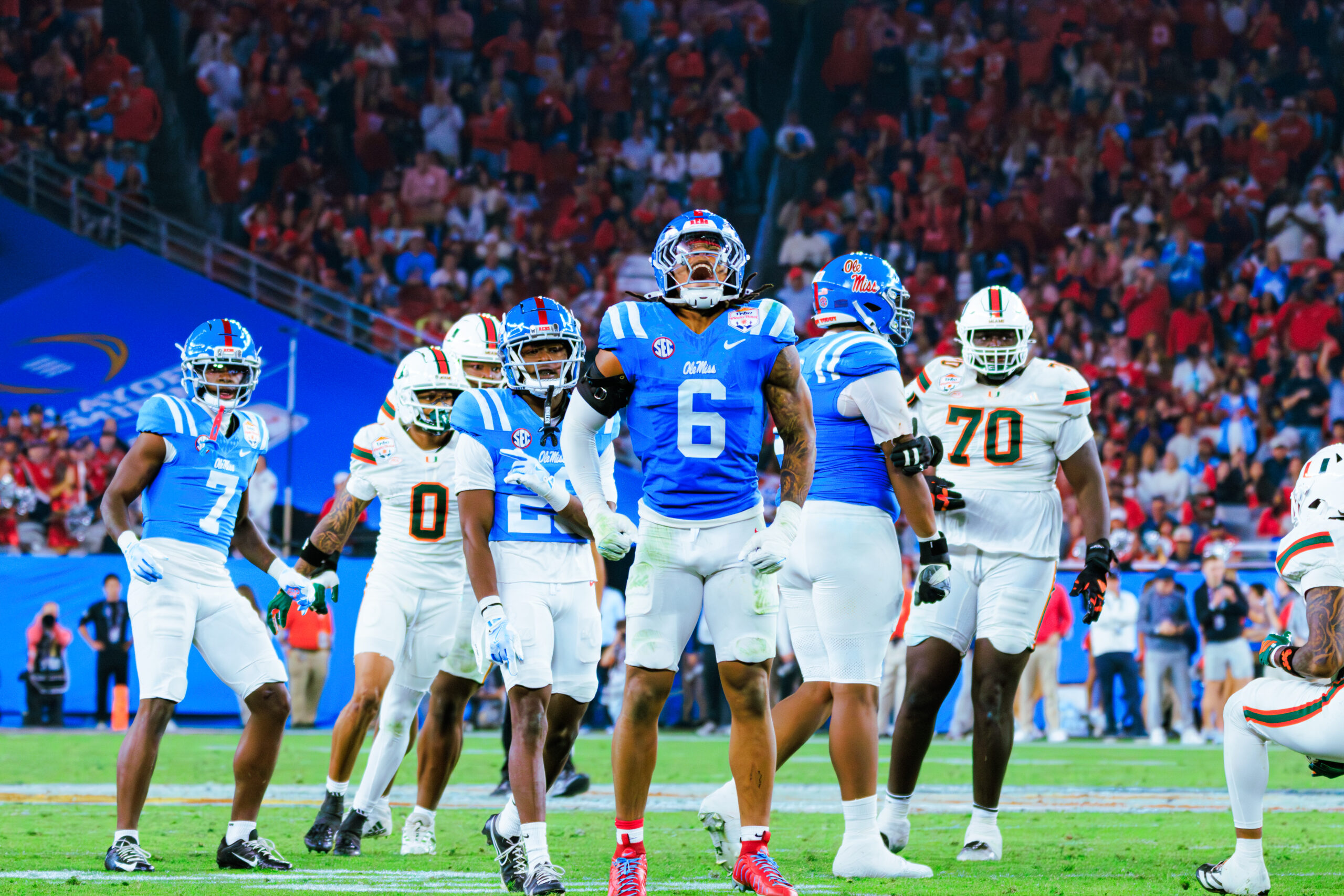
Also, the Ole Miss defense was unable to capitalize on Miami third downs. The Hurricanes were 11-of-19 on third down (77%), but were only one-of-six on third-and-longs (nine or more yards).
This can be traced back to first and second down. Running back Mark Fletcher Jr. punished the Rebels all game; he finished with 22 carries for 133 yards, a whopping six yards per attempt. If the Rebels had limited Fletcher to minimal gains on early downs, they would have had an easier time getting off the field on third down.
However, it was not just Ole Miss that missed opportunities. Chambliss technically had no interceptions during the playoffs, but Miami defenders bobbled and dropped four of Chambliss’ throws which could have been picked off.
The offense was inconsistent
Ole Miss was a measly two-of-10 on third down. Two of these failed attempts came on the first two drives of the game, when Ole Miss went three-and-out and did not gain positive total yards.
Chambliss played well — he finished with 277 yards and a touchdown — but as stated before, if the Miami defenders were able to corral even half the risky throws that hit them in both hands, this game could have played out very differently.
Moreover, the Rebels ground game was essentially nonexistent after running back Kewan Lacy strained his hamstring on his 73-yard touchdown run. The offense became one-dimensional; in total, the Rebel offense had only 21 carries for 121 yards — the unit gained only 48 rushing yards outside of Lacy’s big play.
This was problematic because the Ole Miss offense has always relied on its ground game and passing attack to work in unison. The overreliance on Chambliss’ arm strained the offense, which was only able to scrounge together one touchdown pass, a 24-yarder to tight end Dae’Quan Wright.
Ole Miss was not physically, or technically, sound
Throughout the game, Ole Miss was overpowered in the trenches on both sides of the ball. Miami’s offensive line is big: four of their starters are at least 6-foot-5-inches tall and 325 pounds. Of course, Ole Miss has similar size on its offensive and defensive lines, yet Miami consistently generated pushes at the line of scrimmage.
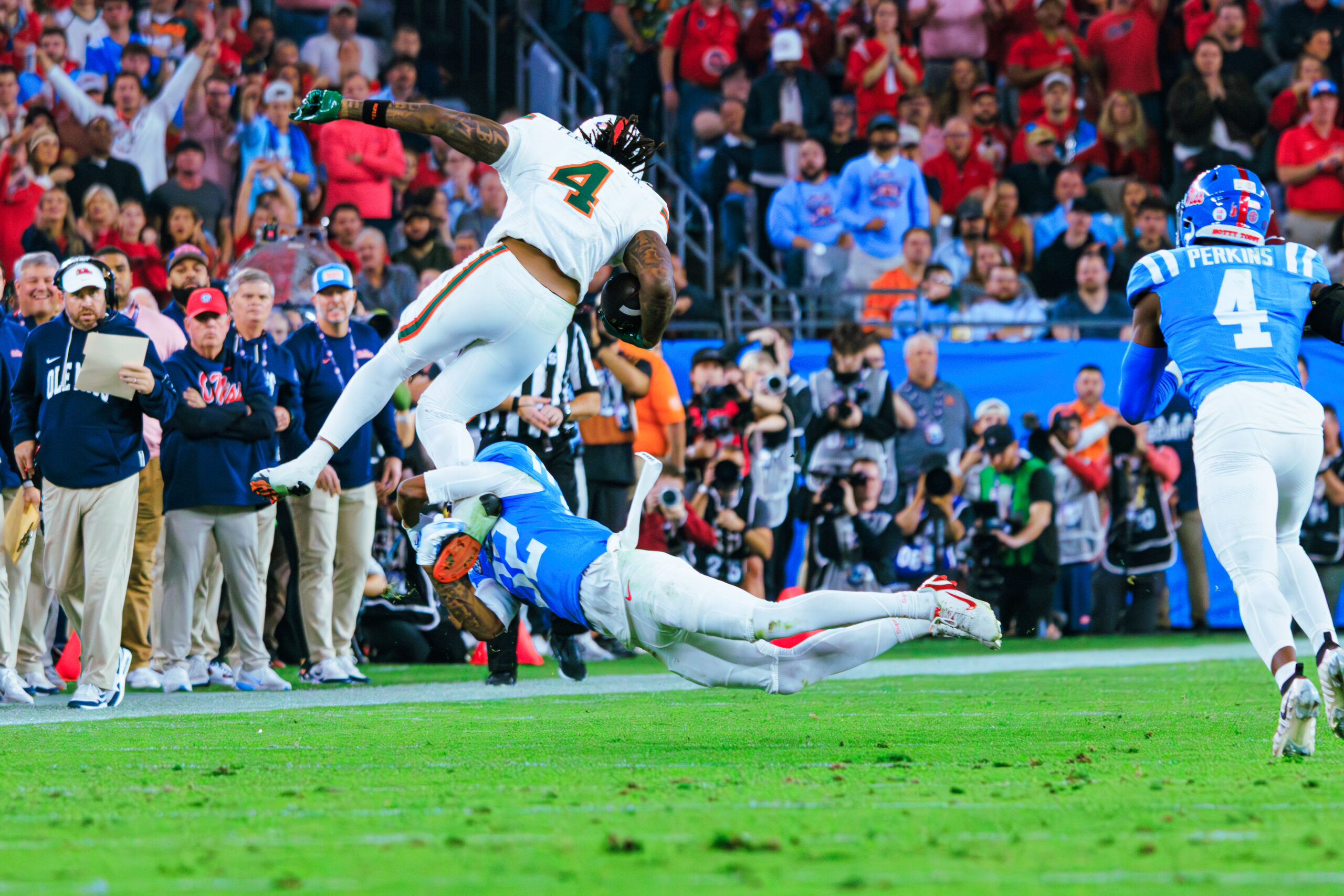
This allowed Miami’s pass rush to break into the backfield frequently. Chambliss had to scramble outside the pocket multiple times. On the other side, the offensive line cleared lanes for Fletcher and his running mate CharMar Brown, who combined for 187 yards on 36 carries.
Even beyond the trenches, the only Rebels who seemed ready to match Miami’s physicality were Lacy and wide receiver De’Zhaun Stribling, both of whom laid fierce hits on Miami defenders and consistently bounced away from contact. Outside of that, Miami was clearly the tougher team.