























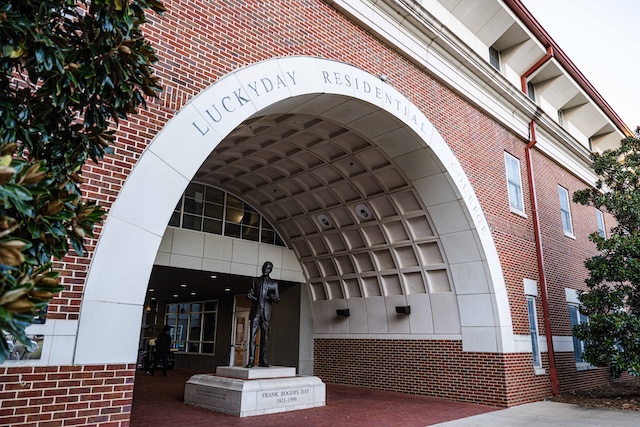
The short film “The Screening of Ben Williams,” which documented the impact and legacy of the University of Mississippi’s first Black football player, was screened at the Luckyday Residential College on Thursday, Oct. 8.
A discussion panel followed the film screening, which included James Reed, a panelist and one of Williams’ former teammates; W. Ralph Eubanks, UM faculty fellow and writer in residence; and Charles Ross, professor of history and African American studies. The event was sponsored by the Center for the Study of Southern Culture, the Department of African American Studies and Luckyday Residential College.
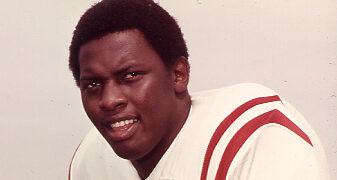
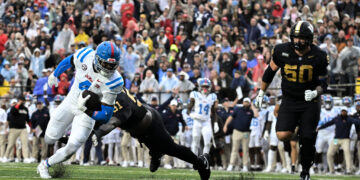
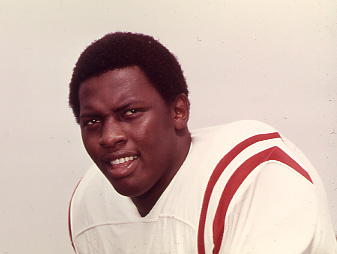
Robert Jerry Williams Jr., nicknamed “Gentle Ben,” was a defensive lineman for Ole Miss from 1972 to 1975 before his 10-year NFL career with the Buffalo Bills. The Yazoo City, Miss., native is the university record holder for sacks in a single season and career sacks, with 18 and 37, respectively.
He and Reed were among the first Black players on the Ole Miss Football team. They were members of the same recruiting class on the team.
Fred D. Nettles, a filmmaker who obtained his bachelor’s in broadcast journalism and master’s in Southern studies from the university, created the short film. Nettles’ short film on Williams was released in March 2026 with a special screening in the Overby Center for Southern Journalism and Politics.
The film describes how Williams met his wife, Linda, while attending the university. During his senior year, Williams also became the first Black student to be elected Mr. Ole Miss, then called Colonel Reb.
Reed shared how the football team fully supported Williams in his campaign for Colonel Reb.
“He was the most popular male on campus, regardless of football or basketball or whatever the case may be,” Reed said. “We supported him as a team.”
In the film, Williams’ wife, Linda, spoke about the signs of Chronic Traumatic Encephalopathy (CTE) that became present later in his life. CTE is a degenerative brain disease caused by repetitive head impacts and concussions over time. Many college and professional football players are diagnosed with this condition after their playing days are over.
Williams died in 2020 after suffering a stroke. His No. 74 jersey was retired by Ole Miss Football two years later. He is only the fourth Rebel football player to receive this honor.
The screening was followed by a discussion panel hosted by Nettles.
The panel spoke about the impact that Williams made on the university by joining the football team only 10 years after James Merdith became the first Black student at the university and only two years after the Fulton Chapel protest. The speakers also talked about how Williams had to perform well on the field because of the pressure of being an African American athlete.
“When you start talking about African American athletes, not business people and not politicians, you’ve got to be able to perform,” Ross said. “I think that is one of the things that makes Ben Williams such an outstanding individual.”
Reed also discussed playing for coach Johnny Vaught, who came back to coach the university for the final eight games of the 1973 season after Billy Kinard was fired. Vaught told an Associated Press reporter in 1966 that he only recruited Black players to get federal funding.
“When it was announced (Vaught) was coming back, I was very apprehensive,” Reed said.
According to Reed, Vaught gave him so many carries in a game against a nationally ranked Tennessee team that he actually asked for someone else to get the ball. Reed rushed for 137 yards and two touchdowns in that game.
Liyah Jackson, a freshman accountancy major from Clinton, Miss., said she attended the event to learn about the history of Black athletes at the university.
“I really like sports, and I love the football games and the atmosphere,” Jackson said. “I really like to know about my roots and know what happened, especially since I’m here as a Black student. I wanted to know what came before me, because I think it is good to know about your history and the people who paved the way for you to come here.”