





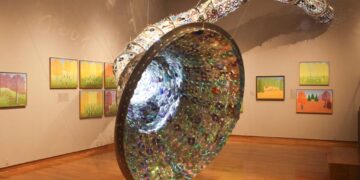
























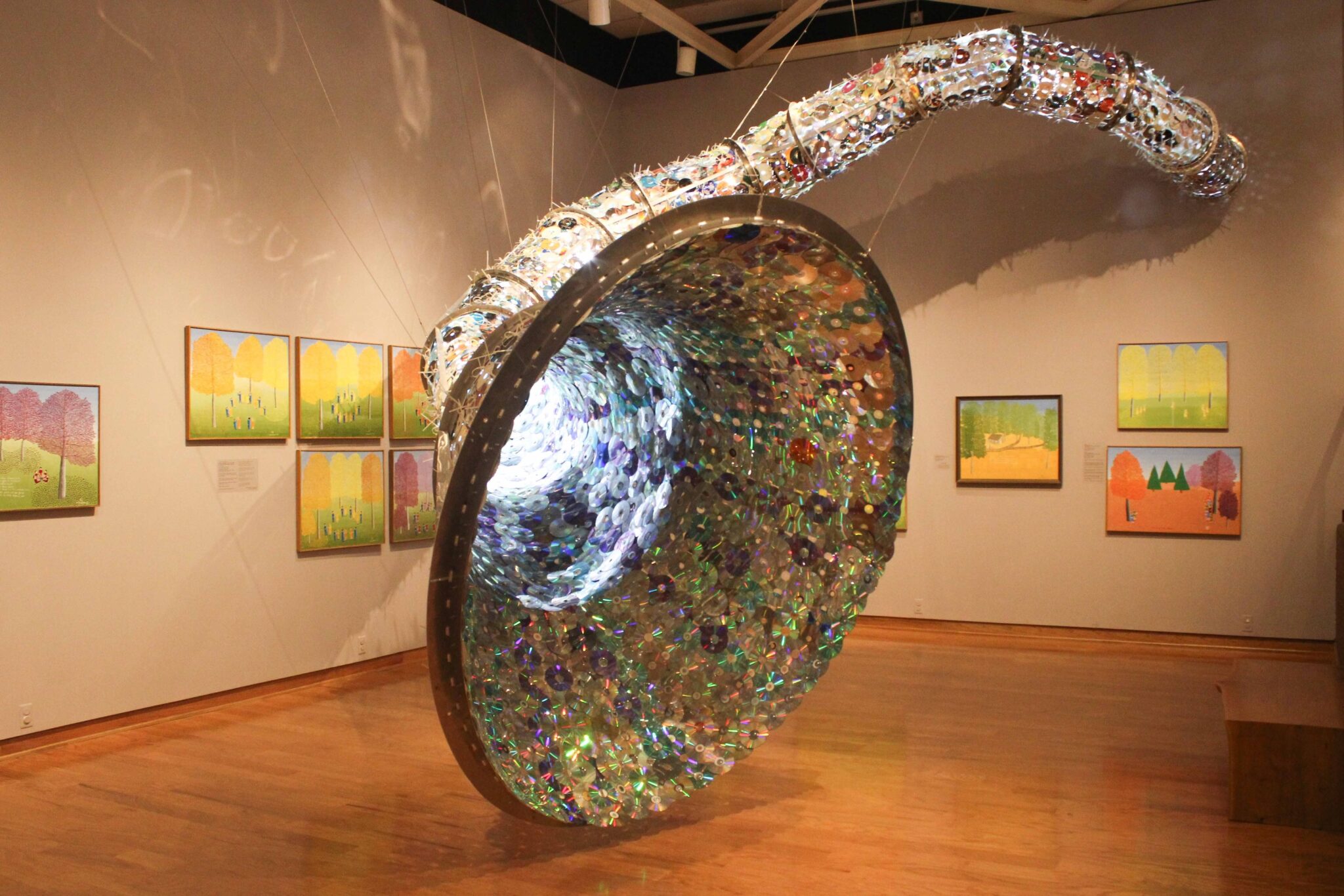
Artist Leticia Bajuyo’s latest exhibition, “Event Horizon Ad Infinitum,” has transformed thousands of discarded compact discs into a massive, spiraling installation that winds through the University of Mississippi Museum.
The museum welcomed Bajuyo on Thursday, Oct. 29, for an opening reception and artist talk celebrating the exhibition, which opened on Oct. 13 and will remain on display through April 3, 2027.
Drawing on a wide range of inspirations, including musical instruments, science fiction, wormholes and the concept of interconnectedness, Bajuyo’s work explores how memory, technology and everyday objects relate to one another.
During Thursday’s talk, Bajuyo discussed her artistic background, previous projects and the creative process that brought “Event Horizon Ad Infinitum” to Oxford. An associate professor of sculpture at the University of Oklahoma, she has created sculptures from CDs since 2009, using a once-popular technology to explore how objects can retain meaning long after they lose their original purposes.
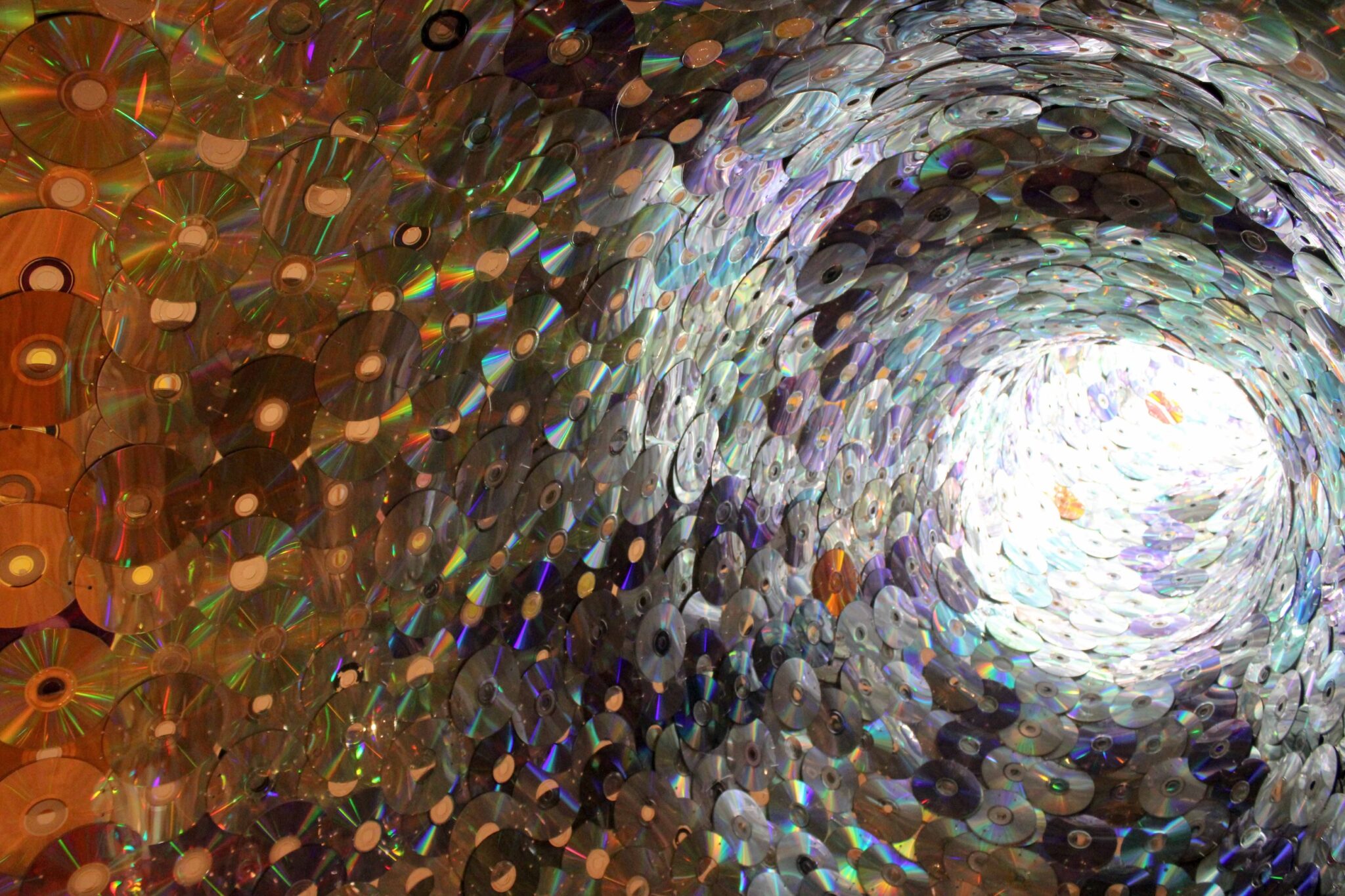
For her, the discs represent more than outdated technology. Even when a CD can no longer be played, it still carries the memories and stories of the people who once used it.
“There’s still memory in there. There’s still a value to that,” Bajuyo said.
Throughout the presentation, Bajuyo also shared photographs of her childhood and previous installations, showing how her upbringing in rural Illinois shaped her interest in places and objects that are often overlooked, from rural communities and hay bales to construction scraps and outdated technology.
That interest in finding value in things that others might overlook has remained a consistent theme throughout her career.
“What is it that we value, and how do we apply value to something, and how can it change? That’s what matters to me,” Bajuyo said.
For “Event Horizon Ad Infinitum,” Bajuyo brought those ideas to life through an installation designed specifically for the university museum, making the themes visible in the space itself.
The sculptures, made from donated CDs and DVDs, extend through the museum’s galleries and exterior spaces. The winding forms appear to disappear behind walls and reemerge in other galleries, creating the illusion of a continuous structure that connects separate spaces.
“We only understand the parts of the world that we can perceive,” Bajuyo said.
The installation also incorporates sound through a theremin, an archaic electronic instrument that produces sound without physical contact. Visitors can interact with the instrument by moving their hands near it, which adds another dimension to the exhibition.
While the finished installation is impressive, Bajuyo emphasized that bringing it to life required much more than her artistic vision alone.
“Two and a half years ago…the sculpture faculty invited me to come as a visiting artist, to do an iron pour, to meet with the students,” Bajuyo said. “And part of that was a visit to this museum, I’d never been to this museum. We walked around, we (had) a conversation and we started brainstorming early on — just making a relationship. … So much of art is about relationships.”
Those relationships became essential to the exhibition. Students, museum staff and community volunteers helped collect, drill and weave the donated discs, transforming what would otherwise be discarded materials into a large-scale sculpture.
Bajuyo repeatedly emphasized that the project would not have been possible without the contributions of those involved.
“This artwork is so much part of you all, too,” Bajuyo said.