






















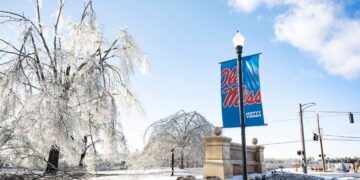
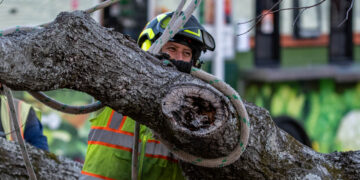
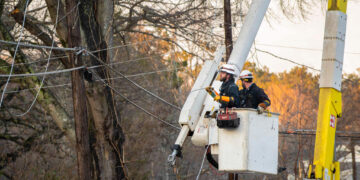





When Winter Storm Fern swept through Oxford, the destruction left behind more than just frozen branches and scattered leaves. The accumulation of ice caused irreparable damage to hundreds of campus trees, damaging a core facet of the University of Mississippi’s identity.
The trees on the Ole Miss campus serve as far more than just decorative landscaping; from the towering oaks that line walkways to the flowering dogwoods and magnolias scattered across campus, they provide beauty, shade and serenity in a constantly changing university environment.
Prior to Winter Storm Fern, the university boasted thousands of trees across campus, representing dozens of native species such as the bigleaf magnolia, northern catalpa and flowering dogwood. Our campus is not only a center for education, but also a botanical sanctuary.
Ole Miss researchers and faculty actively study and work to preserve the campus’ beloved trees.
Professor of biology and ecologist Steven Brewer, for example, has emphasized the importance of restoring fire-adapted oak woodlands, which once dominated much of Mississippi’s natural landscape. Their numbers have dwindled due to urban development and fire suppression.
These woodlands are composed of oak and pine species and are shaped by consistent and low-intensity fires. They are a key component of the environment as they support high biodiversity and prevent a buildup of dense vegetation, which can further lead to wildfires.
The restoration of oak woodlands around campus, furthermore, serves as a refuge for native species that have disappeared from their former home.
These trees are classrooms in themselves, teaching lessons about resilience, biodiversity and environmental stewardship. But they do more than that; the university’s trees act as nature’s pillars of memory, holding moments of community and tradition beneath their branches.
Nowhere is this connection more visible than in the Grove. Students, alumni and families have gathered beneath majestic oak branches for decades for celebrations, reunions and rituals that define Ole Miss game days.
The university’s trees also boast remarkable historical importance. Some predate much of the modern campus itself.
Two of the university’s “Champion Trees” stand as living monuments: a northern catalpa estimated to be around 175 years old that sits between the student union and Bryant Hall and an osage orange recognized for its size and age.
Known as “George and Martha,” two willow oaks near the J.D. Williams Library were planted on Arbor Day in 1932 to commemorate the bicentennial anniversary of George Washington’s birth.
It is this converging significance — ecological, cultural and historical — that makes the damage from Winter Storm Fern especially painful.
For many on campus, the loss felt personal.
“It’s really sad to see trees that were so old destroyed by the storm,” junior psychology major Sydni Nguyen said. “The campus looks sadder now.”
These were the trees students studied under, posed beside for graduation photos and walked past every morning on their way to class.
The trees of Ole Miss link alumni to students, past to present and culture to science. They connect ecological research with football traditions and historical commemorations with daily routines.
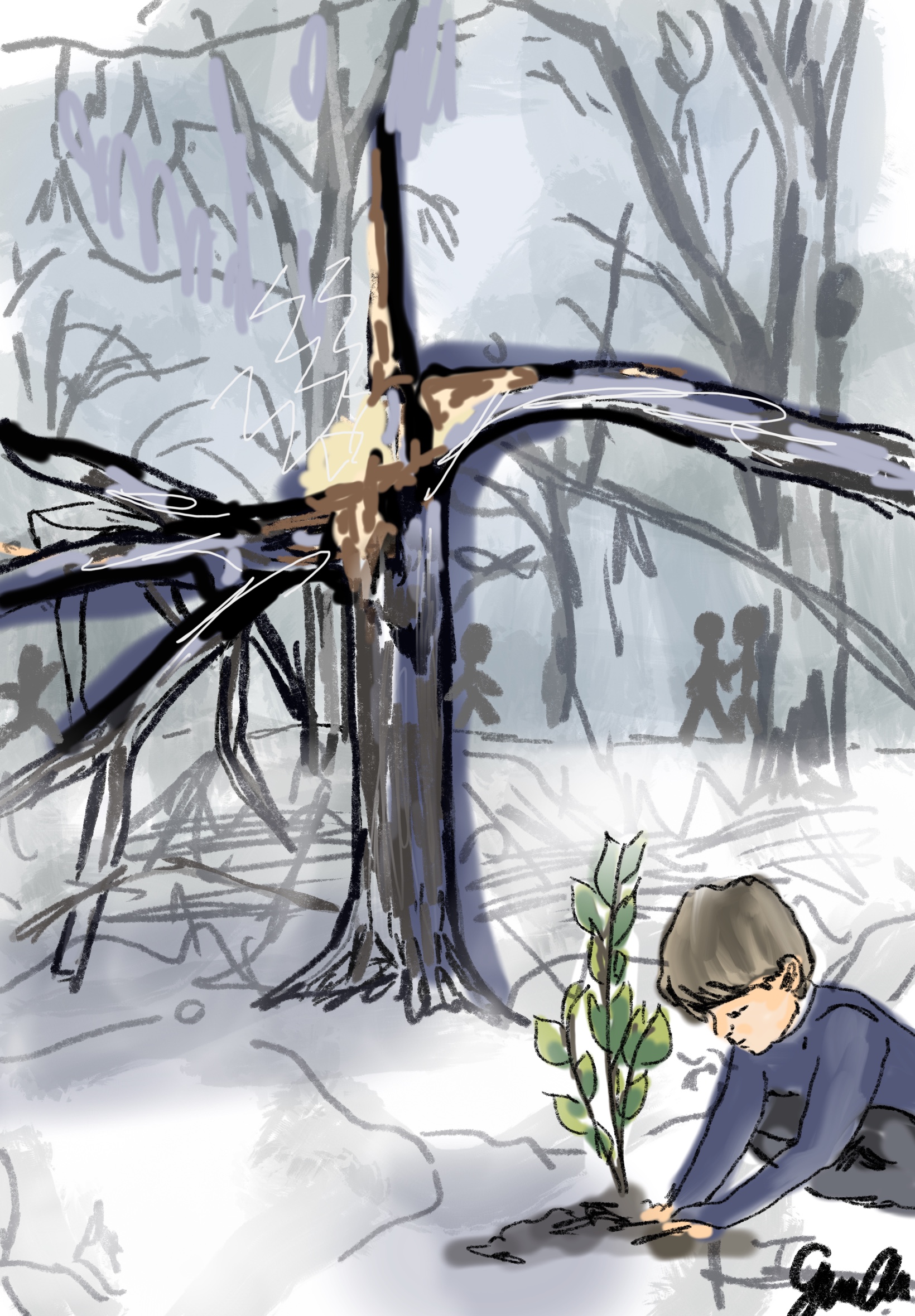
However, in this loss there is hope for renewal. The destruction left by the storm has spurred conversations about preservation, care and the future of the campus canopy, turning grief into a renewed sense of responsibility.
As restoration and cleanup continue, Winter Storm Fern revealed how deeply rooted the trees of Ole Miss are in the identity of the university. Their survival and regrowth mirror the resilience of the community that gathers beneath their leaves.
Vidya Adlakha is a junior biological sciences major from Ocean Springs, Miss.