




























Students at the University of Mississippi are pushing back against the use of Flock Safety surveillance technology around Oxford. The automated license plate readers (ALPRs) use artificial intelligence to log license plate numbers and vehicle characteristics. Critics of ALPRs, however, believe the cameras amount to warrantless mass surveillance.
Oxford Police Department public information officer Breck Jones said Flock’s technology is a vital tool in solving crime. OPD confirmed that 16 cameras are deployed in the city of Oxford as part of its contract with Flock Safety.
“Technology, including Flock, has been an instrumental tool in solving cases in Oxford that include a sexual assault case and a burglary case where approximately over $150,000 worth of jewelry was stolen by a group from another state who were passing through,” Jones said.
The UM College Democrats launched a petition on Aug. 26 asking Oxford’s Board of Aldermen and Mayor Robyn Tannehill to “DeFlock Ox,” or cancel the city’s contract with Flock Safety. So far, the petition has gained over 600 signatures.
According to Jacob Williams, a senior public policy major and the UM College Democrats public relations chair, the campaign boils down to three main issues with ALPRs: potential for abuse of footage, threats to freedom of speech and mass surveillance by a private corporation.
“Given that over (120,000) of these cameras are up around the country, it amounts to mass surveillance by a private corporation,” Williams said. “Every time you pass a (Flock) camera … it collects data on you without your knowledge nor your consent.”
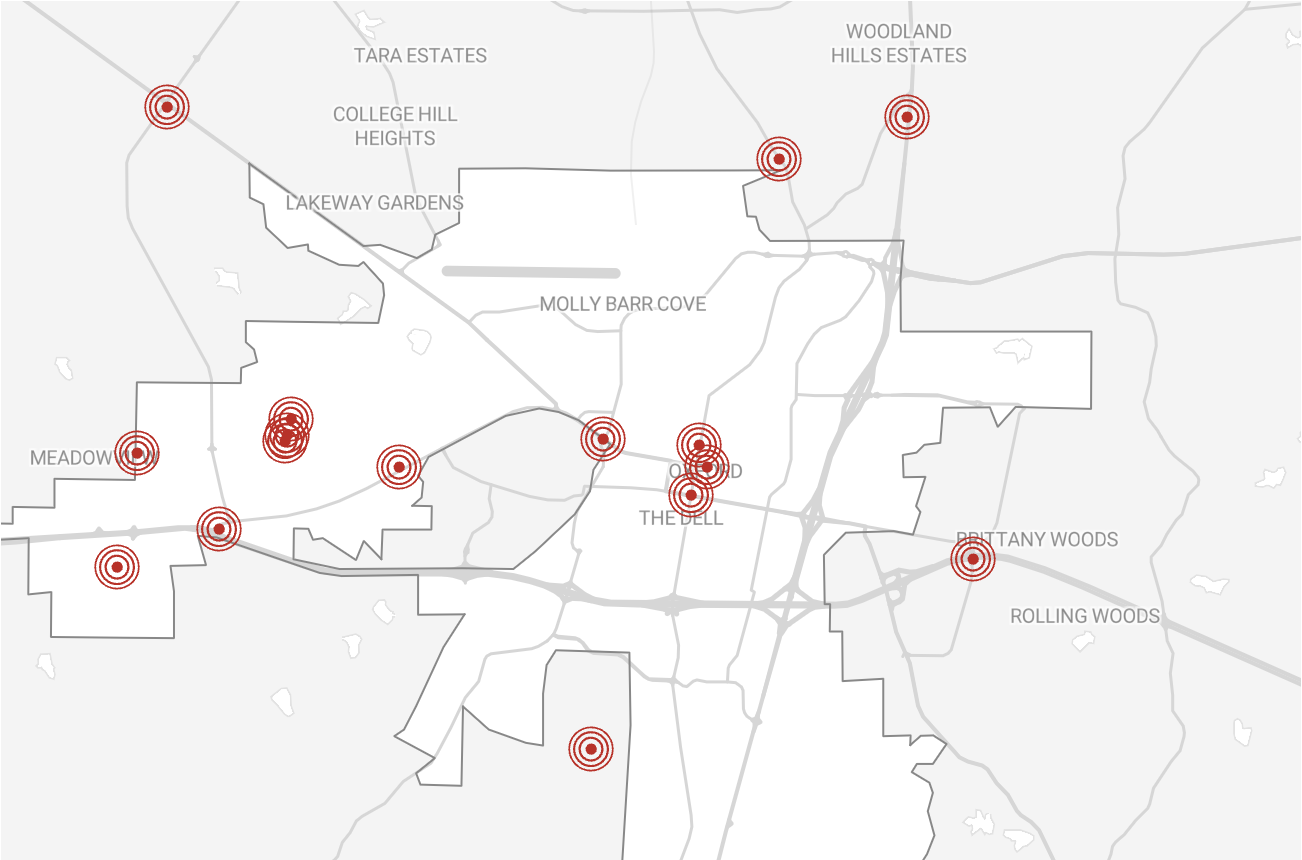
Reported Flock camera sightings in Oxford Miss. Map data courtesy of DeFlock, OpenMapTiles and OpenStreetMap. Graphic by Taf Flanders using Datawrapper.
ALPR cameras spread through Oxford
OPD owns the footage collected by Flock Safety’s cameras, but Flock Safety owns the cameras themselves. The department has paid Flock Safety $2,500 per camera since 2022 to use its hardware and access Flock’s online platform to view footage.
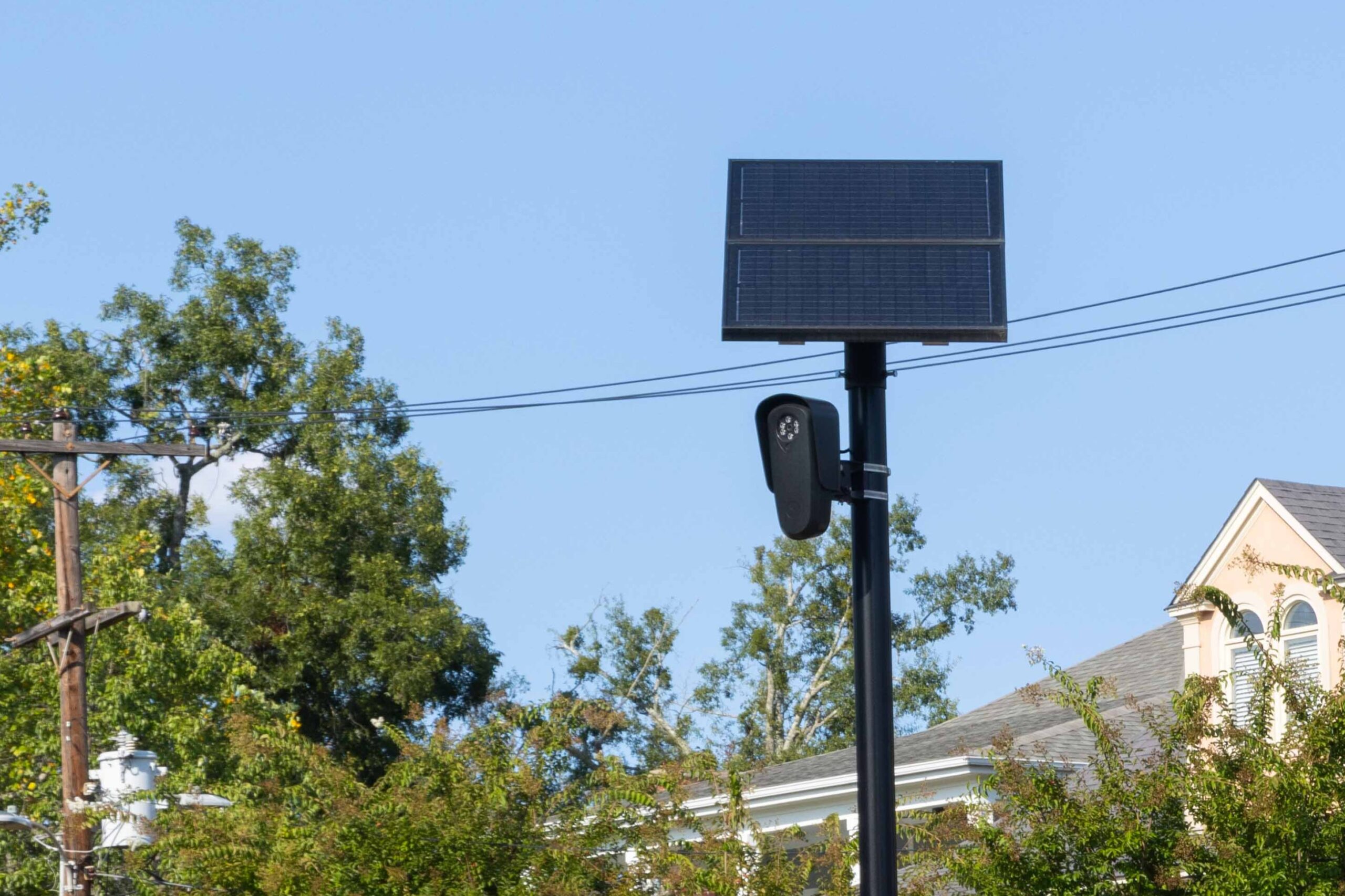
ALPR cameras in the Oxford city limits are located on the Square and throughout town. In the county, cameras appear to be stationed at major highway entrances and exits, including on Mississippi Highways 6 and 7.
Lafayette County Sheriff Joey East said there are 30 ALPR cameras at approximately 15 locations throughout the county, including along county lines. Some of these cameras are owned by Flock Safety, per reporting by The Oxford Eagle. According to East, the Lafayette County Sheriff’s Department conducts audits to ensure appropriate use of ALPR technology and would terminate and prosecute deputies in the case of misuse.
Some private housing complexes, such as Lark Oxford off of Anderson Road, have deployed their own cameras to track vehicles entering and exiting their property. A leasing agent at Lark Oxford said the complex’s four Flock cameras were “a source of extra protection in the parking lot” and that Lark Oxford shares its camera footage with OPD.
The city of Oxford’s contract with Flock Safety is set to expire in early 2027.
Flock reserves the right to “collect, analyze and anonymize” OPD footage and data uploaded to Flock’s platform to improve its own technology, including training AI models.
Flock Safety users can choose the agencies with whom they share their data. The Daily Mississippian did not confirm which agencies OPD shares its Flock data with by the time of publication.
A bipartisan swath of Americans have grown increasingly concerned about the presence of ALPRs in their communities. NPR reported cases of vandalism against Flock cameras in at least 36 states, as of Aug. 21.
Recent polling by Data for Progress, a progressive think tank, reported a net favorability rating towards Flock cameras of -18 among Democrats, -28 among independents and -13 among Republicans, reflecting widespread disapproval. The Cato Institute, a conservative think tank, said opposition against Flock cameras was the “one thing that the right and left seem to agree on.”
Mike Cavanaugh, a public policy leadership and economics double major and president of UM College Democrats, said the organization’s petition was just the beginning of its activism.
“(The petition) gives us leverage to get in the door with the Board of Aldermen, if we get a substantial amount of petition signatures,” Cavanaugh said.
He hopes that mobilizing residents will put pressure on Oxford’s Board of Aldermen not to renew the city’s contract with Flock Safety.
“We believe in strength in numbers,” Cavanaugh said. “We want to go to these meetings, and we want (the board) to see how passionate the people that live within Oxford and within Lafayette County feel about this issue.”
Symphany Grier, who served as treasurer for Ole Miss Turning Point USA for the 2025-26 academic year, said opposition to ALPR cameras unites individuals across party lines.
“The issue of Flock cameras is one of the only common sense, nonpartisan issues I can think of in the last two years,” Grier, a senior accountancy major from Godley, Texas, said. “They are a flagrant infringement upon our Fourth Amendment rights and a dangerous step towards a seemingly Orwellian future if our local, state and federal leaders do not implement meaningful regulations as soon as possible.”
The Daily Mississippian asked dozens of students at the University of Mississippi for their opinions on ALPR use. The vast majority of students polled were opposed to ALPR use or indifferent. Only one student expressed support for ALPR use and declined to comment further.
Usage Concerns
Regarding the potential to abuse Flock’s technology, Williams cited recent cases of police officers who have used the technology to stalk their ex-partners. According to a Washington Post investigation, at least 50 law enforcement officers have been accused of or charged with unauthorized use of license plate readers — 46 of them using footage from Flock Safety cameras.
Charges and accusations against law enforcement across the U.S. related to ALPR use include personal stalking, unauthorized cross-jurisdiction data sharing and department-wide misuse of footage.
Jones said OPD is aware of the potential for misuse. He said OPD has already taken steps to safeguard access to the database of vehicle information.
“We wanted to get ahead of that by creating a policy that does not authorize officers to use Flock for personal purposes or for any activity unrelated to legitimate law enforcement duties,” Jones said. “Access is restricted to authorized personnel and is subject to audits. When it’s in use, our officers must enter a reason why it’s being used.”
Delaney McNear, a senior philosophy major from Wheaton, Ill., said she does not believe OPD’s existing policies go far enough to safeguard the technology from misuse.
“With all the cases that have already been documented in the news and everything (about) police officers stalking mostly women, (the officers) put in a reason and they say, ‘Oh, speeding’ or ‘Oh, warrant’ … but obviously (these reasons are) fake,” McNear said.
Law enforcement can use information collected by Flock cameras to track vehicle movements, regardless of whether vehicle owners are suspected of a crime, which members of UM College Democrats consider a red flag.
Flock Safety, according to its contract with OPD, can “access, use, preserve and/or disclose” the footage it collects to other law enforcement authorities, government officials and third parties to “protect the rights, property or safety of Flock, its users, a third party or the public as required or permitted by law.” Flock Safety does not sell any data collected, according to the contract.
Jones said OPD expected Flock to follow the law when it comes to sharing OPD’s footage with third parties.
“We expect the appropriate safeguards to be in place and for our vendors to comply with applicable laws and the terms of their agreements with the city (of Oxford),” Jones said.
According to OPD’s contract with Flock, the law enforcement agency has 30 days to “view, save and/or transmit” the footage and data before Flock automatically deletes it. Before deletion, the department has the right to use and save the footage without a warrant as long as it falls under “investigative purposes.”
Sam Line, a senior public policy leadership and German double major from Hattiesburg, Miss., said he was worried about the opportunities Flock provides to work inside legal loopholes.
“There’s kind of a loophole where you just don’t necessarily need a warrant,” Line said. “That concerns me greatly.”
In a similar thread, Caitlyn Zuege, a sophomore social work major from Starkville, Miss., said Mississippi’s lack of comprehensive privacy legislation made the presence of Flock cameras around her apartment more distressing.
“We don’t have an overarching privacy law that would give us much protection at all,” Zuege said. “It’s a worry of, if we bring anything to court, there’s typically good chances that it’s going to be dismissed because there’s not enough to prove that anything is being violated.”
Jones, however, said OPD took citizens’ concerns seriously and believed that conversations about the technology were important.
“Our goal is to make responsible decisions based on the effectiveness of these tools, appropriate oversight, legal requirements, cost and their ability to help us create a safe and connected community,” Jones said.
McNear attributed the bipartisan nature of ALPR opposition to America’s core values.
“It’s a very core American principle that we should have a right to privacy, and we should have a right to freedom of movement without being scrutinized and without being recorded every step of the way,” McNear said.
Backlash against ALPRs is largely concentrated around the Flock Safety company. Students are concerned that directing opposition only toward Flock and not other ALPR companies, like Axon or Motorola Solutions, could slow the momentum of the ALPR opposition movement.
“What worries me is … what happens when we get rid of Flock cameras and then Axon steps in and goes, ‘Hey, we’re not Flock,’” Line said.
Mass digital surveillance is already prevalent in the U.S. Several law enforcement agencies use Real ID tracking, facial recognition, cell-site simulators and other methods of digital surveillance to work around privacy regulations and oversight. The use of surveillance strategies is already ingrained into law enforcement tactics, so some people do not view license plate and vehicle tracking as a significant concession of privacy rights.
Students like McNear, however, argue digital monitoring is not a valid reason to remain passive on the issue.
“Whenever someone is telling you this is for your own good, you’ve got to really ask yourself: ‘Is this actually for my own good?’” McNear said.