





















How many cameras do you think you pass on your way to class? There are cameras on the sides of buildings, in hallways, above cash registers — but there are also the cameras you may have never noticed, quietly photographing and documenting your vehicle as you drive down the road.
If you live in Oxford, there may be more roadside cameras than you think.
Many Oxford and Lafayette County residents, University of Mississippi students included, do not know that these cameras exist, how many there are locally or who has access to the vehicle information they collect.
That should concern all of us.
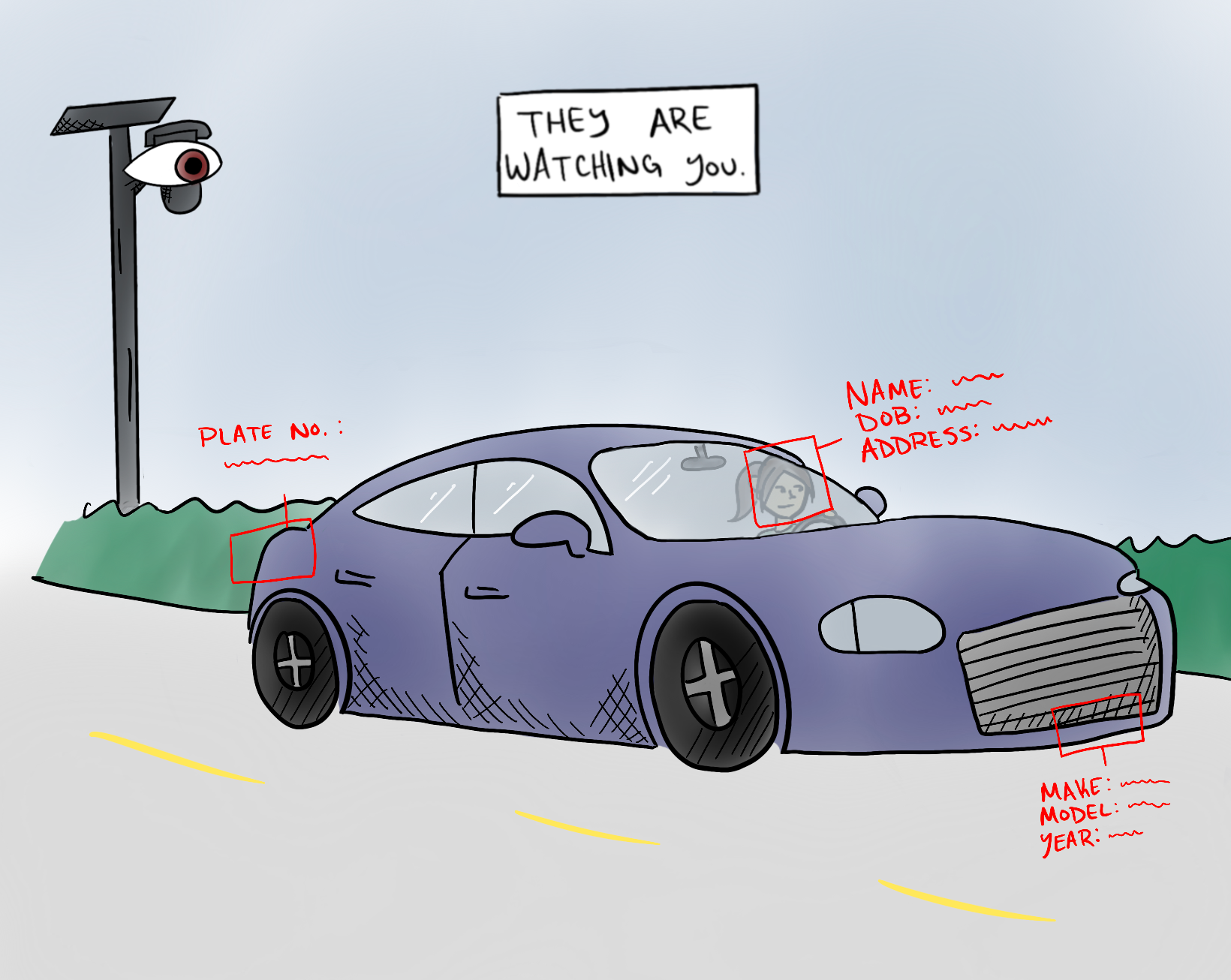
Flock cameras are artificial-intelligence-automated license plate readers that photograph every passing vehicle and log information such as license plates, car descriptions, the place and time that vehicles are observed.
The Flock Safety company markets the cameras as a tool to assist in solving crimes. However, the large network of cameras creates a searchable record of where ordinary civilians have visited in the past 30 days.The line between public safety and surveillance has begun to blur.
I am not opposed to government or law enforcement, and I am not against using technology to solve crimes. In fact, I believe police officers should have access to every tool available to help protect communities. However, Americans should not have to sacrifice privacy simply because technology makes surveillance easier.
My argument regarding the cameras is simple: Government power should have its limits.
The Fourth Amendment protects Americans from unreasonable searches and seizures without warrant. While the Bill of Rights was written long before AI and automated surveillance, its principles remain the same. Neither the government nor privately owned corporations should have unlimited access to regular civilians’ information.
Flock cameras photograph every person that drives past, not just criminals. This means an innocent person heading to class, visiting family or even getting gas can have his or her vehicle monitored. As more cameras are installed, photos from several connected cameras map movements and daily routines.
While the cameras themselves are not immediately harmful, the people that are responsible for handling these systems are not immune from abusing power.
In Savannah, Ga., four former police officers were recently arrested and fired after allegedly misusing Flock data to track family members and acquaintances for personal reasons. National reporting has also documented law enforcement officials allegedly using the license plate readers to track former and current romantic partners.
This concern is not just hypothetical. If an officer can use a public surveillance system to find out where someone is or where they have been, the possibility of systematic abuse is sickeningly large.
As we have all learned, technology — especially AI — can be wrong. License plates can be misread, and vehicle descriptions can be confused. The Institute for Justice has documented dozens of cases in which innocent people were wrongfully stopped, accused and detained for crimes they did not commit simply because of license plate reader errors.
Computers should never replace human judgment, suspicion or due process.
Flock cameras do have the power to help solve crimes, and that benefit matters. Still, useful technology can be dangerous.
My question is not whether Flock cameras can catch criminals, save civilians or stop crimes, but whether stopping criminals requires the creation of a system that records the movements of everyone.
Americans should not have to choose between safety and liberty. We should demand both.
Municipalities should regulate how Flock cameras are used and hold the people with access to their data accountable. Access should be limited to legitimate law enforcement purposes, searches should be logged and audited routinely and officers who misuse the system should face meaningful consequences. Public outreach and communication is vital to educate the public on what policies are in place to prevent misuse and how such policies are enforced.
Before we allow local governments to install more license plate readers, we should be asking ourselves and our leaders one simple question: Who is watching the watchers?
Riley Altiere is a sophomore journalism major from Alpharetta, Ga.