






























As students embark on a new semester at the University of Mississippi, many will begin by reviewing the syllabuses from their courses, plugging assignment due dates into planners and learning professors’ expectations. In the midst of planning out a new semester, students rarely have the time and energy to reflect on one important question: What do I want to get out of my education?
Earning an A in a course is, justifiably, the answer for most students; when it comes to passing a class, maintaining a scholarship or applying to an internship or graduate school, the letter grade seems like the most important part. However, the goal of higher education is to prepare students for their future careers. For this reason, the university should place a greater emphasis on project-based learning (PBL) alongside traditional exams.
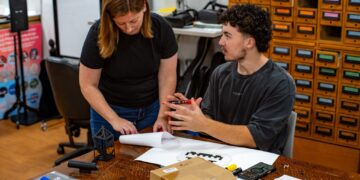
PBL is a teaching method in which students gain knowledge and skills by working for an extended period to investigate and respond to an authentic, engaging and complex question, problem or challenge. Instead of being expected to memorize information ahead of exams, students will be asked to apply concepts in situations that mimic those they might encounter professionally in their fields.
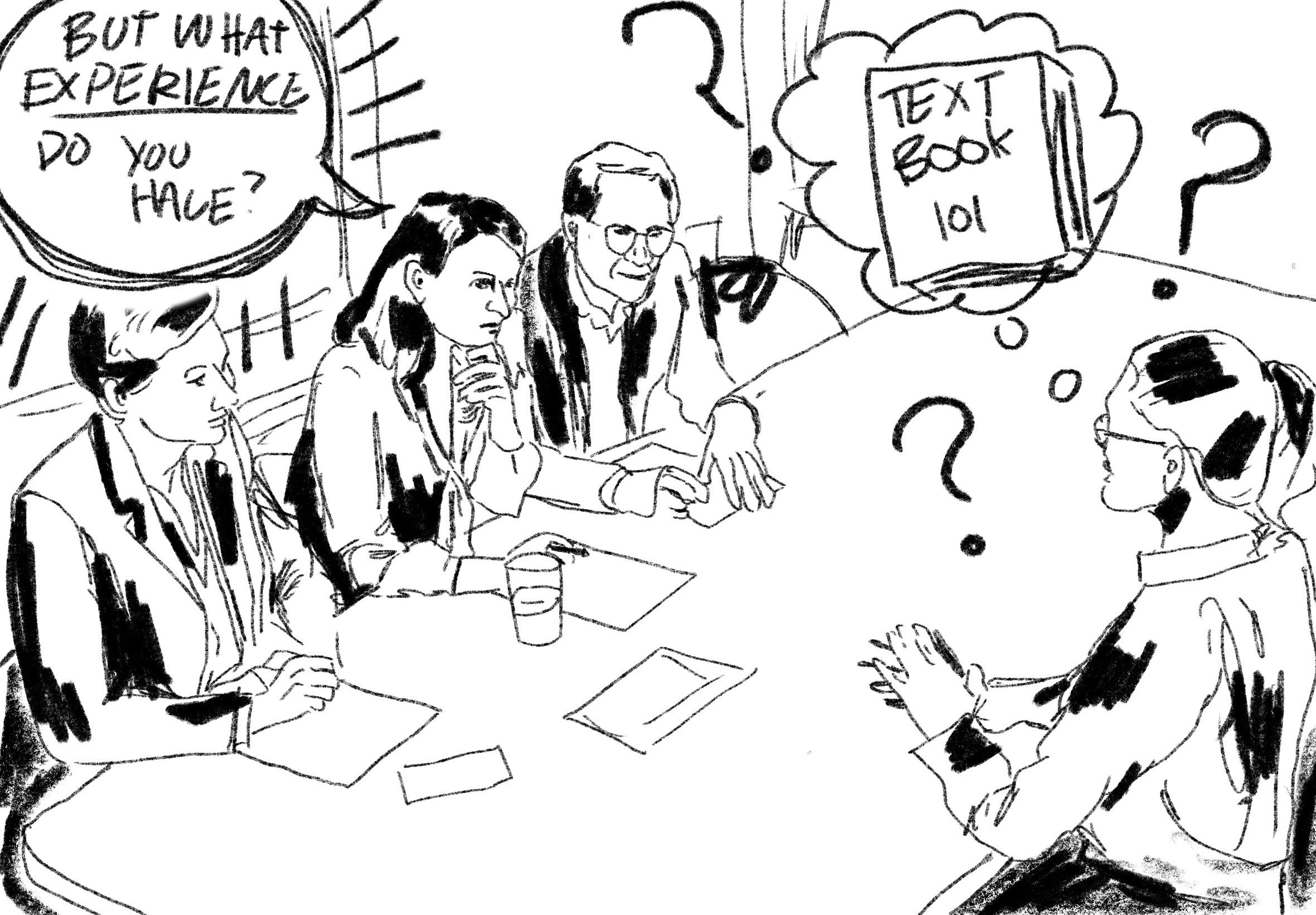
Dr. Ike Brunner, interim chair of the integrated marketing communications department, said students need to be able to demonstrate that they can apply the material they have learned rather than simply memorize information.
“It is vitally important for students to demonstrate that they can apply what they’ve learned rather than just memorize it,” Brunner said. “It’s important what gets put into a résumé, portfolio or LinkedIn profile. Employers are looking for specific applications and expect to hear those stories in interviews.”
Research from the National Association of Colleges and Employers (NACE) shows that roughly 70% of employers use a skills-based screening process instead of relying solely on metrics like GPA.
Whether a student is applying for a job, an internship or graduate school, hiring teams are looking for candidates who can communicate effectively and possess strong problem-solving skills which they can apply in real situations.
Luke Delaney, a junior biochemistry major from Long Beach, Miss., believes that PBL is important in higher education, but that it should be an asset rather than a replacement for traditional exams.
“Project-based learning does help me feel more comfortable applying what I’ve learned,” Delaney said.
For Delaney, however, PBL should not be the only metric of knowledge or skills.
“Keeping exams while simultaneously teaching using project-based approaches would be the best,” Delaney said.
Instead of choosing one over the other, Delaney believes, “Keeping exams while simultaneously teaching using project-based approaches would be the best.”
Brunner also believes assignments should give students opportunities to apply concepts in different situations.
“Any assignment that allows for application of a notion through different situations. Being able to take a core concept and apply it to distinct scenarios, especially those not familiar, showcases understanding of the material,” Brunner said.
Memorization of fundamental knowledge for a course should still have a place in our curriculum, especially for STEM classes in which exact terminology is vital. However, students should be able to demonstrate that they can efficiently communicate ideas, use critical thinking and find solutions to problems that do not have only one correct solution.
Georgette Gulley, a junior public policy leadership major from Springfield, Ill., sees PBL as one of the best ways to prepare students, especially those who learn best through hands-on experience, for life after graduation.
“I’m a hands-on learner, so projects help me understand and retain information better than traditional exams,” Gulley said.
Through interviewing for internships and speaking with employers, Gulley has found that employers often value project-based experience.
“They’re looking for much more than good grades,” Gulley said. “They want people who can think critically, communicate, adapt and work well on a team. … Projects provide a better picture of whether students can apply that knowledge in meaningful ways.”
Her perspective reflects the reality of today’s workplace. Employers prioritize portfolios, research projects and experience. While a student’s performance on exams and papers remains important, it is no longer the main focus.
Brunner said that changing the grading systems is a larger discussion and depends on the field of study, the context of the assignment and students’ career goals.
“Changes to grading systems are large discussions. The field of study, context of an assignment and post-graduate careers are big factors in how individual classes should prepare students,” Brunner said.
This does not mean that traditional exams are not important, since they do measure students’ comprehension of course material. However, as students move into upper-level courses, PBL should be implemented to give students the ability to work on projects which are most similar to those they will eventually encounter when they work professionally.
Higher education has always been said to prepare students for post-graduate careers, and if that is still the goal, we should be reflecting on how courses will prepare us for our desired careers rather than simply asking, “How can I earn an A in this course?”
Lauren James is a junior integrated marketing communications major from Hernando, Miss.