





















As Halloween approaches, some students at the University of Mississippi are not buying new, mass-produced costumes. Instead, they are creating their own costumes using clothes they already own, secondhand finds and ingenuity.
College students must balance the cost of school and social activities, which means a homemade costume can be a more affordable alternative to buying a new one. Creating a Halloween costume also lets students assemble something unique while reducing waste from a costume that may only be worn once.
William Johnson, a junior from Memphis pursuing a B.F.A. in theatre arts, said he will be crafting his own Halloween costume this year.
“I wanted to create my own costume mainly out of convenience,” Johnson said. “It’s cheaper, and I have a few basic items that I can turn into several costumes.”
Affordability is one of the main reasons students are choosing to make their own costumes. With rising prices and the expenses of college, homemade costumes make Halloween a little less stressful.
“A costume can cost up to $30-50 … and I already spend enough money … to add more to it,” Johnson said. “I’ve spent roughly $6 on a makeup pen to draw on my face to enhance whatever I’m wearing, and that’s really it.”
Ruby Ortwein, a junior English major from Como, Miss., agrees that the price tags on costumes can be steep.
“Costumes — the pretty ones at least — are usually pricey, so getting creative and sourcing the majority of your costume from your own closet or a thrift store, or even hand-making parts, is a great way to save money,” Ortwein said.
Price is not the only factor in students’ decisions to make their own costumes. The desire to create something one of a kind is fueling students to get thrifty with their resources.
This year, Johnson is putting together three costumes: a skeleton, Simon from “Alvin and the Chipmunks” and a Smurf. Rather than purchasing three separate outfits, he can use clothing he already owns and add details to bring each character to life.
“Costumes are mainly colors and accessories, so anyone can go in their closet and find pieces of clothing they already have and, with some accessories, begin making a costume with it,” Johnson said.
Students using clothing items that they already own curates a standout costume. Not only is it cost-friendly, but it sets them apart from their peers and allows personal style to shine.
“What’s great is no one else will have the exact same costume, so the whole look is more unique to your aesthetic,” Ortwein said.
Carey Hanson, professor of costume design in the university Department of Theatre and Film, said crafting your own costume puts your own spin on a look and adds authenticity.
“Store-bought, mass-produced costumes are usually generic with no detailing that make
the garments unique,” Hanson said. “Designing your own look allows you to bring your personality and aesthetic into a one-of-a-kind creation.”
The distinction between making a costume and purchasing one goes beyond the finished outfit.
Making your own costume not only helps you stand out from the crowd, but also offers the satisfaction of bringing your vision to life. The creativity and problem-solving that come with the process can be a gratifying way to head into Halloweekend.
“There is some problem-solving when making your own costume, but overcoming and finishing with the final product is so much more rewarding than just buying something,” Johnson said.
Along with the satisfaction that comes from making something by hand, students’ ideas often go beyond what is offered in stores, which can make it hard to fulfill a more niche concept.
“I think the costumes available to buy are either expensive or cheaply made and unflattering,” Ortwein said. “Plus, I always have a specific vision, and a lot of times I can’t find a ready-made costume I like.”
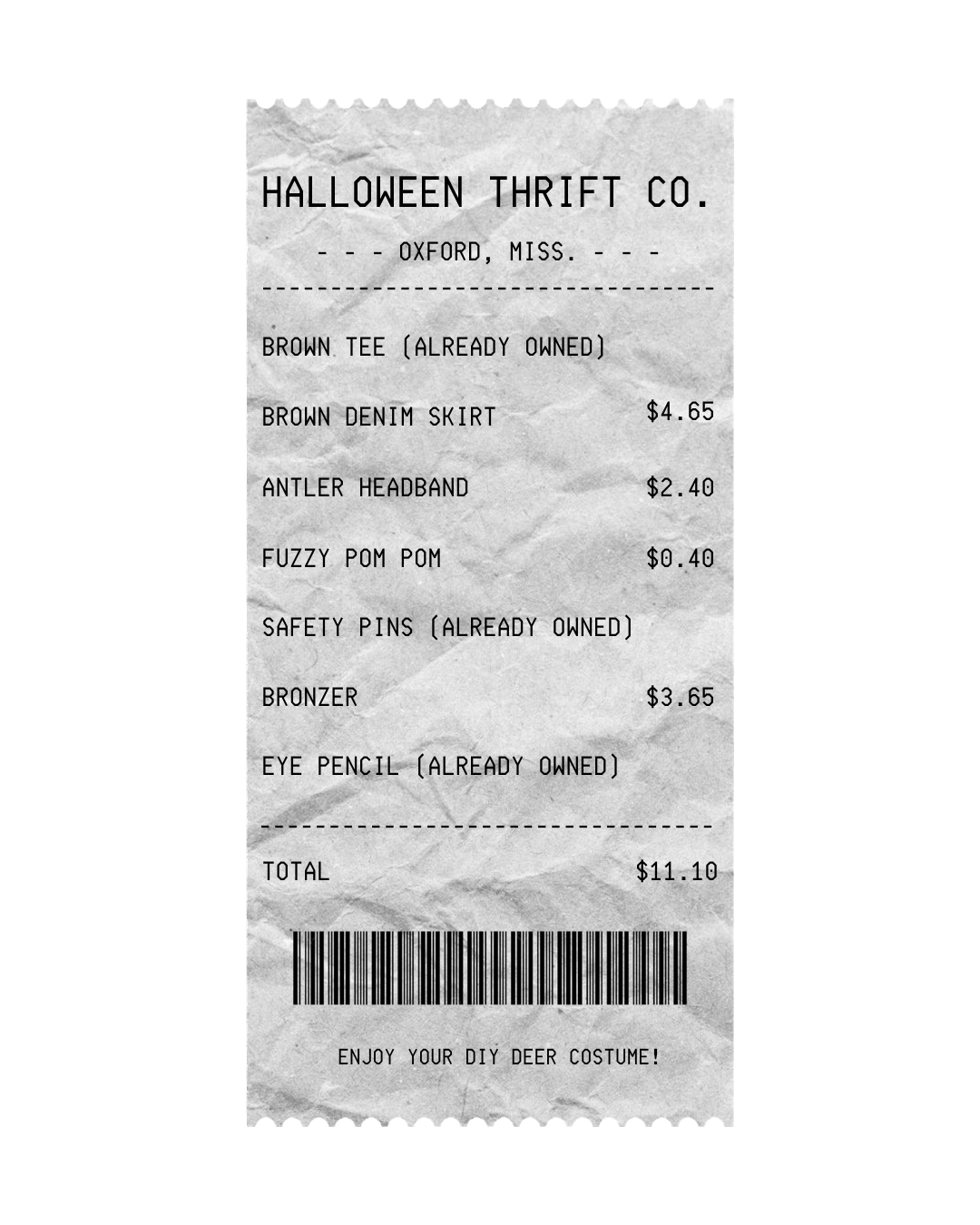
Ortwein is making a deer costume this year using clothing she already owns and secondhand items she plans to wear beyond Halloween.
Reusing clothing can help students reconsider how much they purchase for a single night. Halloween costumes often include inexpensive materials that are difficult to reuse, leaving people with outfits they may never wear again.
Johnson said the short lifespan of many store-bought costumes is one reason he prefers working with clothing he already owns.
“If you buy a costume, then once you’re done with it, you’re most likely never using it again,” Johnson said. “Using already existing pieces of clothing reduces waste tremendously.”
Ortwein said the environmental impact is another reason to reconsider buying a new costume every year, particularly when cheaper options are not made to last.
“Consumerism is dreadful for the environment, and a lot of the cheaply made plastic costumes are going to end up in a landfill,” Ortwein said. “I think thrifting is great because thrift stores have so many cool, unique pieces available.”
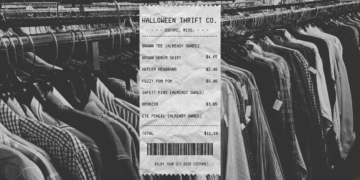
Thrifting provides students another way to find distinctive pieces without purchasing everything brand new. Hanson said costume designers in the theatre department frequently search for existing garments and materials that can be adapted to fit a particular vision.
“We often shop at thrift stores or repurpose a garment we already have by adding new detailing with scrap fabrics, trims or accessories to create something new,” Hanson said.
Although creating a costume can save money and reduce waste, Hanson said the process takes more planning than some people might expect. Designing a custom look requires time to research ideas, find materials and put everything together.
However, it does not have to be a wearying and tedious experience. Students do not have to start from scratch or figure everything out on their own. By making use of resources they already have access to, they can make the process more manageable and affordable.
For students who are unsure where to start, Hanson recommends looking at what they already have on hand before buying anything.
“(Go to a) thrift shop, see what exists in your own closet that can be repurposed to look like what you would like to create,” Hanson said. “See what friends or family members might have (that) they are looking to get rid of or would let you borrow.”
Students can also work with the skills and resources available to them. Those with sewing experience can transform existing garments, while students without sewing skills can combine thrifted clothing with pieces they already own. Hanson also suggested using accessories to personalize a look and exploring the university’s IDEA Lab as a resource for creative projects.
“What one person may be getting rid of might be the perfect item to help you create the custom costume you have in mind,” Hanson said.