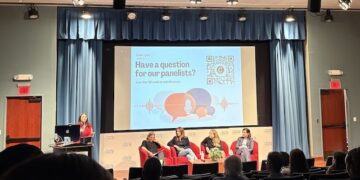



























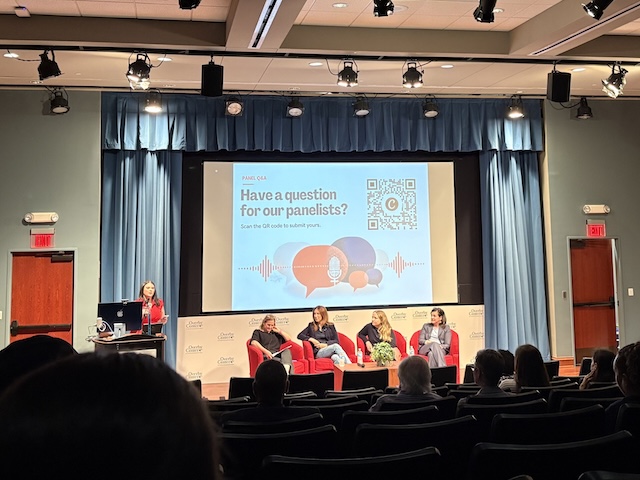
The Overby Center for Southern Journalism and Politics hosted The Justice Narrative: Investigative Journalism, True Crime and the Law panel on Oct. 22, featuring two highly acclaimed journalists and one law professional who discussed the impact that investigative journalism has on the legal field. The panel also reviewed several cases of wrongful imprisonment and the role that the media played in it.
Kate Rodemann, magazine and book editor and the director of nonfiction at the Vierto Library, served as the panel moderator and was joined by Madeline Baran, Pamela Collof and Laura Fernandez.
Colloff, author of “Catch the Devil,” participated in the panel to offer her approach to journalism and how modern-day true crime has impacted the law and delivery of justice. Her true crime book focuses on notorious conman and jail house informant Paul Skalnik and how he helped to send Jim Dailey to death row based on a reportedly false testimony.
Fernandez is a clinical lecturer in law and fellow in residence at Yale University’s Inman School of Law and was able to provide the audience with a law-focused approach. She worked alongside Colloff as Dailey’s lawyer.
Baran is a Pulitzer- and Peabody-winning investigative journalist and host of the popular true crime podcast “In the Dark.”
Collof opened by discussing Jim Dailey and Michael Morton, two people who were convicted of brutal crimes. Dailey was accused of murdering a 14-year-old girl in Florida, and Morton was accused of murdering his wife in Texas.
“Michael Morton, a man wrongly convicted of murdering his wife in Texas, was later exonerated, and because of his conviction and the immense media coverage following it, the legislation regarding open file policies in district attorneys offices in Texas was eventually changed,” Collof said.
Fernandez was asked about how a journalist’s involvement in a case would change a lawyer’s approach.
“I think it depends on the case,” Fernandez said. “We sometimes come to a different form of storytelling because there are so many unjust restrictions we can often do in our field. Every case is totally different. You just have to have the correct experience and know how to know what is appropriate and in what context.”
Lawyers typically do not allow their clients to speak to journalists, out of worry that their words could be used out of context, and Fernandez said that this is the case of her current death row client Jim Dailey, who was wrongfully imprisoned.
“Most journalists, … I don’t want you taking my client’s story out, because something terrible could come of this,” Fernandez said.
Fernandez and Collof both worked hand in hand throughout this case, Collof telling Dailey’s story of wrongful imprisonment and Fernandez representing him as a lawyer.
The panel went on to talk about the negative side effects of the popularity of true crime media.
Collof discussed how she had been invited onto a true-crime-themed cruise and how an event that sensationalizes such brutal true crime stories can deeply affect the narrative around how the general public views true crime cases and a client’s innocence or guilt.
“People who consume this don’t necessarily understand the difference between the hot take of someone who read a magazine article and speaks about it in their podcast versus years of investigative reporting,” Coloff said.
Baran also explained that most people do not do further research into these cases, which forces most people to have a very one-sided approach to brutal crimes.
“When I’m choosing a story, I really try to think about the public importance of the story and really think of the harm that this case actually had,” Baran said.
Collof also mentioned Curtis Flowers’ case, and how she and her team managed to gather so much information about him through their research. However, Collof explained that revealing their findings still did little to alter the outcome of the trial.
“In the case of Curtis Flowers, we were not naive as to where his case was at, but we felt it was very important for the courts to have access to our reportings. … We did a massive jury analysis and looked at all the trials and were able to establish a clear pattern within the county,” Baran said.