












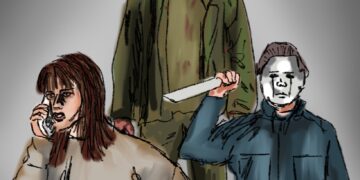


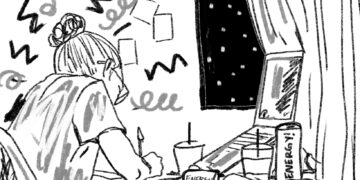








Halloween is the one day of the year when a person can transform into someone they cannot be the other 364 days. Some lean into the glitz and glamour, dressing as princesses, pop stars and breakout television stars. Others embrace the horror genre, becoming iconic figures from Michael Myers and Jason Voorhees to Sidney Prescott. But, in recent years, a more troubling trend has emerged: dressing as real-life killers and victims.
Whether it is mocking Gypsy-Rose Blanchard’s appearance, dressing as Jeffrey Dahmer after his portrayal in multiple Ryan Murphy projects or recreating the pink Chanel suit Jackie Kennedy wore during her husband’s assassination, these costumes raise an uncomfortable question: Where do we draw the line?
The morbid side of Halloween has always been embraced. Horror movies, haunting outdoor decorations and costumes that make other people look twice are standard practices of the holiday.
However, there is a fundamental difference between dressing as a fictional monster and recreating the appearance of a person who suffered or whose actions caused real human harm. When a real-life tragedy is minimized into a costume, the people affected become associated with the worst days of their lives rather than being seen as fully fleshed-out human beings with lives and experiences. Somewhere between the virality of true crime and Halloween costumes, the humanity of the people involved begins to disappear.
The popularity of true crime has undoubtedly influenced this shift. Streaming platforms and social media have transformed crimes into entertainment, often focusing on the psychology, appearance and notoriety of perpetrators while giving little attention to the impact on victims and their families.
Murphy’s “Monster” anthology and “American Horror Story” have introduced audiences to dramatized versions of real-life figures and tragedies. While these productions can spark conversations about violence, history and human behavior, they also raise questions about how easily suffering and pain can become a spectacle.
When a real-life killer becomes a recognizable character, the distinction between entertainment and reality begins to blur. Audiences become familiar with the person’s appearance, mannerisms and story. Eventually, that familiarity can make the individual seem less like a real person responsible for real harm and more like an evil character from a fictional television series. The horrible actions these people committed become secondary to their television “characters.”
Social media has further amplified this desensitization. Platforms like TikTok reward shocking and recognizable content because it is more likely to generate engagement. People understand that a costume depicting a real-life tragedy will generate attention, positive or negative, and could possibly even start a trend.
There is a belief that the more recognizable the character, the more successful the costume will be. However, people are forgetting those affected by these tragedies in the pursuit of attracting online engagement.
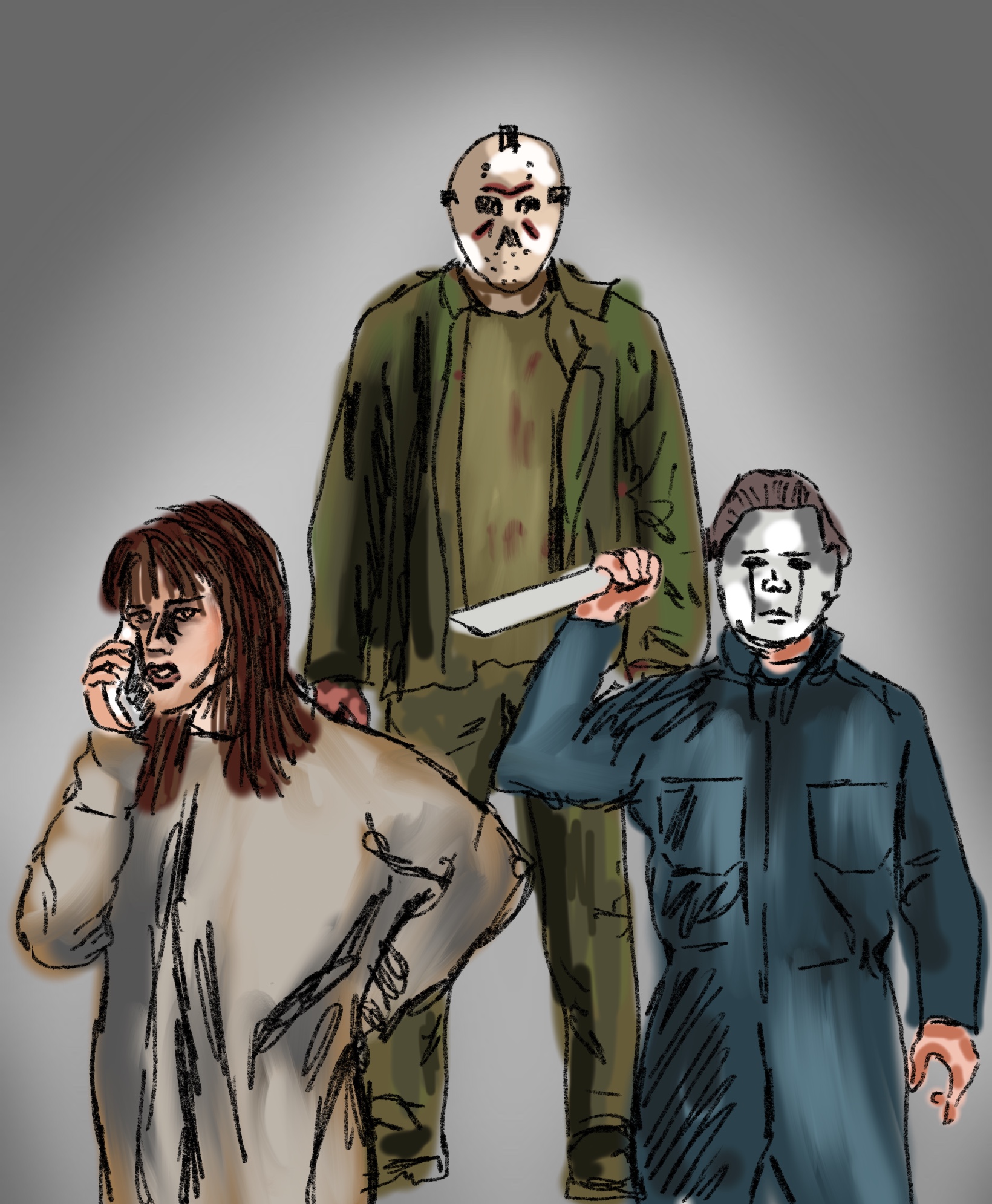
Consider the difference between dressing as a villain from a horror movie and dressing as a real-life serial killer or another sensationalized criminal. One pays homage to a character created for entertainment; the other glorifies someone responsible for human suffering as a source of amusement. Even if the intention is not to cause harm, the impact can still be insensitive. Dressing as real-life victims and killers does not separate these figures from the events that happened, and a lack of malicious intent does not eliminate the harm it causes.
This becomes even more complicated when costumes imitate and mock individuals’ trauma. Blanchard’s case, for example, involves years of abuse and a complicated relationship with her mother. Reducing her story to a Halloween punchline that makes fun of her childhood trauma strips away the events that shaped her life. Similarly, recreating Kennedy’s pink suit splattered with blood, which is seen as a symbol of a national tragedy, for a niche Halloween costume detaches it from the grief and fear surrounding the actual moment.
These examples reveal a troubling pattern in society: We often remember the appearances of individuals involved in tragedies more than the human experiences behind them. This effectively turns both perpetrators and victims into cultural references.
This is not an argument against Halloween or exploring real-life tragedies through entertainment. However, we need to recognize the difference between engaging with a story and exploiting the people who lived through it. We can appreciate horror and Halloween without glorifying real violence, and we can discuss these stories without reducing a victim to just another minor detail.
The question is not whether a costume is recognizable or creative. It is whether we have become so desensitized to consuming real-life suffering that we no longer recognize when our entertainment comes at someone else’s expense.
Halloween is a celebration of transformation, but it should not require us to abandon our humanity. Before turning a real person into a costume, we should consider the people who cannot separate that tragedy from their own lives. When real-life monsters become Halloween costumes, the most frightening thing is not the person we choose to imitate, but how easily we forget the victims who were hurt.
Lauren James is a junior integrated marketing communications major from Hernando, Miss.