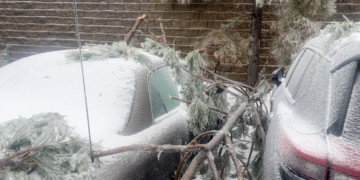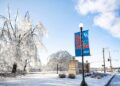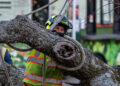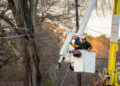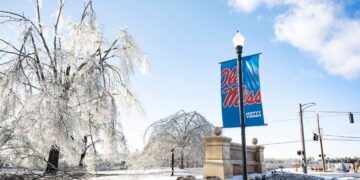
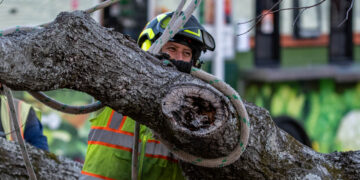

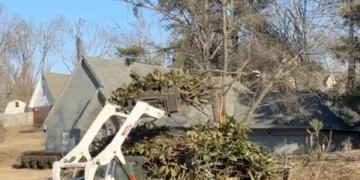

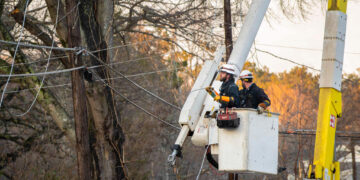

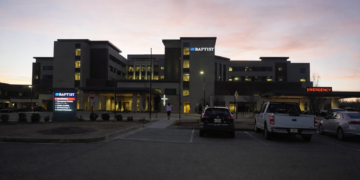

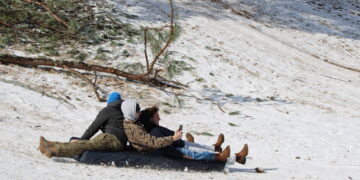






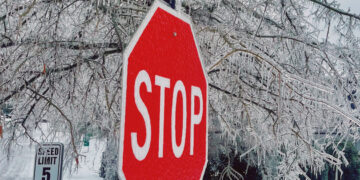


As Winter Storm Fern hit Oxford, many Oxonians and University of Mississippi students were left without power, water or a warm shelter.
“Nothing prepares you for hearing your neighborhood come apart in the dark,” Kitty Hurdle, a staff member for campus ministry Ole Miss Cru, said, describing her experience during Winter Storm Fern. “We thought we were prepared, but the reality of it was overwhelming at times.”
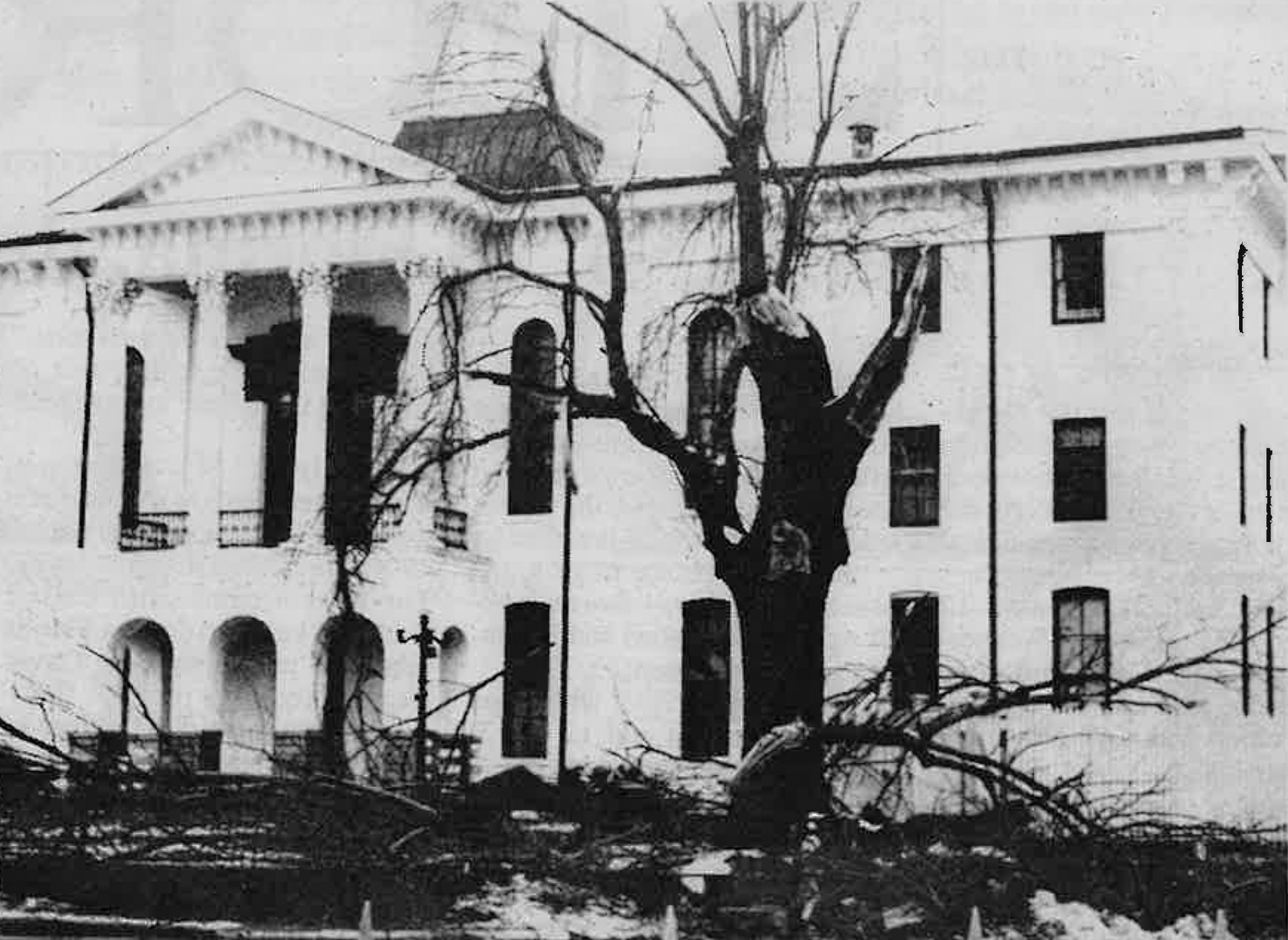
More than 30 years earlier, Oxford heard the same sound.
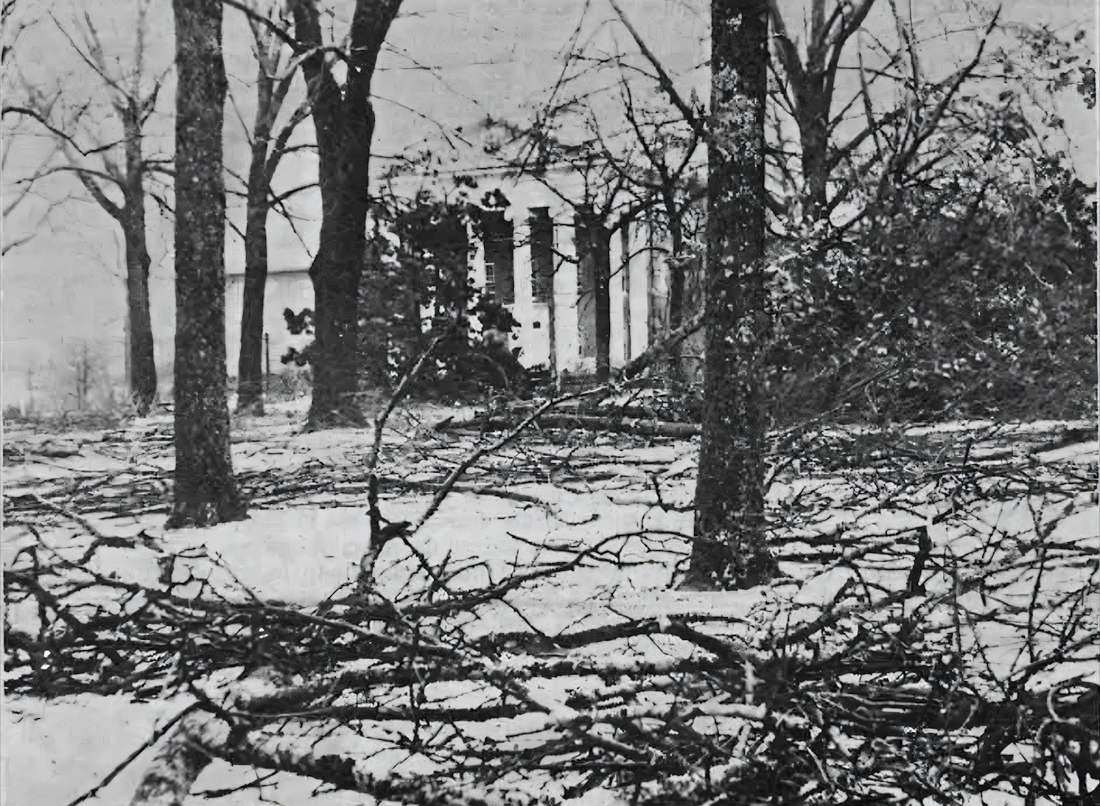
Gerald Turner, chancellor of the University of Mississippi from 1984–95 and now president emeritus of Southern Methodist University, shared his firsthand experience of the 1994 ice storm that hit Oxford.
“That night it sounded like somebody was out in the yard shooting shotgun shells. You’d hear a crack, then a boom, and then (the limb or the tree) would hit the ground,” Turner said. He and his family lived in Carrier House, the UM chancellor’s official residence.
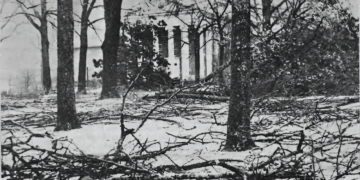
“The next day it looked like a tornado had come through the yard, the house, the campus.”
Like Fern, the 1994 ice storm left significant damage to buildings and surrounding infrastructure. The roads were obstructed for several days and cleanup crews were busy for close to a month.
“I’ve had lots of pictures sent to me, and I don’t know how you could tell the difference between what you have this year and what we had in ’94,” Turner added.
This year, the university informed students that the semester calendar would be shortened by two weeks, leaving dates for spring break and commencement convocation as scheduled.
While commencement was rescheduled in 1994, Turner recalls adding Saturday classes to students’ schedules to make up for class time missed.
“My memory is that we had some Saturday classes to make up some time, but I don’t remember us delaying commencement,” Turner said.
During Winter Storm Fern, the university opened the Gertrude C. Ford Ole Miss Student Union as a 24-hour warming center for community members without power. Turner recalled opening his doors at Carrier House for students, faculty and locals to use the hot water for showers during the ice storm.
“At that time, we had more generators. The chancellor’s house was only out for three days. We had a lot of people come to our house to get a hot shower,” Turner said.
During Fern, the power outage forced many Oxford businesses to close their doors. The historic Square Books was out of business for four days until power was restored and operations resumed.
Lyn Roberts, the current general manager of Square Books, worked as a bookseller there during the 1994 storm.
“I didn’t have power personally for a week, but after the first two days, I drove in every day to work,” Roberts said.
Square Books operated without power in 1994 and served as a community gathering spot for residents to mingle and buy books during the cold.
“The store was pretty busy, and there were a lot of people here because they could get a cup of hot coffee and see other people and buy books,” Roberts said. “There was really that community spirit and, of course, I’ve seen that community spirit this time but not so much because now everyone is so much more connected with social media. We are more connected in that way that we don’t necessarily have to see each other physically.”
Even with the power out, Square Books was able to manually maintain commerce and help Oxford cure their boredom.
“We just wrote down the books that we sold and did the cash register the old-fashioned way. We wrote down credit card numbers and rang it up after the power came back,” Roberts said.
A 91-year-old resident of Ellison Assisted Living of Oxford, Jimmie Sparks, remembers her experience in rural Lafayette County during the 1994 ice storm.
“We shivered. My husband had got a camp stove out, and we were able to cook on the camp stove. We had a wood furnace, so we had some heat and our hot water was heated,” Sparks said.
As in the aftermath of Fern, one good thing about the power outage 32 years ago was the quality time Oxford residents spent with loved ones.
“The best part was just the family time. We were comfortable and our planning beforehand really paid off,” Sparks said.
In 1994, the community of Oxford did not fail to come together and help one another.
“In times like this, people are incredibly cooperative. Everyone was trying to help everybody,” Turner said. “The resilience is just remarkable, even though the pain is really severe while it’s going on.”