



























Athletes are often extremely competitive individuals who strive to play in every contest, but where is the line drawn? At what point is the physical stress too much? There is a thin but distinct difference between programs getting the most out of a player, keeping them healthy and preserving their health for the next level without pushing a player past his or her limits to elicit injury.
Dr. Kurre Luber, Ole Miss Athletics orthopedic surgeon and a team physician, is well-versed on how to balance what is best for players’ health and the team.
“The bulk of it is prevention, not treatment,” Luber said in an interview with The Daily Mississippian. “That means staying in regular communication with strength and conditioning (staff) about training loads, catching small issues — a tendon that’s a little irritable, a joint that’s not moving quite right — … and using imaging and physical exams to track things.”
Sleep and nutrition are vital steps to preventing injuries and keeping athletes on the field. Luber works with athletes to reinforce those processes and identify injury sites or chronic overuse patterns over time.
Running back Kewan Lacy is a prime example of why it is important for athletes to manage their workload. Lacy’s performance and the weight he carried last season is unheard of in college football.
“(Lacy) carried the ball over 300 times last season, and he did it while staying available almost the entire year. That kind of workload doesn’t happen by accident,” Luber said. “It takes an athlete with genuinely exceptional durability and work capacity to begin with, but it’s also a credit to how closely our strength staff, athletic trainers and medical team monitored him week-to-week — adjusting practice reps, prioritizing recovery and treating minor issues early so they didn’t compound.”
When it comes to the intense pressure that players put on their bodies, Luber said the key for athletes learning to handle this burden is by doing it in increments.
“The body adapts remarkably well when the stress is applied progressively,” Luber said. “Bodies adjust well to gradually increasing demand; they adjust poorly to sudden spikes in load.”
Tissues can be made stronger and more resilient through increased exposure to strength training, repetition of movements that are commonly performed in games and frequent conditioning. Luber has used these processes to help athletes build up more power and get used to building stamina so that they will waste less energy when playing.
Professional football players like Matthew Stafford, Travis Kelce and T.J. Watt have played long, successful careers at a high level, even after injuries. On the other hand, some players’ careers end after one injury, or, if they do return, they lack the speed, burst or athleticism they once had. An athlete’s longevity, in part, comes down to how they treated their bodies leading up to their professional careers.
“Athletes who’ve been developed properly over time — good movement mechanics established early, consistent strength training, injuries managed correctly rather than played through — tend to hold up better than athletes with the same talent but (with) a rockier training or injury history,” Luber said. “Genetics and a bit of luck play a role, too.”
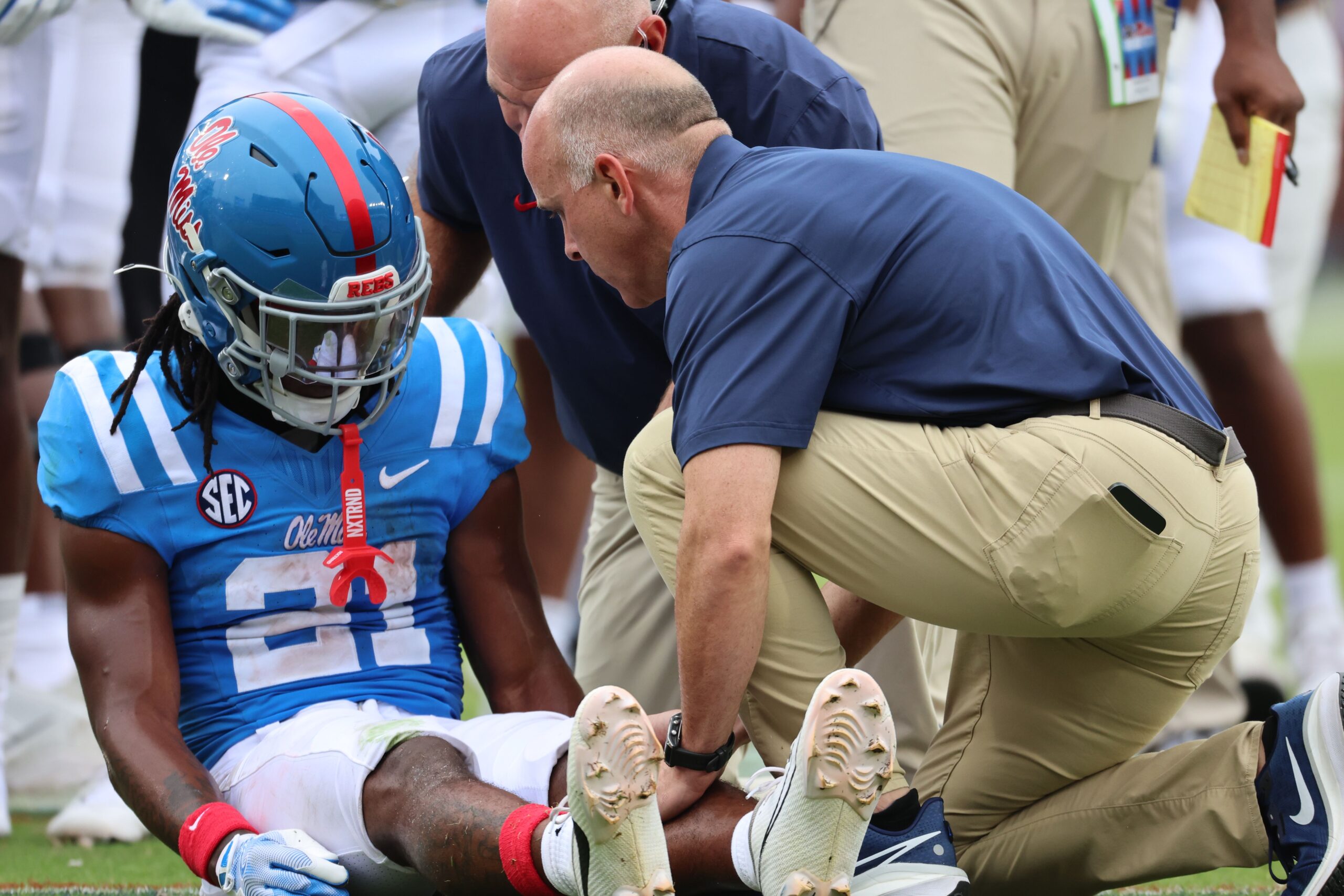
Position greatly affects the amount of wear and tear athletes see on their bodies and the longevity of their careers. Offensive lineman and running backs will sustain more impacts than quarterbacks or kickers who do not get hit quite as frequently.
The length of a season also affects how much stress an athlete sees. In the NFL, athletes play at least four more weeks of football than most college football players. Bodies have to be prepared for that extra time. Athletic staffs have to prepare for players to go through long seasons from the beginning, rather than just being responsive to an injury when it occurs.
“That includes conservative in-season load management on practice days, more sophisticated use of recovery tools and individualized soft-tissue work and offseason training built around adding durability, not just strength or speed,” Luber said. “Teams built to make a playoff run typically manage their key players’ snap counts and practice reps all season with that extended timeline already in mind. (Also), the NFL Collective Bargaining Agreement limits them to 14 full padded practices a year, so that limited contact helps.”
Keeping athletes off the field is where it gets difficult for coaches and physicians to limit a player. Athletes are competitive and almost always want to be in the game.
The athlete and the injury determine when the move is made to sit a player, and regardless of how much an athlete wants to participate, sometimes the medical team has to do what is best for the athlete’s health. Ultimately, every decision is made with the athlete’s best interest in mind.
“Our (medical staff’s) responsibility is to bring objective information into that decision — what the injury actually is, what playing through it risks and what the realistic recovery timeline looks like — rather than letting emotion or the moment drive the call,” Luber said. “I involve the athlete and, when appropriate, their family in that conversation.”
With injuries that can escalate in severity with extended play, such as concussions, the medical team has to hold firm regardless of an athlete’s eagerness to return to the field.
Coaches have to be aware of players’ injury statuses before every game and must communicate with medical staff. They take athletes’ reps into account from games and practices involving their injury.
“The biggest thing is cumulative load — not just what happens in the game, but what a player has already absorbed that week in practice, film sessions and conditioning,” Luber said. “Pushing a player because they’re available isn’t the same as pushing them because they’re ready.”