





























What was once a quiet college town, Oxford has now transformed into a nationally recognized destination for literature, food and SEC athletics. Few people have witnessed that evolution more closely than third-generation Oxford historian John Cofield, whose family has documented the city’s history for nearly a century.
Cofield’s grandfather, J.R. “Colonel” Cofield, moved to Oxford in 1928 as a professional photographer. He became friends with William Faulkner and photographed for Ole Miss yearbooks from 1931-61. His father, Jack Cofield, later served as the University of Mississippi’s official photographer, continuing the family’s role in documenting Oxford’s history.
“My granddaddy had his photography studio there on the Square, and my father had his office in the Lyceum,” Cofield said. “Preserving Oxford’s history is just natural for me. Dad and Granddad did it.”
As a lifelong Oxonian, Cofield has dedicated years to preserving the city’s past through books, photographs and stories passed down through generations of local families. His work has given him a unique perspective on how Oxford has evolved alongside the university while still maintaining the character that first made it home.
“People today complain that (old Oxford) is gone, but you either go forward or you go backward,” Cofield said. “We had to go forward, and we did.”
Although he acknowledges that Oxford looks much different than it did during his childhood, Cofield believes the city’s core identity has remained consistent. The university has set Oxford apart from other Mississippi towns. While the city maintained a close-knit community, UM brought energy, traditions and events that made Oxford unique.
During Cofield’s childhood in the 1960’s, downtown Oxford was built around everyday necessities rather than tourism which began to change in the 1970’s. The square used to have family owned businesses like Morgan’s Jewelry which operated through the 1970s and 80s’ but closed in 1984. There were also businesses built for usability like The Gathright-Reed Drugstore established in 1923 which later moved off the square.
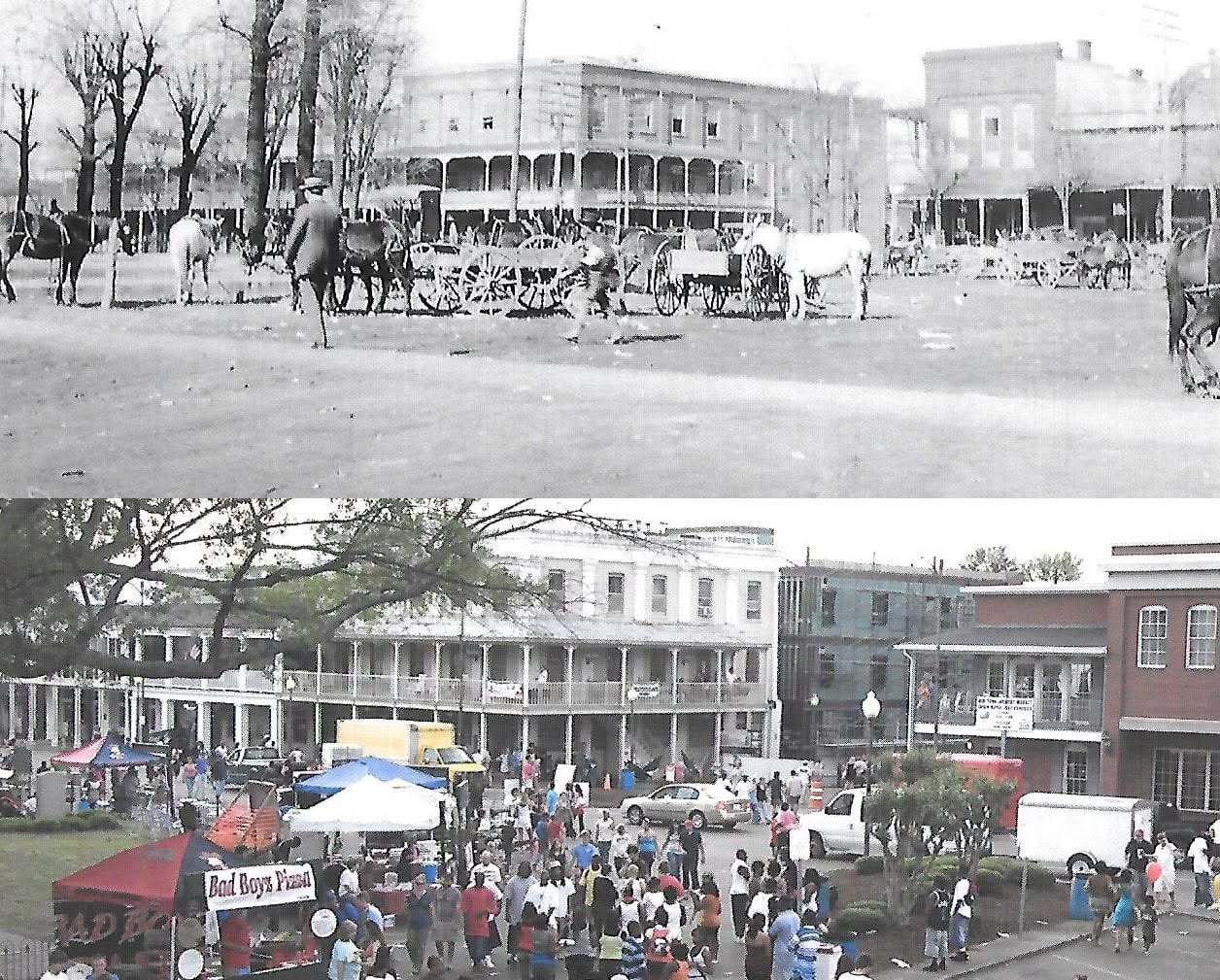
“There were a couple hardware stores, several drugstores and a lawyer’s office or two. It wasn’t anything like it is now, with boutiques and shops,” Cofield said. “There was no bar district. That bar district down there, between Van Buren (Avenue) and Jackson (Avenue), wasn’t there.”
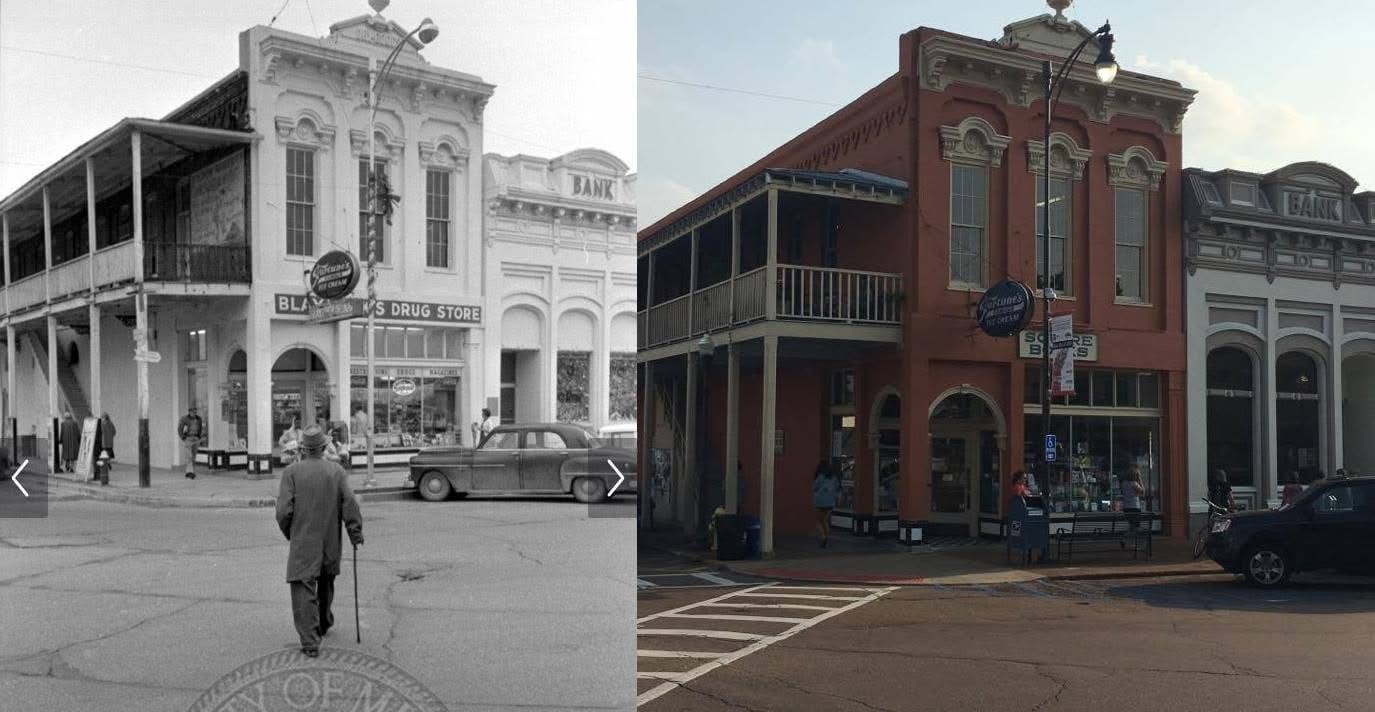
The square began to change dramatically in the 70s, with the addition of Square Books. The bar district was pioneered by The Warehouse, The Gin and The Hoke in the 70’s and 80’s into what it is today. With additions like City Grocery in 2009, and Yaya’s Frozen Yogurt in 2010, it started to become a food district which has only continued to expand.
“The Square evolved like Oxford evolved, with changing times,” Cofield said. “It got stronger and bigger.”
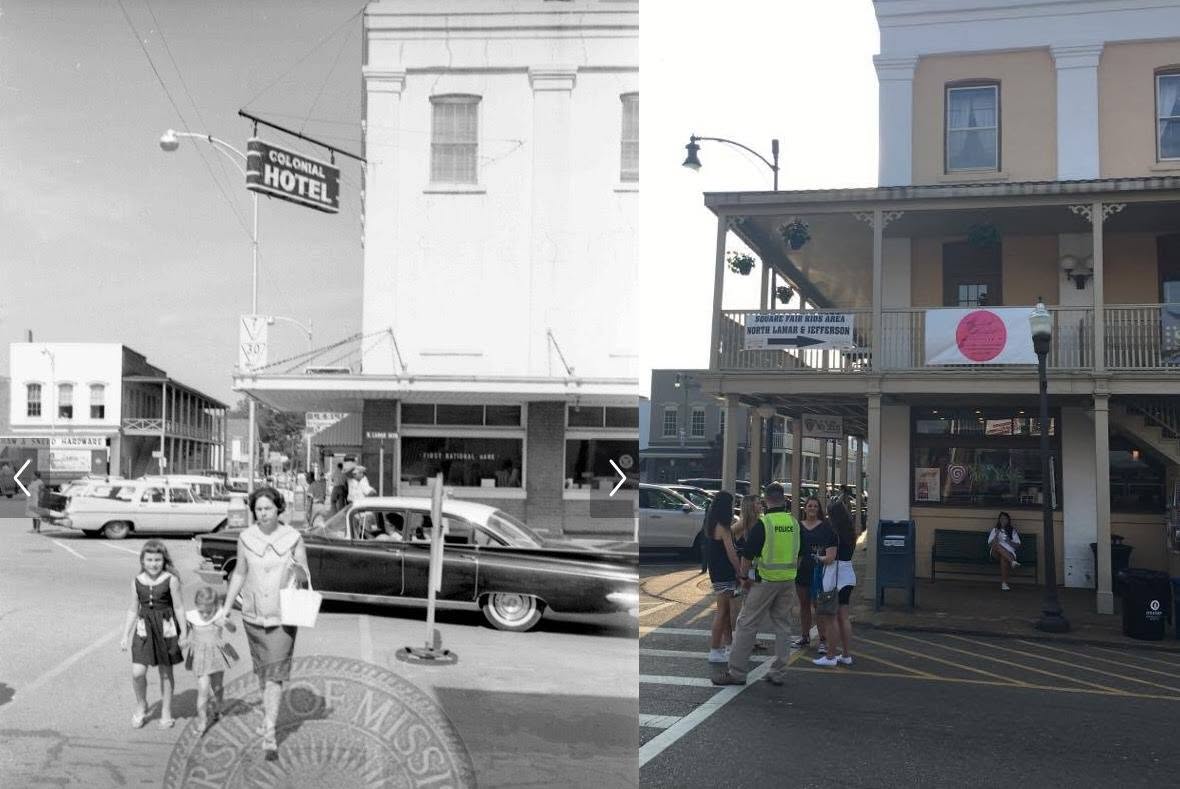
While businesses have come and gone, Oxford’s physical landscape has expanded far beyond the Square. In the 70’s the Square began going through private restorations and rehabilitation activities driven by groups like Oxford Ltd. historic preservation efforts sought to protect pieces of the city’s past from disappearing entirely, new subdivisions for example, have replaced land that was once dedicated to hunting and fishing,
“There are these subdivisions I’ve never seen before that were hunting and fishing territory when I was a kid,” Cofield said. “Somebody will ride me out there and turn me down (a road), and it’s 15 large homes I didn’t even know were down this road.”
As development accelerated, Oxford began preserving what remained of its historic character. Neighborhoods surrounding the Square, including North and South Lamar Boulevard, became designated historic districts in March 2009, a qualification which placed restrictions on how homes can be altered in an effort to protect the city’s architectural identity.
“Now, finally, we declared it a historic district,” Cofield said. “You can’t even repaint your house without the color being approved nowadays.”

As the university’s influence expanded beyond employment, it also began reshaping Oxford’s identity through arts, food, and athletics. What had long been a college town gradually became a tourist destination, driven in large part by Ole Miss Football.
“Oxford changed when Ole Miss quit playing football in Jackson, (Miss.,)” Cofield said. “People don’t realize that, but suddenly, LSU and Alabama and (Mississippi) State were all on campus.”
A series of milestone moments over the following decades confirmed that transformation including Eli Manning leading the Rebels to a win in the 2003 Cotton Bowl. Another milestone was the football victory that symbolized Oxford’s arrival on the national stage in 2014 against Alabama.60,000 people flooded the square after the win, celebrating more than the game.
“When we beat Alabama in football in 2014, and the students took the goalpost down (and) brought it to the Square, I realized we weren’t just local. We weren’t just a Mississippi college anymore,” Cofield said. “We were becoming our own brand, and it’s not us versus (Mississippi) State and (the University of ) Southern (Mississippi) anymore. We’re a national brand.”
As Ole Miss continued to gain national attention, Oxford’s reputation grew alongside it. The town became known for its literary history and Southern charm, but athletic accomplishments and traditions had a large influence. The addition of the Walk of Champions and legacy of Chucky Mullen’s resilient character continued to push the positive reputation around the university . These changes have drawn visitors and prospective students from well beyond Mississippi.
“They’re throwing beer in the outfield and (Ole Miss Baseball is) winning the national championship; we’re in the Grove rushing the football field and beating Georgia in the Sugar Bowl,” Cofield said. “To all these teenagers around the South, that looks like a whole lot of fun. They’re ready to get here (and) have fun, and they come in with a good spirit. They come in ready to love the place.”
But even as athletics helped redefine Oxford’s image, the town did not lose the literary legacy that first put it on the map. For generations of readers, writers and scholars, Oxford remains heavily influenced by author William Faulkner, the winner of the 1949 Nobel Prize in Literature, whose work continues to draw visitors from over 58 countries, all 50 states and over 20,000 people from around the world.
“When (Faulkner) died, he belonged to the public,” Cofield said. “You can go out to Rowan Oak right now, and you’ll find people speaking Japanese, French and Russian. They travel all this way to Oxford just to be close to William Faulkner.”
For Cofield, however, Oxford’s appeal has never been defined solely by its icons, landmarks or traditions. What has kept people connected to the town is the sense of community that has endured alongside its growth.
“There’s a real community spirit in Oxford that I’m not sure other towns have,” Cofield said.
That sense of community has remained the town’s defining characteristic, even as Oxford has evolved into a nationally recognized destination. After decades spent documenting Oxford’s past, Cofield believes its future lies not in resisting change but in remembering what has made the town worth preserving.
“My dad would lean back and take a sip of Scotch and say, ‘Well, it’s still Oxford,’” Cofield said. “It’s still ours, and Granddad would agree too. You can still go up on Square Books balcony and look at the city hall over there, and Neilson’s (Department Store). That view has not changed a little bit.”