


















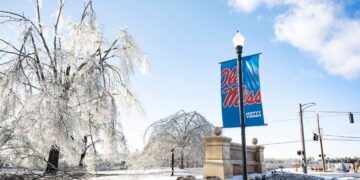
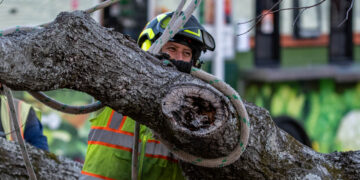
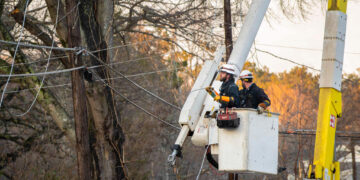



Winter Storm Fern wreaked havoc on greenery across campus in January. While there is still much work to be done, the university’s Department of Landscape Services and independent contractors are working hard to bring the campus back to life.
Chancellor Glenn Boyce detailed the storm’s environmental impact on campus in a letter sent to university stakeholders last week. He described the university’s preservation efforts and the extent of damage to campus landscaping.
Of the more than 130 tree species on campus, red oaks and maples fared the worst. Trees were removed entirely if they met one of the following conditions: losing 30%-40% of their canopy, losing larger limbs on one side of the tree or by losing their resilience with age.
While much of the university’s greenery survived the storm, there is still a sizable amount of foliage to be removed.
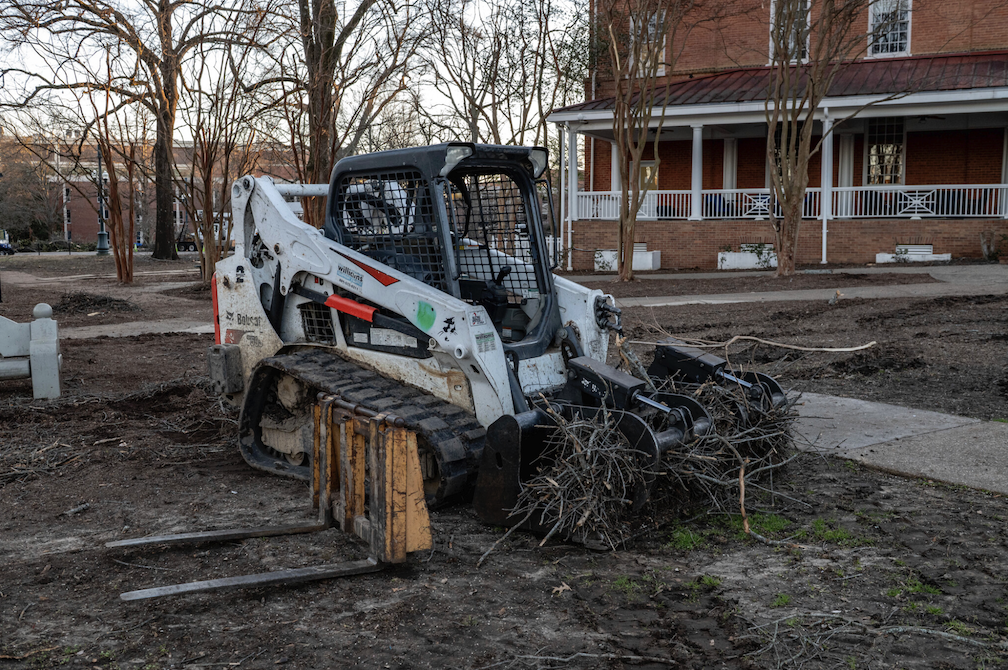
“We estimate 95% of the trees weathered the storm pretty well, but we have 14,000 trees on campus,” Nathan Lazinsky, director of landscape services, said. “I think we’ve already pruned over 2,100 trees in … about 10 days now. So it’s been rocking and rolling.”
Lazinsky estimates that the remaining 5% of trees, around 700, will have to be removed in the coming weeks.
He fears the process may be lengthy and continue into the future due to budget and government regulations. The university, he said, has requested funds from the Federal Emergency Management Agency to offset the costs of landscaping damage.
Despite the damage seen across campus, landscape services and contractor teams have high hopes for restoring injured landscaping.
“Our hope is to make it better than it was before. And again, that’s a hard pitch to catch. But I’m going to do my best to do it, and I know our team will too,” Lazinsky told The Daily Mississippian.
Boyce said the university plans to replant a tree for every one cut down following Fern. He emphasized his faith in landscape services and contracting teams to restore the former beauty of the UM campus.
“Those in our community who were here in 1994 remember a similar storm and the recovery that followed,” Boyce said. “Our landscape rebounded, and it will do so again. The trees we plant today will grow and serve our campus for decades to come.”
The landscape services team includes experienced International Society of Arboriculture Certified Arborists, qualified in tree risk assessments useful for evaluating storm damage, and partnering ISA Certified Arborist consultants.
The 5% of trees that cannot be recovered, according to Lazinksy, will largely be chipped and repurposed elsewhere. Some logs, especially those that hold some sentimental value, may be repurposed to build furniture.
“We have a natural debris site that we use on campus,” Lazinsky said. “Typically, we use that as our treecycling program. We chip everything up every two, three years and then repurpose those chips on campus.”
Treecycling is the process to sustainably reuse trees to be made into mulch or compost.
In addition to landscape services, contractor teams are also working on the ground. Woodland Tree Service is the primary contractor for rehabilitating the Grove and Circle following the aftermath of the storm.
Terran Arwood, president of landscaping contractor Woodland Tree Service, said that the damage of the storm was difficult to anticipate.
“For the people that are involved in the leadership here, this is probably a once-in-a-career, once-in-a-lifetime type of thing, so nobody’s prepared for it,” Arwood said.
The landscaping team faced complex challenges over the past two weeks. Both Lazinsky and Arwood voiced difficulties regarding getting their employees to job sites.
“There’s two weeks straight in the early part of it (Winter Storm Fern), we’re driving down here in slabs of ice, and then the interstates closed,” Lazinsky said. “There’s no place to stay here, so you’re talking about 20-hour days.”
These difficulties result in fewer staff members showing up, meaning less efficient cleanup efforts.
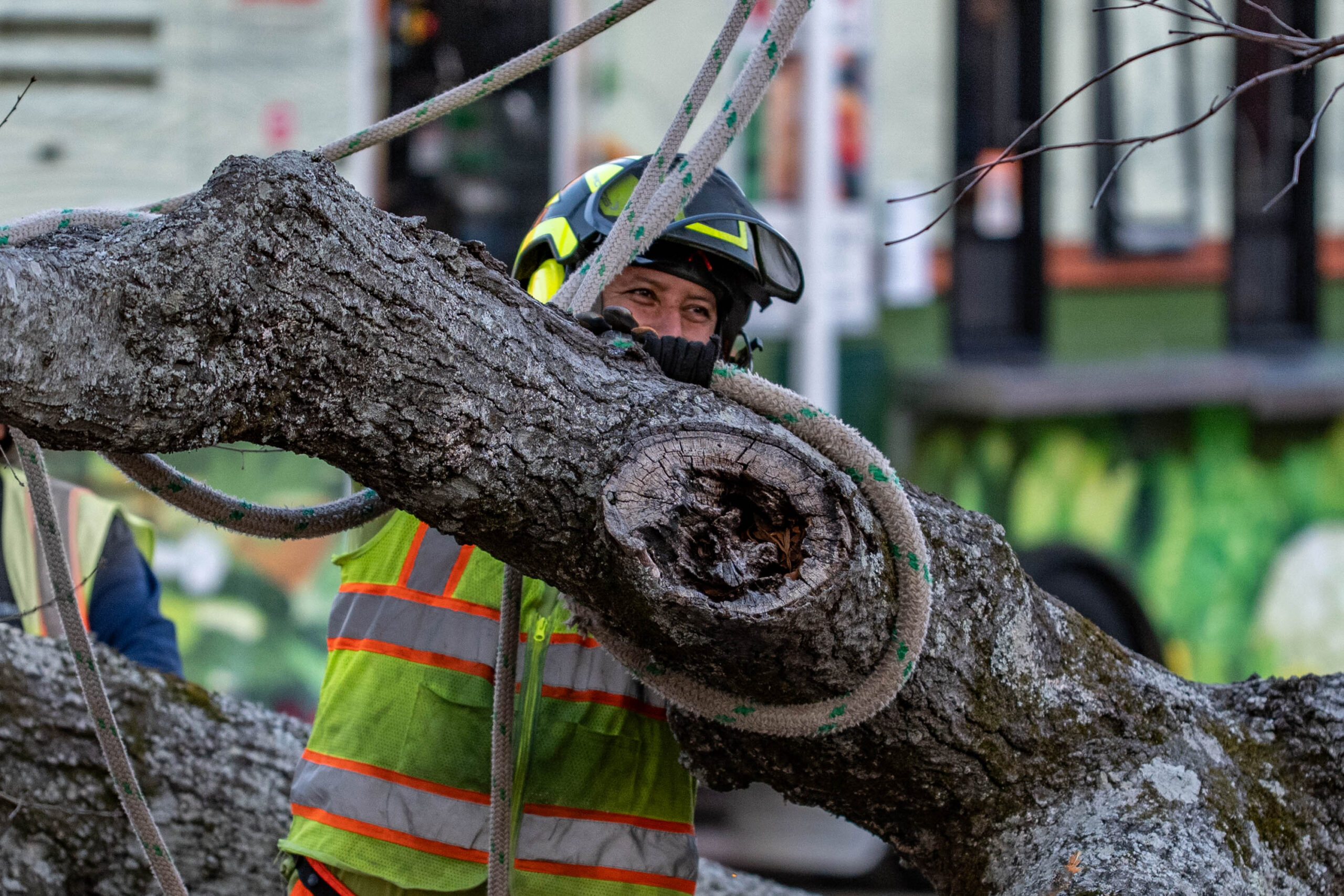
“Our staff had a few reporting in the last two weeks, but some didn’t,” Lazinsky said. “I mean, we probably had a third of our staff reporting in.”
However, both groups remained dedicated with several employees who began cleanup efforts during dangerous conditions. Lazinsky gave credit to his staff members who reported to campus during the two-week university closure, noting that many had no power, water or heat.
“They take a lot of pride in what they do, and obviously by showing up here, cutting their way to work without water and power,” Lazinsky said. “To me, when you have a team that’s brought in with pride … you can’t stop that.”
Both Woodland Tree Service and UM Landscape Services have been put to the test repairing damage from Winter Storm Fern, yet the workers remain resilient and positive that they will restore campus to a condition even better than before.
“I think the layperson, if they came and visited next fall for a tailgate, I don’t think that they would honestly even notice it,” Arwood said. “In some way, they’re even safer now than they were before the storm because there’s a lot of reduction of weight.”
Editor’s Note: A quote regarding employees showing up to job sites previously attributed to Terran Arwood has been correctly attributed to Nathan Lazinsky.