













Freshmen first arriving on campus face a host of challenges as they navigate a new chapter of their life, including finding close friendships. Many freshmen leave their old connections in their hometowns, and some start completely from scratch in terms of developing a social circle.
It can be hard to determine which groups and communities at the university will be the best fit, and putting oneself out there is scary and overwhelming for many. However, all freshmen have access to a guaranteed and close-proximity community that is found in their dormitories.
Certain dormitories on the University of Mississippi campus have decided to take advantage of their living situations to encourage residents to build relationships with one another, planning social events that promote engagement and camaraderie.
Residential College South, Luckyday Residential College, Burns Hall, Pittman Hall and Minor Hall, with the combined efforts of housing staff and resident assistants from each residence hall on campus, have programming that allows for strong community ties.
These dorms have found that by emphasizing community-building through events for fostering student-student relationships and student-faculty relationships, students develop long-lasting connections that can curb feelings of isolation and loneliness.
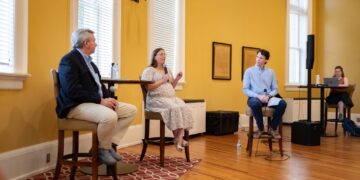
Rory Ledbetter, an associate professor of theatre arts, is the senior faculty fellow at RC South. In his position, he works closely with residents to bring educational growth and interpersonal connections to the RC South living community.
“This is a residential college. It’s where you’re not just going to come here and stay, but you’re going to have a residential experience. Things are going to happen because you live here … under the same roof where you sleep and where you study, you will be able to interact with the world and discover new things,” Ledbetter said. “We have about four (registered student organizations) having meetings in the building, so immediate access to what’s beyond the university. My whole mission has been, ‘How do I bring the university into the RC South, and how do I bring the RC South residence out into the university?’”
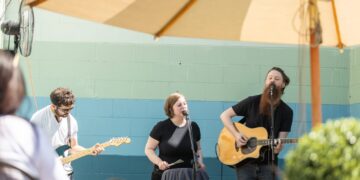
Registered student organizations like UM Jam, UM Poetry and UM Ignite have connected with the RC South community through using its facilities to practice and hosting events in The Dish dining hall. Residence halls like RC South and Luckyday consistently plan weekly activities and social gatherings for people all across campus to participate in.
Many of the events hosted within dorm buildings are not limited to the students that live there, allowing for dorm programming to have a broader impact across campus.
Chelsea Bennett is the director of the Luckyday Scholars Program and works closely with Luckyday Residential College and Luckyday Scholars. Bennett says that these community-building events in dorm facilities help build inter-resident relationships that last throughout students’ college experience.

“One of the questions that we ask (senior Luckyday scholars) is ‘What was the biggest benefit?’ The thing people consistently say is that living together in the Luckday Residential College is where they met their friends, and they still have the same friends as a senior,” Bennett said. “Living in this space kind of solidified those relationships and those friendships that they’ve been able to sustain over the course of their tenure here.”
Jacqueline Dibiasie-Sammons, associate professor of classics, is another administrator at Luckyday, and she acts as the senior faculty fellow at Luckyday Residential College. She plans the programming at Luckyday and works with a student cabinet that helps prepare and put on events for the dorm as well.
“We had a retreat … and (on) the first day of the retreat, there was a student who was extremely quiet, extremely shy, sitting by himself,” Dibiasie-Sammons said. “We did this bingo game where we … went around to the different buildings, and they played bingo as they went. As we were doing that, I saw him start to connect with the other students, and by the end of the night, he went to one of the canvas events with a group. Having those community events in that atmosphere allowed those connections to be made and still to this day, I always see him with a big group.”
Housing staff and resident assistants also play a crucial role in building community on campus. Resident assistants are upperclassmen hired by the university to watch over the residents in their assigned floor and section, acting as leaders for students living under their jurisdiction.
Alex Grimes is a sophomore accounting major from Richland, Miss., and is the resident assistant for the first floor of Residence Hall One.
“(Planning activities is) a good way to get people interacting in the close proximity of the (dorm) building to know your RA’s and building staff and to know your neighbor,” Grimes said. “It helps (people) feel less lonely.”
Loneliness and isolation are two common struggles for new students on a college campus, but dorms are in a unique position to combat these issues by intentionally fostering community.