


















The new College Football Playoff format has been criticized for multiple reasons — chief among them, perhaps, is the overlap of coaching hires with the postseason.
However, the coaching carousel is not actually that big of a problem. The phantom issue stems from one person: Lane Kiffin.
Since the college football playoff expanded to 12 teams, non-playoff bowl games have become increasingly meaningless as players — and, in this case, coaches who have taken jobs at other programs — opt out. (Of course, some bowl games have cleverly danced their way into prominence. Most college football fans look fondly upon the Pop-Tarts Bowl due to the shenanigans of the ridiculous, yet hilarious, Pop-Tart mascots.)
This issue of premature coaching departures extends even to the long-gone Bowl Championship Series (BCS) era, but today’s debate surrounds teams competing for national championships in the College Football Playoff.
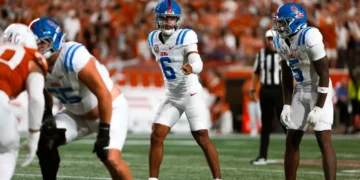
Kiffin has been the enigma at the forefront of controversy this season. Over 20% of DI FBS schools will have a new head coach for the 2026 season, yet most media and conversations focused on the muddled Ole Miss-LSU relationship.
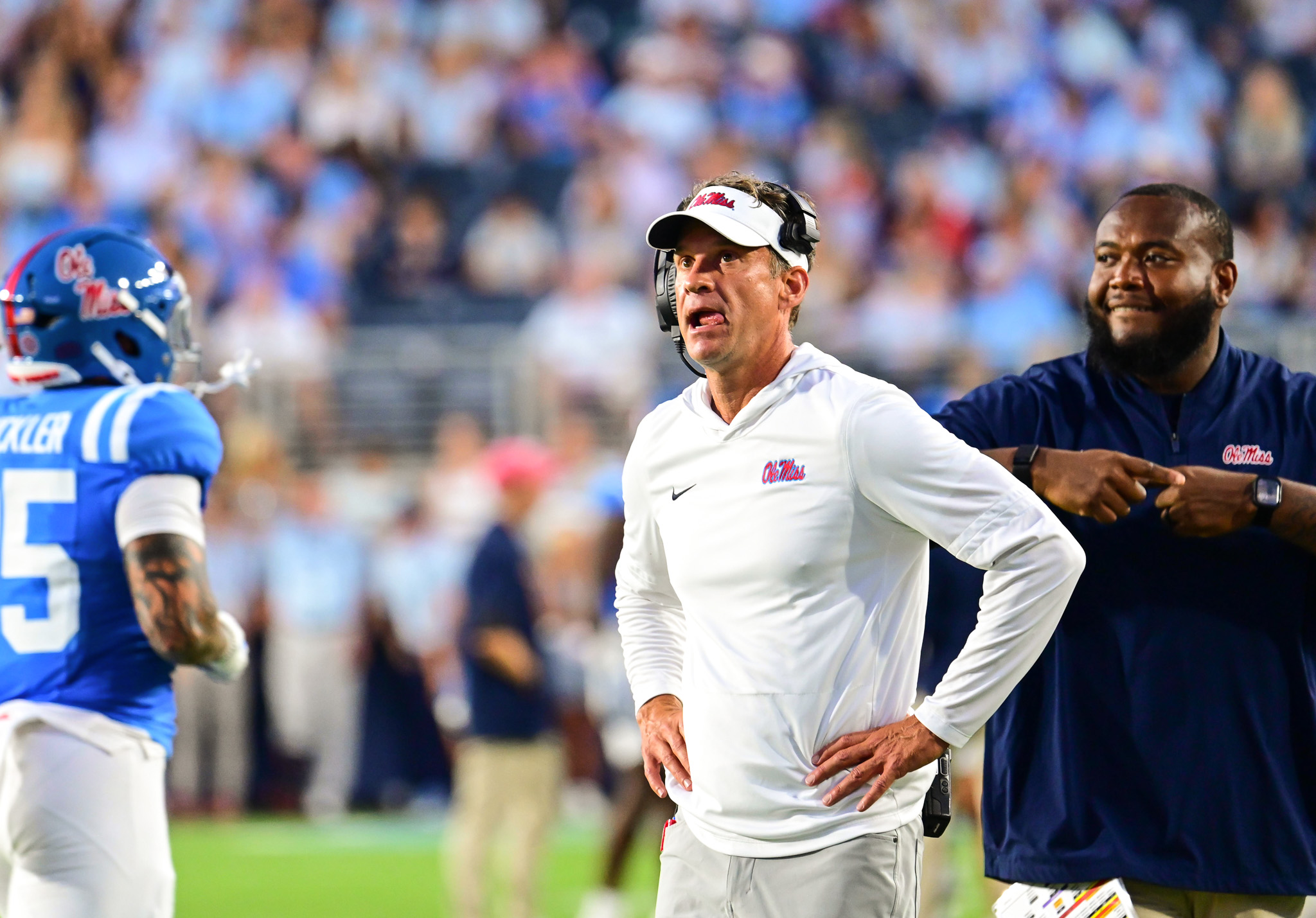
Why is this the case? After all, current Ole Miss head coach Pete Golding, while speaking to the media ahead of the Fiesta Bowl, stated that he believes Ole Miss’ situation is not much that different from other schools whose coaches have been hired to other programs.
“Everybody does this,” Golding said. “Everybody is targeting us on this. There’s multiple teams that have coordinators that have other jobs — they’ve taken head jobs everywhere else. Every year that I was at Alabama that we went to the playoffs, we had coordinators and assistants that had other jobs.”
Yet Golding may be underestimating the uniqueness of Kiffin’s manner of departure. Take, for example, Oregon — who, like Ole Miss, lost its offensive and defensive coordinators to head coaching jobs at Kentucky and Cal, respectively.
However, the issue with this analogy is that these two coaches were not actively disrupting the order of Oregon’s coaching staff. Neither Will Stein nor Tosh Lupoi actively disrupted Oregon’s coaching hierarchy during the playoffs; neither made ultimatums to position coaches which forced them to abandon Oregon before the playoffs were over, which Kiffin did with Ole Miss coaches.
In fact, Lupoi described what it would take for him to leave Oregon before they finished the playoffs.
“I made it clear on every one of those Thursday-night interviews that I will not participate or even consider the job without finishing through our season,” Lupoi said. “I made it very clear that over my dead body would I ever leave the individuals here.”
The last time a coordinator of a playoff-bound team who had taken a job with another school departed before the playoffs ended was (unsurprisingly) when Kiffin, then the offensive coordinator at Alabama, took the head coaching job at Florida Atlantic University. Head coach Nick Saban forced Kiffin to leave only one week before the national championship because he thought that Kiffin was too distracted.
Moreover, Kiffin sowed strife among Ole Miss’ staff by forcing position coaches who intended to take jobs at LSU next season to leave before Ole Miss’ playoff run had ended.
This was the ultimate slap in the face to Rebel fans. It would be more understandable if Oregon’s coordinators left their playoff run to take a head coaching job at an SEC or Big 10 program. It is less forgivable for Kiffin to create such a tizzy over an offensive coordinator and positional coaches, who were stepping into arguably equivalent roles at LSU.
Another wrinkle is that Kiffin left Ole Miss for a bitter interconference rival. It is a rare occurrence, which is another reason why Tulane’s head coach Jon Sumrall, Oregon’s coordinators or James Madison University’s head coach departures carry less impact.
Kiffin blew his leaving out of proportion because Ole Miss refused to allow him to coach the team during the most important stretch in its history and simultaneously coach one of its biggest rivals.