



























President Donald Trump is considering signing an executive order to reel in NIL and set guardrails. Congress is also working on the Student Compensation and Opportunity through Rights and Endorsements (SCORE) Act — which would allow the NCAA to set transfer regulations — and two senators recently agreed to amend a decades-long sports broadcasting act.
Nearly a year after the House v. NCAA settlement, the fear of losing women’s and Olympic sports, TV deal issues, NIL problems and rampant transferring, the federal government has decided to take further action.
The House settlement allowed athletic departments to directly pay student athletes. This marked what many thought was the point of no return for college athletics, but recent comments from Trump have brought this into question.
Roundtable
The College Sports Roundtable is a group of commissioners, coaches, media executives, athletic directors and professional sports executives assembled by Trump to “probe what ails college sports — and how to fix it.”
The group met on Friday, March 6, to talk about the future of college sports. Members discussed NIL collectives, the SCORE Act, the transfer portal and the Olympics. Television rights are also a controversial topic amongst college sports executives.
All Power Four conference commissioners attended the roundtable, along with American Athletic Conference commissioner Tim Pernetti, Notre Dame Director of Athletics Pete Bevacqua and longtime college football coach Nick Saban. Most attendees did not speak.
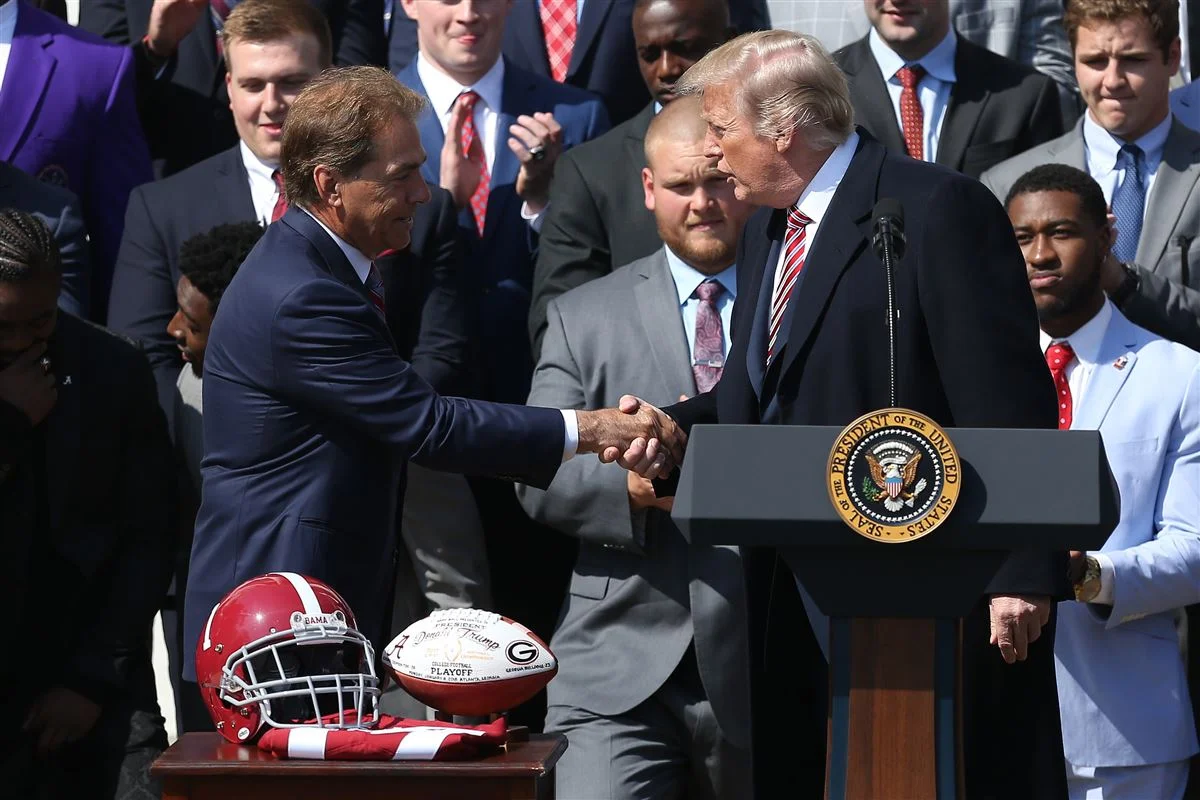
Trump blames the courts for the current state of college athletes. He specifically cited the Supreme Court’s 9-0 decision in the NCAA v. Alston case, which determined that it was illegal to limit education-related compensation. A lower court originally arrived at this decision; the NCAA brought it to a higher court, which agreed with the original court. The U.S. Supreme Court affirmed this decision in 2021.
Trump announced that he plans on signing a second executive order, college football writer Ross Dellenger reported on March 6.
“Donald Trump plans to release a second executive order – this one ‘more comprehensive’ – that, it appears, will return college sports to concepts of the pre-NIL era,” Dellenger said.
He originally signed a prior one on July 24, 2025. Entitled “Save College Sports,” the order “intended to protect and preserve college athletics.” It states “it is the policy of the executive branch that third-party, pay-for-play payments to collegiate athletes are improper and should not be permitted by universities.”
However, the first executive order carried little value since its provisions were not legally binding.
“I will have an executive order within one week, and it will be very all-encompassing,” Trump said at the meeting, according to ESPN reporter Heather Dinich. “We’re going to put it forward, and we’re going to get sued and we’re going to see how it plays, but I’ll have an executive order which will solve every problem in this room.”
Trump has yet to sign the second order. While an executive order did not come within a week of the roundtable meeting, Dellenger reported that Trump’s staff had begun drafting the order.
“The goal of the order is, more so, to spur Congressional action, including movement on the SCORE Act,” Dellenger said on March 13.
Dellenger reported on March 19 that any vote for the SCORE Act has been pushed to mid-April at the earliest.
While the order seems to be a motivator for Congress, its contents reflect some of the biggest issues that college sports face: employment, transfers, eligibility, collectives and Olympic sports.
Former Ohio State Football head coach Urban Meyer said that collectives should go away.
“Donors put money in a pot. It’s distributed to the players through coaches and managers,” Meyer said, according to Dinich. “That’s not allowed. Not supposed to do that. That’s pay-for-play.”
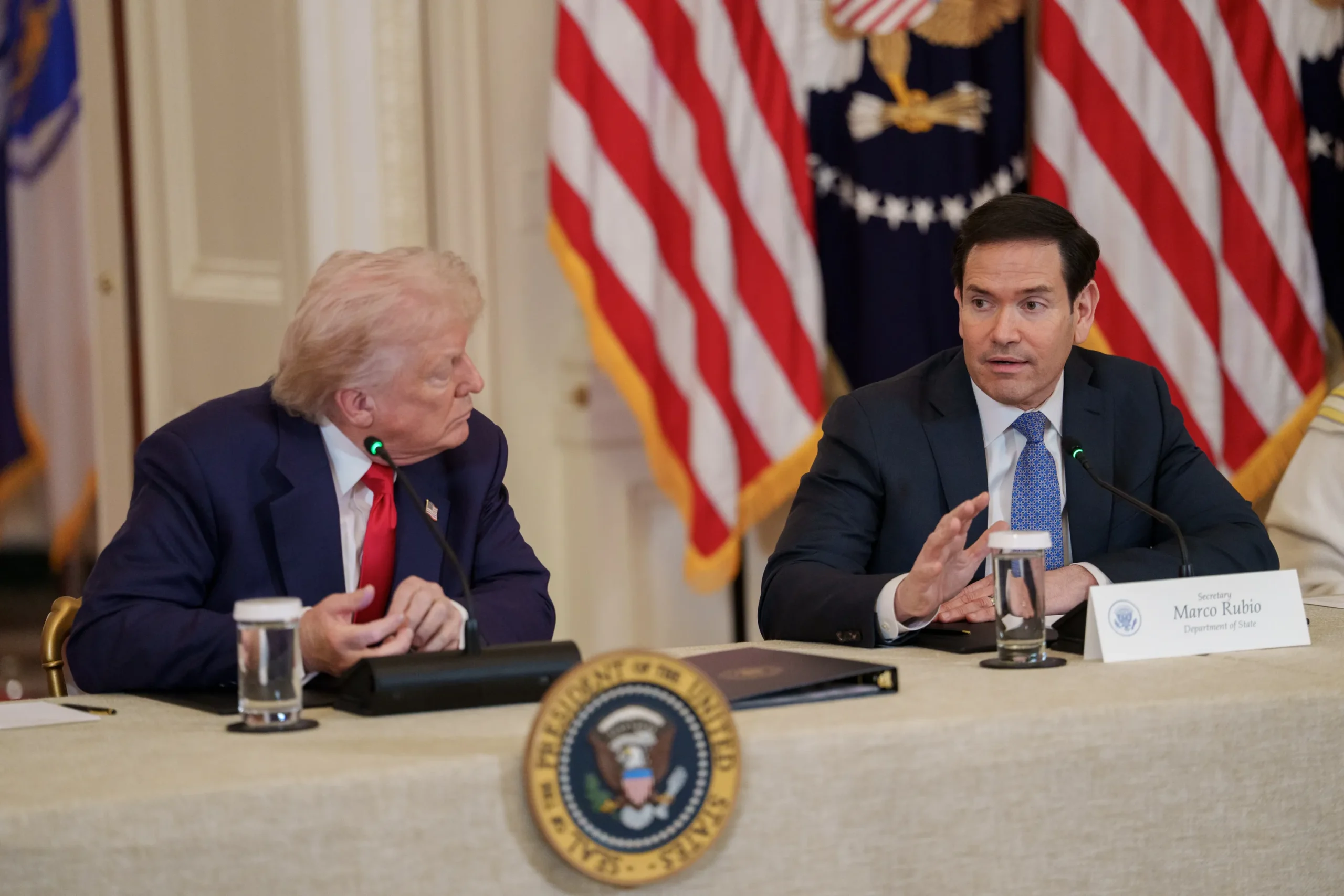
Trump’s executive order would limit collectives. The order would also make a one-time transfer rule, in which players are immediately eligible at the first school they transfer to but are forced to sit out a season if they transfer more than once. SEC commissioner Greg Sankey is particularly concerned about older players staying in college sports.
“My advocacy would be, ‘Hey, we should be back to some type of one-time transfer exception,’” Sankey said. “We have to support educational continuity if we truly believe that academics is the heart of what we do, and I’m a true believer in that.”
The SCORE Act
At the meeting on March 6, U.S. Speaker of the House Mike Johnson and majority leader Steve Scalise said the SCORE Act has enough votes to pass through the House. However, the Republican-proposed bill might encounter difficulty passing through the Senate. To have the 60 votes needed to pass, all Republicans and seven Democrats would need to vote in favor.
The SCORE Act would not allow student-athletes to be considered employees, give the NCAA the power to set transfer regulations, prevent the NCAA from restricting student-athletes’ ability to enter into NIL agreements and provide some antitrust immunity to the NCAA.
The act also seeks to protect non-revenue sports. Any school that generates more than $20 million would be required to have at least 16 varsity sports teams. Additionally, these schools would have to provide various benefits to student-athletes including mental health programs, legal and tax services and representation and career readiness counseling.
A common issue across the country in college sports is the varying NIL laws from state to state. The SCORE Act would set a national standard to establish uniformity in NIL rules throughout the country.
Those who oppose the bill say it would hurt student-athletes. U.S. Sen. Cory Booker is among those in opposition.
“I’ve been really happy that we have been able to make a lot of gains in recent years and they were fought for by college athletes … themselves,” Booker said in an October meeting with senators, college and professional athletes. “They won those gains. They earned them in court. They began to share in the revenues being created … to see some of the money that they were principally generating through their athleticism. We are now seeing, stunningly, a bill come out called the SCORE Act that would halt the progress that these athletes made. … Which is just, to me, outrageous.”
Booker stated that the government should empower athletes, protect their rights, health and education and create stability for the next generation.
The act has been delayed multiple times. It is set to be voted on in mid-April.
Television
While Trump and his roundtable were meeting, two senators agreed on a bill to amend the Sports Broadcasting Act (SBA) of 1961.
“Two U.S. senators, Maria Cantwell (D-Wash.) and Eric Schmitt (R-Mo.), agreed on a bipartisan bill to amend the Sports Broadcasting Act of 1961, permitting college conferences to consolidate and sell, presumably for more revenue, their media rights,” Dellenger wrote on Yahoo.
The pair released a discussion draft of the “College Sports Competitive Act” to amend the SBA, which gave antitrust exemptions to professional sports leagues and let them pool their television rights. It currently does not apply to college sports.
According to a U.S. Senate Committee on Commerce, Science and Transportation press release, the draft, which advocates for pooling rights, would ensure all schools receive more media rights revenue, give all schools a percentage of new revenue and allow performance-based awards for schools that drive viewership revenue and make the playoffs.
The SEC and Big Ten are against pooling rights. A study by the two conferences concluded that pooling rights would generate less revenue than if they sell their own games.
If conferences pool their rights, it is estimated that they would make $7 billion over the next decade. The SEC and Big Ten argue that the bill fails to produce more revenue than the current structure and is unworkable.