





























Many college students in the U.S., including those at the University of Mississippi, are voting for the first time in the 2026 midterm elections.
Traditionally, the greatest predictor of how a person will vote is how his or her parents vote, and while that is still the case, today’s ever-changing political landscape will force all voters to adapt to new ideas and vastly different principles. This stems from the turning of the political parties from their core values to new directions.
Today’s polarized political climate, in which parties are straying from their core ideologies, is a better reminder than ever that “conservative” does not mean Republican and “liberal” does not mean Democrat. In fact, it is often a challenge to find those ideologies in the current parties at all.
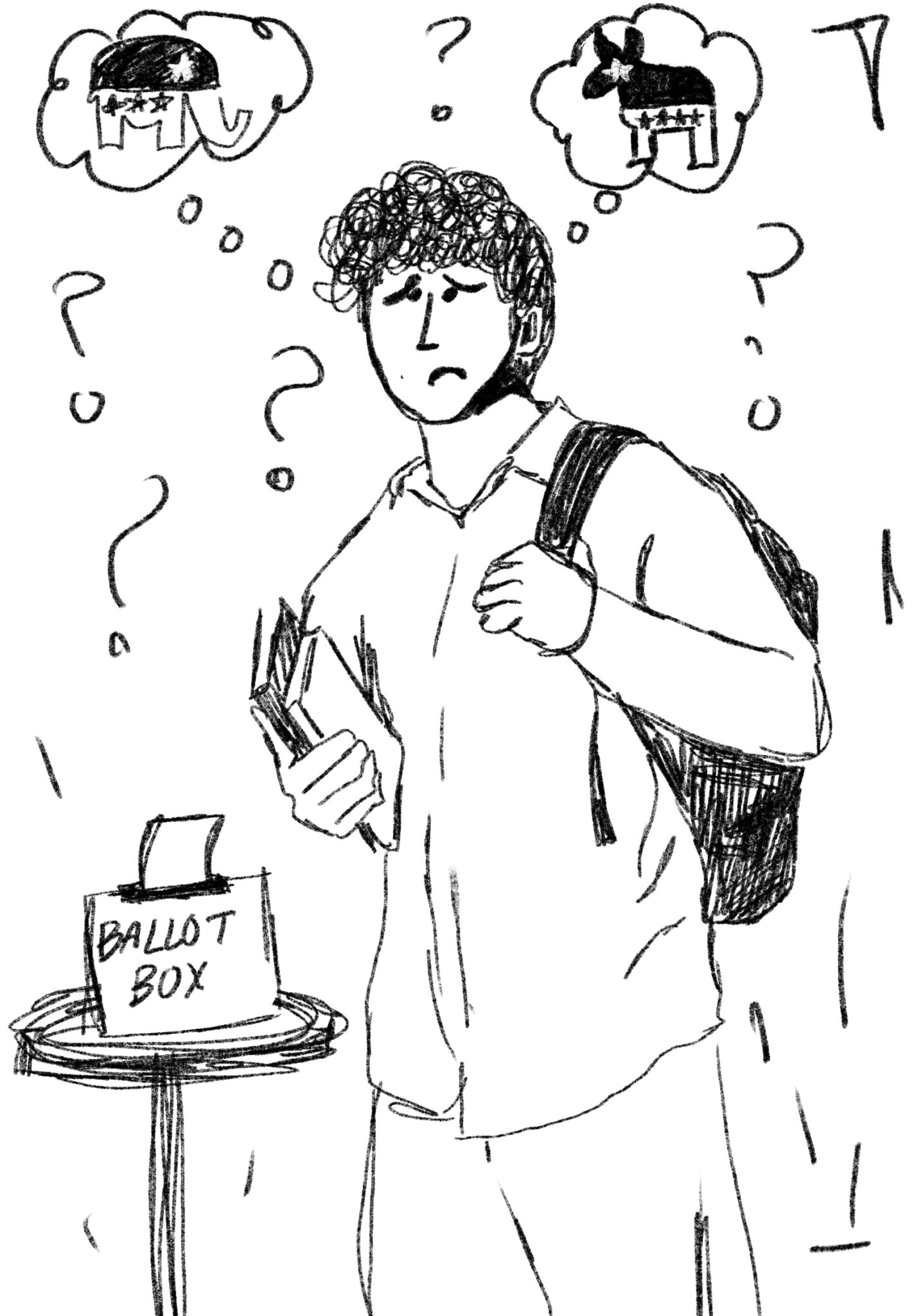
To be conservative is to want to preserve tradition and maintain stability, resisting rapid or radical change. To be liberal is to want to adopt new governmental policies and create changes in society that promote equality and individuality. Conservatives need liberals to pull them forward; liberals need conservatives to slow them down.
Recently, members of both the Democratic and Republican parties have taken certain stances that make me — and, hopefully, all voters — question where they stand ideologically.
Historically, when Democrats have been in control of both Congress and the White House, one can expect a large amount of government intervention in people’s lives, whether this be through inventing new measures to ensure civil rights and equality or establishing new welfare programs. Lyndon B. Johnson’s Great Society is the quintessential example of liberal governing, with its massive spending and creation of Medicare, Medicaid and food stamps.
Now, when Democrats are elected, an increasing number of representatives want to reach and take over establishments historically run by the private sector. City- or state-run grocery stores have opened sparingly in states like Kansas, and more Democratic candidates are adding them to their platforms, such as New York City Mayor Zohran Mamdani, who plans to open five.
When Republicans have been elected, they typically want to decrease the size of government, reduce government spending and preserve free markets and individual liberties. Now, Republicans are spending baffling amounts of money and touching everyday lives through tariffs and foreign conflicts. For example, the Iran war has cost the U.S. roughly $40 billion since its start in February, impacting Americans directly through augmented gas prices.
Democrats largely oppose unchecked AI and data center expansion, while Republicans are more reluctant to criticise them. National Republican Party leaders are pushing for AI infrastructure, while state and local leaders are pushing back against a rapid data center buildout. One would think that a party that is majority liberal would promote AI, and a party that is majority conservative would oppose AI because it is new with unknown capabilities. We seem to have abandoned our tendencies here.
The largest concern in elections in recent years has been the economy. What is troubling to me is that both parties have held office since the COVID-19 pandemic and its inflationary aftermath, and not much has been done. Inflation and prices may have slightly gotten better for short periods, but pain at gas pumps and grocery store checkouts is still real and does not seem to be going away.
The economy in President Donald Trump’s first term was doing well before COVID, but it has not reached that since. For instance, the consumer price index, the main measure of inflation, is higher now at 3.7% than pre-COVID, when it was 1.1%. This displays that an inflation shift happened recently. Both parties have seemed unable to provide lasting economic relief to American families.
Republicans continue to get involved in issues people do not really care about — such as the war in Iran or the renaming of the Kennedy Center — and the Democrats do not seem to understand the basic principles of economics. They fail to understand that increasing regulations increases prices, establishing price ceilings causes shortages, and instituting more progressive taxation could reduce incentives to work.
The parties hide these shortcomings by campaigning on cultural issues that are inflationary but impact few people, like transgender women in girls’ sports and racial justice curriculum in schools. People certainly care about these, but they will overlook most controversies if the economy is thriving. Bill Clinton’s booming economy saved him from the scandals.
Our two leading parties have no strong identities. Representatives from both parties need to figure out who they are and make the values they stand for clear to the American people.
Party infighting, or parties struggling within themselves to establish final positions, actually leads to more developed, united parties, but there has been a clear fear on both sides of questioning party leaders. Increased debate within parties prior to debates with the opposing party would be a step in the right direction.
Some people may argue that these are the parties of modern society to which everyone, including me, needs to adjust. Frankly, I’m having a hard time understanding who Republicans and Democrats even are in 2026.
Democrats and Republicans need to remember the foundations they are built upon and return to their core ideologies, conservatism and liberalism. The first party to do that will win over young and new voters who want a clear idea of what they are voting for. In the meantime, cast your vote, making your desired direction clear even when parties seem to be wandering.
Griffin Armstrong is a freshman political science major from Tuscaloosa, Ala.