





























As a Black girl growing up in a predominantly white space, it is common to hear phrases such as “Why are you speaking proper?” or “You sound white” from your peers. I’ve always been told to make sure I speak in a way that wouldn’t give people a preconceived notion about me before they ever got to know me. Even in casual conversation, I’ve had to make sure that what I said wasn’t slang, or I would be faced with comments like, “Why are you talking ghetto?” or have someone question the way I spoke.
Why is it that when I use a dialect specific to my culture, I am perceived as unprofessional? Why am I still being pressured to change the way I speak?
Code-switching in Black culture is defined as the practice of altering one’s speech, behavior, appearance and mannerisms to fit into dominant, predominantly white spaces and avoid negative racial stereotypes.
Black women shouldn’t be made to feel like we have to prove our intelligence through the ways we speak, dress or behave, but we learn early on that how we present ourselves can determine how we’re perceived in society.
Code-switching becomes an issue when Black women are forced to become less of themselves, assimilating at the expense of authenticity.
But code-switching isn’t always about being ashamed of who you are. Sometimes, it is about knowing how to navigate different environments.
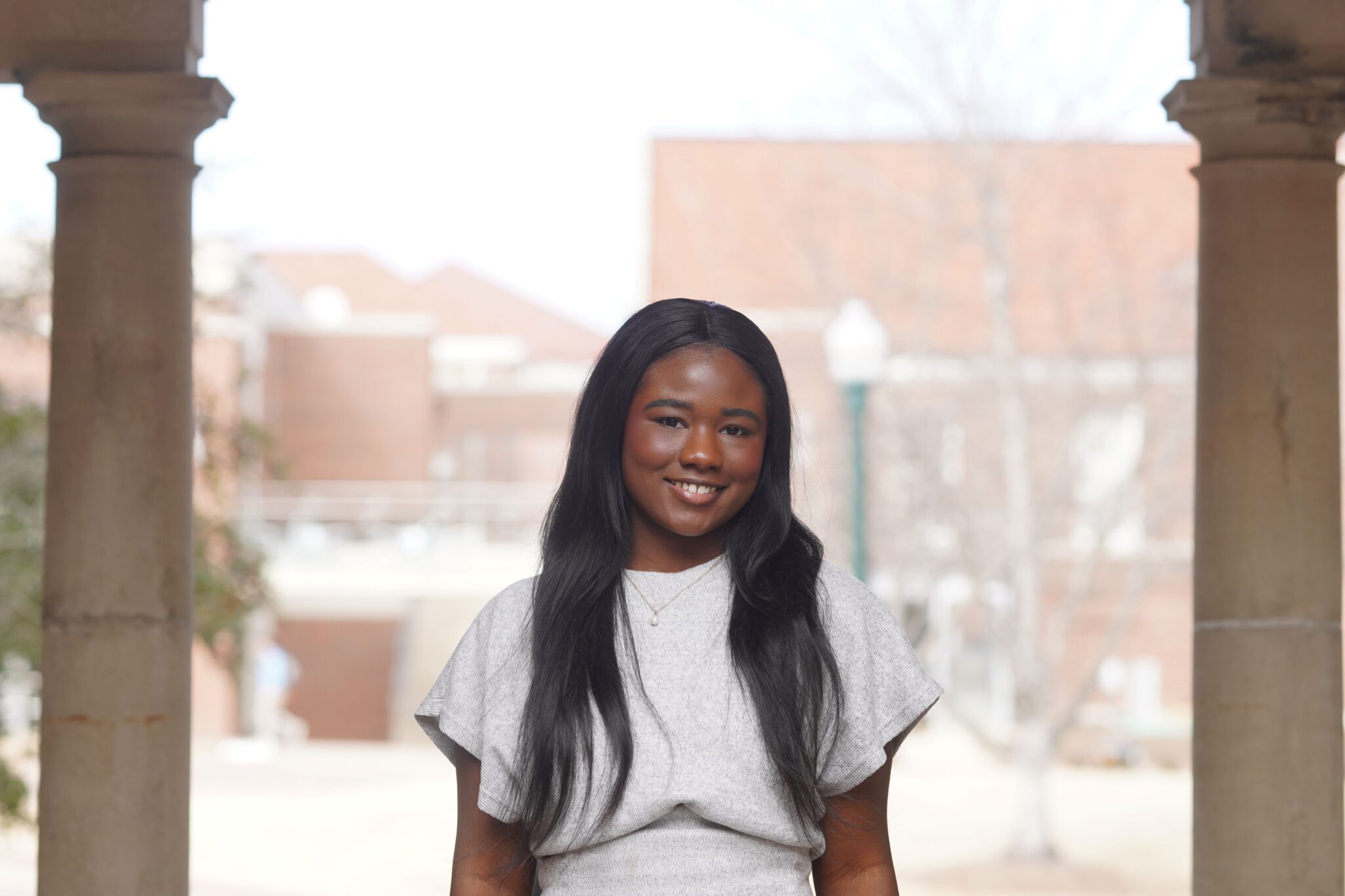
Courtlyn Taylor, a junior psychology and criminal justice double major from Jackson, Miss., said she code-switches depending on her circumstances, not because she’s following societal expectations.
“I do code-switch, but not because I am ashamed of my culture and the habits and vernacular that comes with it,” Taylor said. “Sometimes different conversations require different versions of me.”
For Taylor, changing the way she communicates doesn’t mean assimilating. She said she speaks differently around her loved ones than she does around her professors, and she sees that separation as important.
Switching between informal and formal communication is something everyone does, regardless of race. Speaking to a professor is different from speaking to friends. Black women carry an unspoken expectation to constantly prove that we are just as intelligent and capable as our counterparts.
Taylor said she does not worry about the way she speaks affecting how people perceive her because she believes her academics, passion for learning and campus involvement speak for themselves.
“If an authority figure cannot recognize authenticity and instead mistakes it for something anything less than professional, they aren’t someone I’d like to work with,” Taylor said.
Shelbie Spain, a senior integrated marketing communications major from Tupelo, Miss., also sees value in adapting how we communicate depending on the space we’re in.
“Code-switching regularly has a negative connotation, yet I think it helps us determine when we should advertise the best parts of ourselves, how educated and knowledgeable we are as Black women,” Spain said.
Spain credits her ability to navigate professional spaces to her upbringing.
“I’ve never worried about how I speak to authoritative figures because of my upbringing,” Spain said. “I’ve been taught how to speak in professional and business settings. I was raised with Southern manners; it truly doesn’t get any stricter than that standard.”
Black women deserve to be able to navigate spaces like the classroom or workplace without feeling like our natural dialect makes us less intelligent than our peers. We should be able to adjust how we communicate in different situations without feeling like we’re erasing part of our culture.
For Spain, the desire to prove herself in every room never includes abandoning her roots.
“My parents moved me to Tupelo, Miss., to have access to opportunities I would never have in the Mississippi Delta where I was born,” Spain said. “They wanted more for me than they had. … No matter my achievements or my success, I’m still that little girl from the Delta, and I’m proud of it.”
This is the part of code-switching we cannot afford to lose. Part of growing up is learning how to navigate and communicate across different spaces. The problem starts when navigating those spaces requires us to leave pieces of our identities behind.
Black women should not have to choose between acceptance and authenticity. We should be able to choose both.
Lauren James is a junior integrated marketing communications major from Hernando, Miss.