
















The first day of testimony in former University of Mississippi employee Lauren Stokes’ lawsuit against Chancellor Glenn Boyce opened Friday, Feb. 13 in the U.S. District Court for the Northern District of Mississippi in Oxford without the defendant, Boyce, in the courtroom.
Defense attorney J. Cal Mayo argued Boyce had no obligation to appear because he had not been subpoenaed by the plaintiff.
In a filing in federal court, plaintiff Stokes said she intends to subpoena Boyce to compel his appearance after he failed to attend the scheduled hearing.
Plaintiff attorney Allyson Mills argued her team had not been given sufficient access to Boyce or key records ahead of the trial. Mills said the university did not provide requested emails, phone records and information about public officials who supposedly called for Stokes’ termination until the day before trial, Feb. 12.
U.S. District Judge Glen H. Davidson ruled that the court will reconvene on Friday, Feb. 20 at 10 a.m. to review additional evidence brought in by the defense. Boyce is expected to be present at that time.
Stokes filed her lawsuit for wrongful termination from the university on Oct. 21 in federal court, claiming she “… suffered extreme emotional and financial damages, for which Boyce and the university are liable.”
Stokes was fired from her position as executive assistant at the vice chancellor for development at the university after she reposted on her personal Instagram account on Sept. 10 a post from another individual that condemned the beliefs of conservative activist Charlie Kirk, who was killed at Utah Valley University earlier that day.
Stokes testified that within four hours of the reposting, friends began calling her husband expressing offense to the post. Around 9 p.m., she removed the post. By 9:30 p.m., she had issued a public apology on Instagram. Later, she had received a text message from Vice Chancellor for Development Charlotte Parks checking on Stokes.
“I was humiliated that this had happened,” Stokes said on the stand. “I was grateful for Charlotte’s text.”
Around 3 a.m. on Sept. 11, Stokes emailed Parks, who responded around 5:30 a.m., asking to meet with the UM Department of Human Resources. At 10 a.m., the HR department placed Stokes on paid administrative leave.
At around 11 a.m., Parks called Stokes and told her she had one hour to decide whether to resign or be terminated. At 12:50 p.m., Parks called again, joined by Chief Human Resources Officer Brady Salters, and informed Stroked she was terminated. Recordings of both calls were played in court.
According to Stokes, a university press release announcing her firing was issued around 10 minutes later.
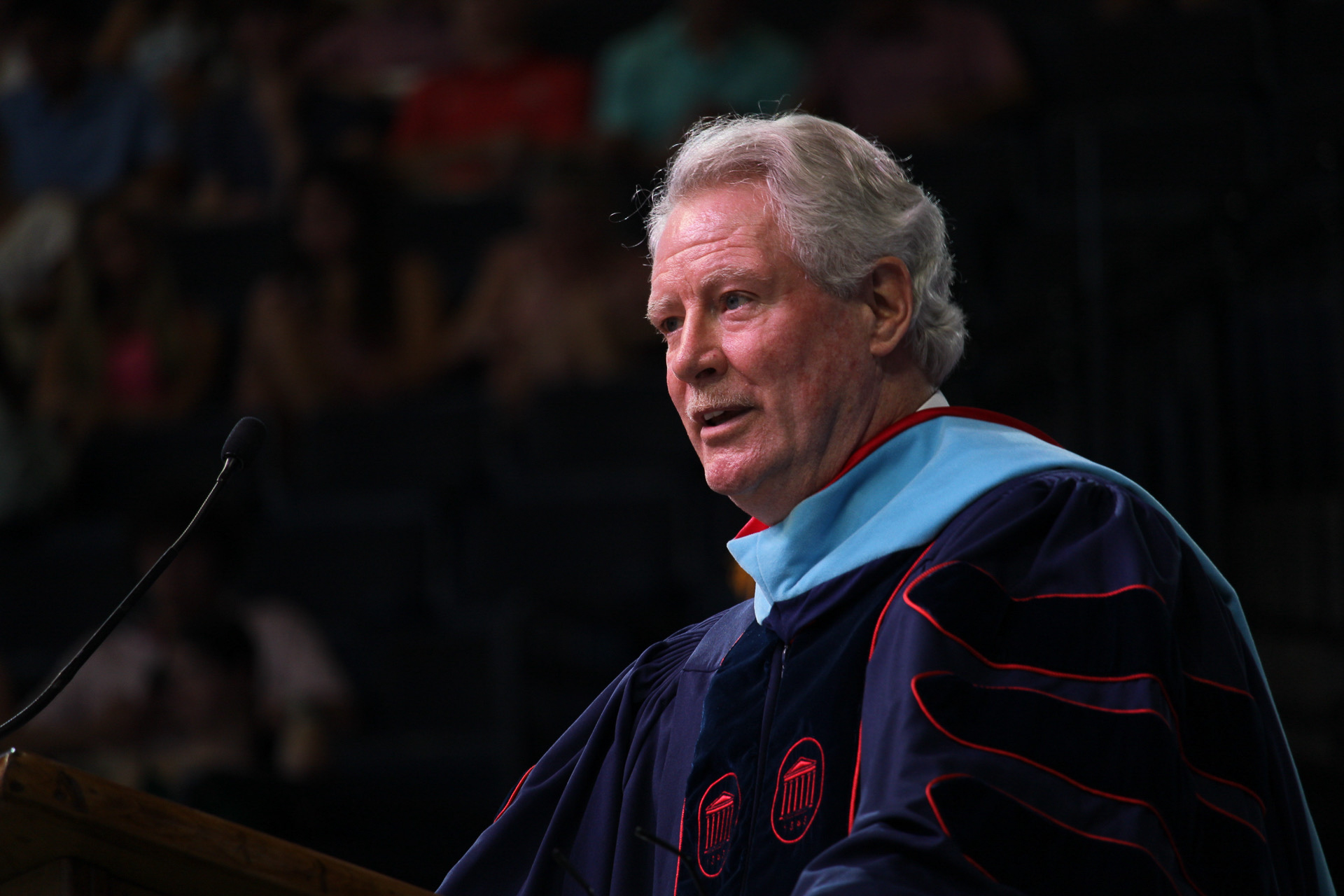
“We condemn this action, and this staff member is no longer employed by the university,” Boyce said in the email. “All of us have a responsibility to take seriously our commitment to upholding a civil and respectful campus environment.”
Stokes testified that the press release issued by Boyce made her termination “newsworthy” and left her feeling “utterly condemned.”
The press release intensified public backlash, Stokes said, leading to harassment at her home and business. By the morning of Sept. 11, she learned she had been “doxxed” online with her personal information, including her address and workplace, shared publicly.
“It made it seem like I did something wrong when I didn’t,” Stokes said. “People are still saying vitriolic things to me. … I was suffering and humiliated then and I am still suffering and humiliated now.”
At 3 p.m. on Sept. 11, Stokes and her husband’s restaurant, Tarasque Cucina, received an anonymous phone call threatening violence. The Oxford Police Department responded and called in a bomb squad, which found nothing. OPD advised Stokes and her husband to leave town for their safety.
Stokes said she was out of town for nearly three weeks. Her husband was gone for two weeks before reopening the restaurant, which had been closed to protect staff and customers. The university did not reach out during that time, she said.
On Oct. 9, nearly a month after her termination, Stokes received a FedEx package from the university with a letter outlining her termination and the grievance procedure. She also received a letter dated Sept. 24 notifying her of her termination, though she testified that she did not receive it until the Oct. 9 package.
Stokes said the delay and the public nature of the press release led her to believe that she had no realistic path to reinstatement, prompting her to contact an attorney and file suit.
“I would like to think, without the press release, that this could have died down,” Stokes said.
Mills called seven witnesses, including the plaintiff Stokes, UM faculty, staff and students.
UM Annual Gifts Officer Angela Atkins testified that employees use personal social media accounts for many different reasons and said that she was “devastated” by how events unfolded.
“Lauren (Stokes) is the type of person (that) it bothers her to think she had hurt someone’s feelings,” Atkins testified.
The defense countered that the email did not publicize Stokes’ situation because it did not include any of her identifying information, which Mills argued prompted “doxxers” to do so.
“I love the university and working here. I just feel like they made a wrong decision in firing her,” Atkins said. “I think a lot of public institutions are finding that they cannot limit public employees’ private speech.”
UM Associate Professor of Sociology James “J.T.” Thomas was called to testify next. He recounted his experience on Oct. 29, the day of the Turning Point USA event hosted by the Ole Miss TPUSA chapter at The Sandy and John Black Pavilion. (Kirk was a founder of the Turning Point USA organization.) He said many students did not attend class because they feared for their safety.
Thomas was placed on TPUSA’s Professor Watchlist, described on its website as “a carefully aggregated list sourced by published news stories detailing instances of radical behavior among college professors.” The site references Thomas’ viral tweets from 2018 that praised harassment of U.S. Sen. Ted Cruz, R-Texas.
“I think there’s a thread to be drawn between those things under a different university administration when I faced that backlash,” Thomas said after testifying, referring to his own similar experience with a Twitter post in 2018. “If someone on campus can be fired for the speech that they have, I just think it undermines everything people lose in the university.”
As a member of the UM faculty, Thomas expressed his and his colleagues’ fears about the implication of this incident.
“Every faculty member that I’ve talked to about this case has described feeling like it’s just one more step to losing free speech and academic freedom on campus,” Thomas said after the trial to The Daily Mississippian.
Thomas was not asked about his social media usage during the trial.
UM Director of Pre-College Programs Wendy Pfrenger testified that she was “puzzled and unsettled” by how quickly the situation developed after the chancellor’s campus-wide email. She said colleagues later asked her to review their personal social media posts out of fear.
Pfrenger also testified that during the period surrounding the Turning Point USA event featuring Vice President JD Vance and TPUSA CEO Erika Kirk, some campus events were canceled and at least one job candidate withdrew from consideration, citing concerns over his/her First Amendment rights.
Senior public policy leadership major and vice president of the UM College Democrats Calvin Wood testified that the university’s response to the Turning Point USA event signaled institutional support for the group. Wood said the College Democrats were required to pay for their own security at their counter-event, while it is unclear if TPUSA were required to do the same.
Wildman confirmed that while the university made arrangements for security at the counter-event at the student union, the UM Democrats were required to pay for it, costing them between $100 to $150 according to an email with Courtney Welch, manager of Facility and Event Services at UM.
Wood described the TPUSA event as “disruptive.” He also said that the chancellor’s email regarding Stokes’ firing differed from past campus-wide emails because it outlined investigation or disciplinary process. Plaintiffs argued the university adopted a particular political viewpoint, violating the First Amendment requirement for viewpoint neutrality.
Plaintiffs entered screenshots from a Daily Mississippian Instagram post into evidence, which included a direct quote from Boyce supporting the TPUSA event. The plaintiff’s team also pulled images from WLPT’s coverage of the event, including Boyce at the Turning Point USA event holding a sign in support of Charlie Kirk.
Senior public policy leadership major and UM College Democrats president Elizabeth Wildman was called to testify.
“We all know the school’s stance in politics, so it was not a surprise,” Wildman said, recounting the support the university provided TPUSA to host its event.
The Laurel, Miss., native said she worried about the future implications of the TPUSA event on incoming students, whom she said may feel discouraged from attending the university in fear of not finding their community.
First-year journalism graduate student Lauren Hite also testified, stating that she was disappointed in how the university handled the firing and that she stopped continuing her second master’s degree at the university following Stokes’ firing.
Throughout the trial, Mills argued that Stokes’ social media post did not disrupt university operations and did not warrant termination.
Further, Mills said the chancellor’s press release established an institutional viewpoint that condemned Stokes and violated her first amendment rights. Mills said that Boyce set a tone against making negative public remarks against Charlie Kirk.
The court is set to resume Feb. 20, when additional evidence from the defense is expected to be presented and Boyce is anticipated to appear in person.
Editor’s note: This article originally cited Wendy Pfrenger as saying that an interviewee withdrew due to fears of safety. The story now reflects that the candidate withdrew due to fears that her First Amendment rights would not be protected.
Editor’s note: This article originally spelled Calvin Wood’s name as “Woods” and Lauren Hite’s name as “Height.” The story now reflects the correct spellings of both names. The article also stated that Wood testified that TPUSA was not required to pay for security of Vice President JD Vance’s visit and that the email from Chancellor Boyce did not outline disciplinary actions. The story now reflects Wood’s testimony that he is unaware if TPUSA was required to pay for security and that the email did outline disciplinary actions.