



























The University of Mississippi has updated the parking and transportation system this semester. Parking spaces at the Tad Smith Coliseum and the former Kincannon Hall site have been temporarily blocked off due to construction, and the university has implemented a new app to track and plan public transportation routes.
The university implemented the new Transit app, which replaced Transloc at the start of this semester. The app includes live tracking and information about bus routes. Sam Patterson, who serves as the director of the Department of Parking and Transportation, elaborated on Oxford-University Transit’s priorities as the university is making the switch to Transit.
“Oxford-University Transit provides an important transportation option for our campus community, including fixed routes and newer microtransit options,” Patterson said. “Our team has been sharing real-time lot updates on social media to help students decide where to go before they leave. We’re also working with students one-on-one to help them plan their commute around their permit zone, where they’re headed and when they get to campus.”
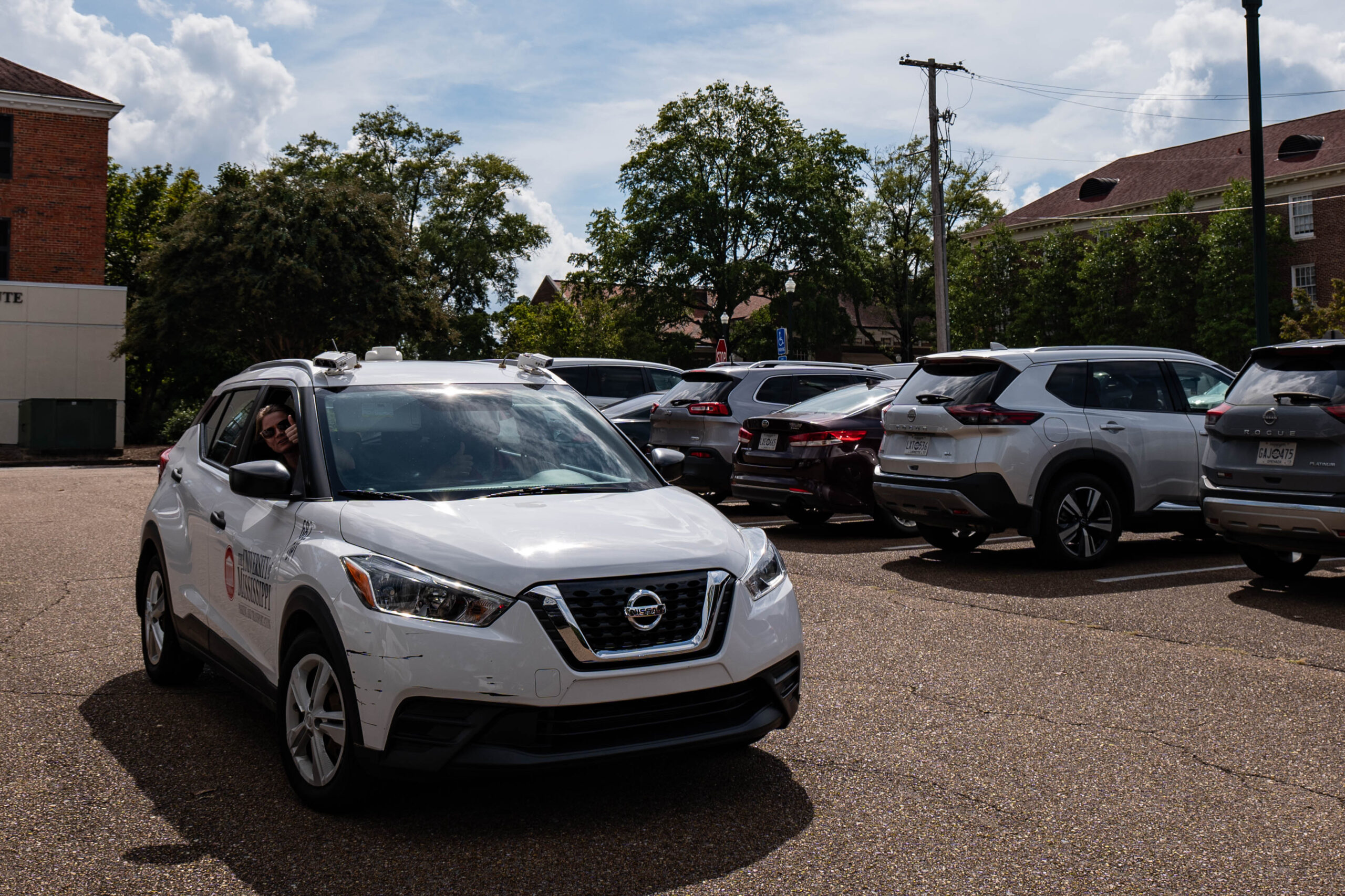
The Transit app was implemented to help students find open parking spaces. Students can also use Transit to find which bus routes will get them to or from campus, and when the buses will arrive at their stops.
“We’re actively helping students get comfortable with the new Transit app and understand the routes that are available,” Patterson said. “Students can find the latest route and service information at outransit.com.”
Students like Ava Myszkowski, a junior business analytics and information systems major from Geneva, Ill., found the Transit app helpful for navigating bus routes.
“It is pretty easy to figure out the routes as long as you have … the Transit app,” Myszkowski said.
Kelsey Defrancesco, a junior integrated marketing communications major from Huntsville, Ala., takes the bus from the South Lot where she parks.
“I think (the bus is) pretty reliable — it literally goes from the South Lot to campus, so it’s not like they’re getting stuck or anything,” Defrancesco said. “The South Lot is good because it’s really big, (and) there’s a lot of parking. Obviously, it would be nicer if there were more parking lots.”
Students are also seeing changes in parking availability alongside the bus app’s introduction.
According to Patterson, about 90 Commuter Blue spaces have been removed from the Tad Smith Coliseum, and 215 residential spaces have been removed from the Kincannon Hall site. However, this temporary decrease will lead to additional permanent parking in the spring.
“While construction has temporarily affected parking in some areas, the new parking garage will significantly add to the university’s parking inventory when it opens in spring 2027,” Patterson said. “We’re always evaluating our current strategies and new approaches to improve the parking and transit experience for our campus community as the university grows. The new parking garage opening in spring 2027 is a significant part of that work.”
The new parking garage, when complete, will contain 1,379 parking spaces.
While temporarily closing parking spots may result in more parking options in the future, students trying to park on campus this semester are dissatisfied with the decrease in available parking.
Kylan Edwards, a junior law studies major from Jacksonville, Fla., believes the Commuter Blue parking pass is overpriced compared to the parking available.
“No one should be paying ($330) to be late to class because they can’t find parking,” Edwards said.
Edwards also experienced issues last year with her Commuter Red parking pass, which gave her access to parking spots farther away from campus.
“Last year, when I had Commuter Red, I usually ended up walking because my parking pass was not even helpful,” Edwards said.
Patterson expressed that the university’s goal to increase the number of parking options was to better accommodate for the increasing number of students.
“Our goal is simple: Help students, faculty, staff and visitors know their options and get around campus as easily as possible. That means better communication, real-time updates when we can and staying coordinated with (Oxford-University Transit) and Cline, our primary and supplemental transportation providers,” Patterson said. “As campus keeps growing, this stays an ongoing conversation with university leadership and facilities planning. We’ll keep watching demand, listening to student feedback and working with our campus and community partners to keep campus accessible.”