

















The Rebels fell just short in the College Football Playoff semifinals on Jan. 8 after a four point loss to No. 10 Miami. This article breaks down the performance of the players and position groups using an A-F grading scale.
Trinidad Chambliss — B-
Nothing came easy for the Ole Miss quarterback this game. Whether it was quick reads or pocket presence, he just did not look like his normally loose, poised self. He tempted fate many times with several risky throws which were nearly intercepted.
Offensive coordinator Charlie Weis Jr. stuck to his fast-paced offense, perhaps hoping Chambliss would find rhythm as he did against Georgia, when he threw 13 straight completions in the second half.
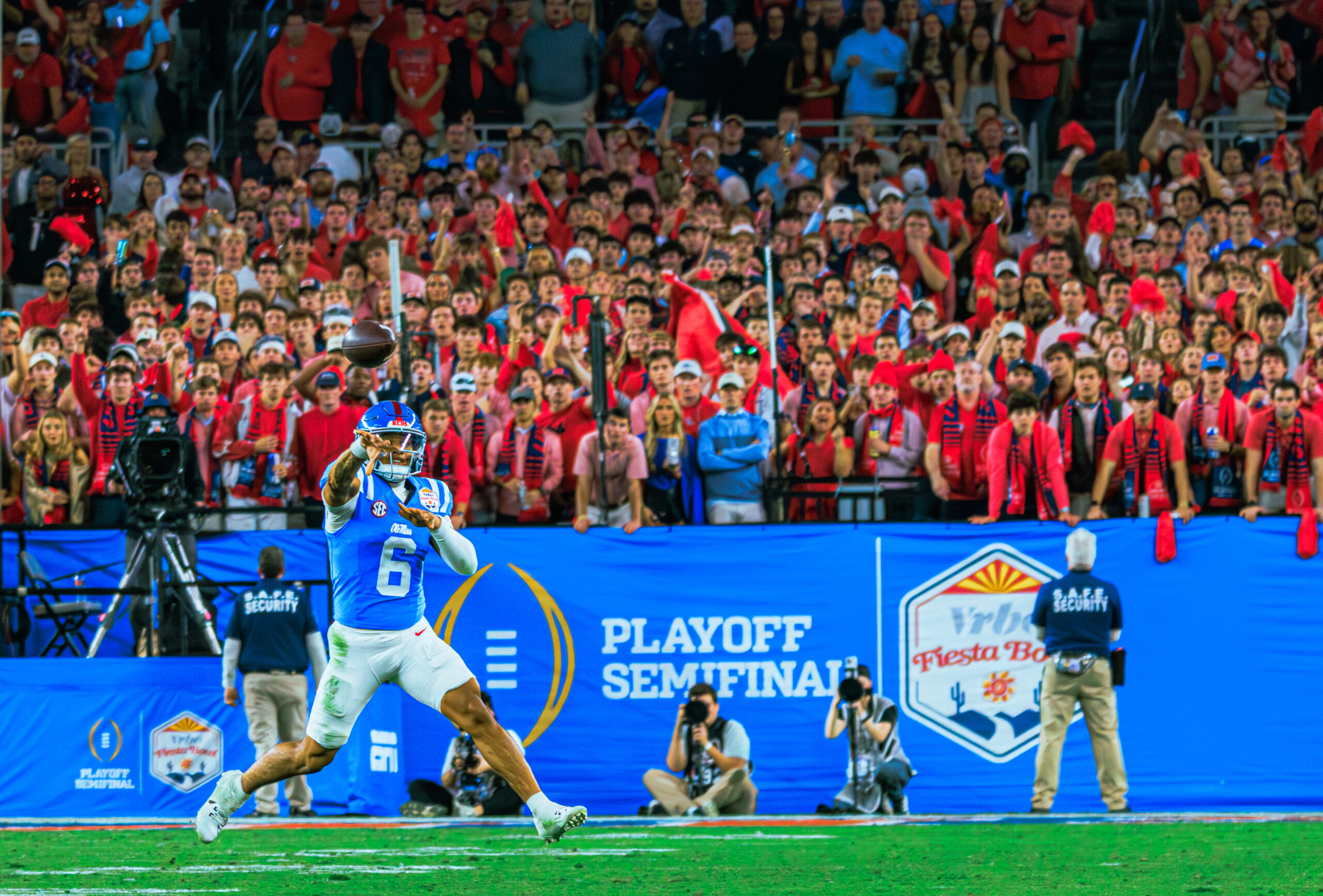
Chambliss finally did — in the fourth quarter. The Rebels were down five with as many minutes to play, and Chambliss led the offense on a six-play, 75 yard touchdown drive that lasted only 1:51. A play after his 24-yard touchdown pass to tight end Dae’Quan Wright, he found fellow tight end Caleb Odom for a two-point conversion which put the Rebels ahead 27-24.
His clutch play continued on the last drive of the game. After the Hurricanes scored a go-ahead touchdown with only 18 seconds remaining, Chambliss completed a 23-yard seam pass in tight coverage to wide receiver Cayden Lee, then threw a post to wide receiver De’Zhaun Stribling to put the Rebels within throwing range of the endzone for the final play.
Though Miami’s long touchdown drive at the end was not his fault, the situation might have been different had he been able to capitalize earlier in the game. Besides the third drive of the game, when running back Kewan Lacy broke loose for a 73-yard touchdown run, Chambliss was only able to lead the Rebels on one touchdown drive. Every other possession, the offense stalled out, and the Rebels were forced to punt or kick long field goals.
Chambliss finished the game with 277 passing yards and one touchdown — not a bad stat line by any means, but not one of his best. His composure in crunch time earns him some extra points here.
Defensive Line — D
The Fiesta Bowl was a less than ideal game for Chambliss, and it was a downright rough game for the Rebels’ defensive front.
The Miami offensive line pushed the Rebels around all night; the interior defensive linemen and pass rushers rarely established control of the line of scrimmage. Miami rushed for 191 yards with four different rushers.
The pass rush, too, failed to generate pressure on Hurricane quarterback Carson Beck. This led to several chunk plays, such as when Beck had enough time to find wide receiver Keelan Marion for a 52-yard touchdown pass.
On Miami’s final touchdown drive, the line yielded a huge first down run on a third-and-two and pressured Carson Beck only once, on the last play of the drive. Beck easily escaped the pocket and walked in for the game-winning touchdown.
Kewan Lacy — B
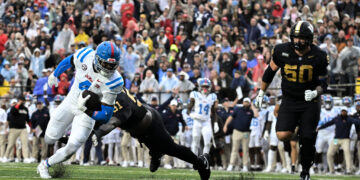
Lacy had a gutsy performance for the Rebels. He finished with 103 rushing yards and a touchdown; he got the scoring started for Ole Miss on the first play of the second quarter when he busted a run open for a 73-yard touchdown. Before that play, Ole Miss had yet to gain a first down.
However, on this play, he strained a muscle in his leg. He did not return to the field until the start of the second half. Even then, he was not the same. He only rushed for 24 yards.
Lacy’s biggest contribution in the fourth quarter was getting a first down on a third-and-one run to keep a drive alive. Lacy looked dead to rights behind the line of scrimmage, but he managed to spin away from the Hurricane defender and dive forward for the first down.
This play was crucial. The Rebels, down 17-16, had just retaken possession after a Miami punt; had Lacy not gained the first down, the Rebels would have gone three-and-out. Instead, the Rebels marched down the field, and kicker Lucas Carneiro put the Rebels ahead with a 21-yard field goal.
Ole Miss fans may be haunted by how the game might have played out if Lacy had not gotten hurt. The running back might have broken away for another long touchdown; if nothing else, he could have been the jolt the Rebel offense was missing most of the night.
Ole Miss secondary — B
The Rebel secondary had a decent game. The unit gave up some chunk plays and allowed two passing touchdowns, but mostly held its own.
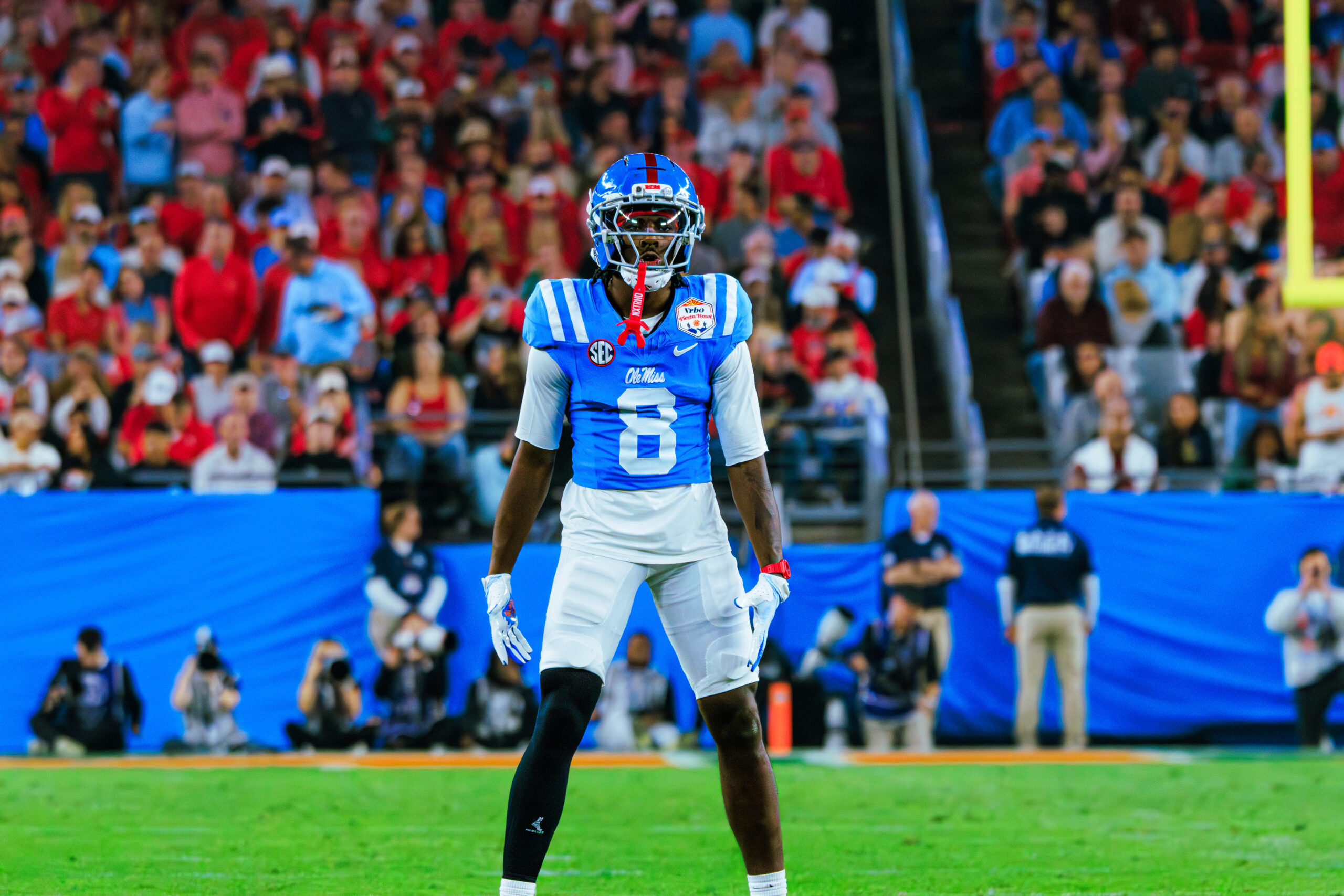
One of these touchdowns came on a screen to Hurricane wide receiver Malachi Toney, one of the most dynamic athletes in the ACC. The secondary had almost no involvement in this play; Toney cut into the middle of the field and sliced through the Rebels whole defense to find the endzone, so this defensive breakdown is more attributable to poor tackling angles by the defense as a whole, not specifically the secondary.
The other passing touchdown came on a broken coverage, when Ole Miss safety Nick Cull drifted into the middle of the field, leaving the back end undefended. This allowed Miami’s Marion to sneak behind him and catch a wide-open touchdown pass.
However, the secondary came up with a huge play late in the third quarter. With Miami threatening to score another touchdown to go up 11, defensive lineman Kam Franklin tipped Beck’s pass, and the ball landed in the hands of diving safety Kapena Gushiken.
This interception kept the Rebels in the game and allowed the offense to go down the field and kick a field goal, bringing the Rebel deficit to just one point. If, instead, Miami had scored a touchdown on that drive, Ole Miss might not have had a fighting chance in the fourth quarter.
Lucas Carneiro — B+
Carneiro followed up his unforgettable Sugar Bowl performance with another great one. He connected on four field goals. One of these was a 58-yarder, which is his career long.
Unfortunately, Carneiro did miss one field goal. He doinked a 51-yarder off the upright, which ultimately hurt the Rebels on the final drive; if they were down four – instead of only one, had Carneiro not missed — the Rebels would have had a shot to kick a walk-off field goal instead of being forced to throw a Hail Mary.
Of course, the course of the rest of the game would have played out differently if this one play were different, so it seems unfair to pin the blame on Carneiro — especially because his field goals were at one point responsible for more than half of the Rebels’ points.