

























Oxford–University Transit is an essential service for students at the University of Mississippi. According to the university’s 2024 Department of Parking and Transportation Annual Survey, 95% of respondents ride the bus. As enrollment reaches a record 28,405 students, those who rely on OUT say the system is struggling to keep up.
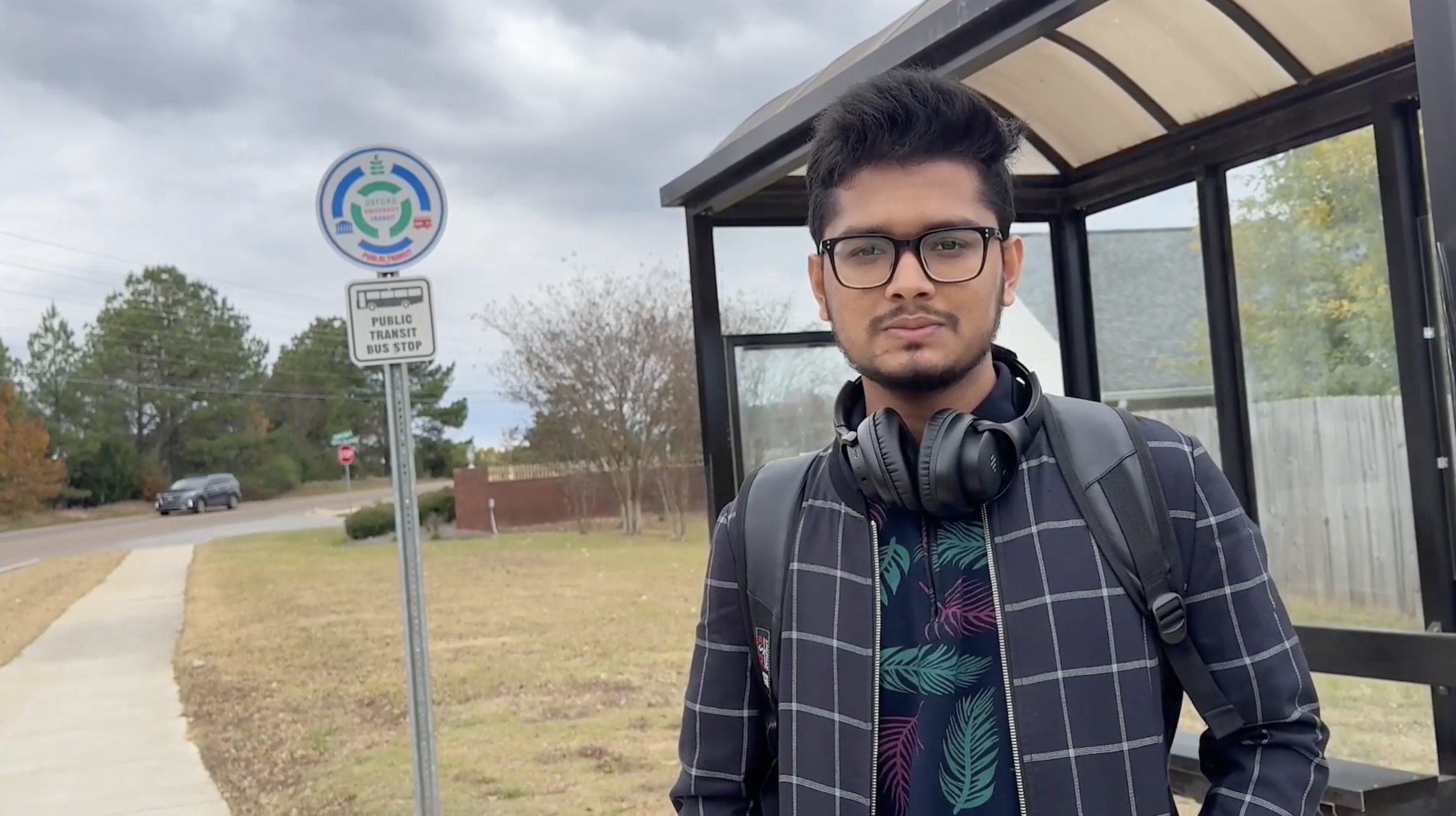
“It becomes stressful when you already manage your expenses carefully as a student,” freshman Abu Bakar Siddique said.
Siddique has missed the bus three times this semester due to inaccurate arrival information on the system’s TransLoc app. Each time, he says, he had to take an Uber instead, which cost him $18–$20 per trip.
“Sometimes the bus stops at the gas station or the OUT head office without any prior notice, and we have to wait much longer,” Siddique said.
OUT provided more than 500,000 rides in 2023, and both the city and the university are planning improvements to match rising demand. Oxford has recently completed road projects on South Lamar and Old Taylor Road, while campus officials point to parking expansion and a new parking garage with 1,300 spaces now in progress.
But despite visible upgrades, many students still face daily transportation hurdles. Inaccurate bus tracking, long waits, and no Sunday service mean those without cars often struggle to get groceries, pick up medication or arrive on time for class and work.
OUT drivers also feel these pressures on their side of the system.
“Even a small delay in one area affects every stop afterward,” OUT driver Dean Ayb said.
Ayb also noted that many students need transportation on Sundays to buy groceries and take care of personal needs. For this reason, he suggested that OUT could consider hiring a few drivers who work only on Sundays so students have options.
While bus service remains a daily concern, parking challenges are also growing as the campus expands. The 2024 Department of Parking and Transportation annual survey details the frustration clearly. Out of 1,788 responses, only 3% said the campus has enough parking, and just 11% were satisfied with parking facilities.
“We use student feedback through the Associated Student Body and the OUT advisory committee to guide our planning,” Samuel Patterson, director of the Department of Parking and Transportation, said.
Patterson noted that the department is taking a strategic approach to parking and mobility as the campus grows. He said the focus is on improving existing facilities, reviewing permit structures to match real demand, and expanding support for transit and other commuting options.
Patterson also explained that commuter permits follow national models. Commuters do not stay on campus all day, so the university sells more permits than the number of available spaces. In the commuter blue zone, the department sells about 1.7 permits for each parking spot. According to Patterson, this model reflects real daily usage and helps the department manage demand more effectively.
“The university is expected to add additional surface-level parking at the Jackson Avenue Center and near the Tad Pad, though those timelines are still being ironed out,” Patterson said.
These areas already offer large open parking zones and are connected to the central campus by shuttle routes, giving students more options when main commuter lots fill up.
Students suggest clearer bus schedules, better lighting at major stops and limited Sunday service so riders can manage basic needs. Others hope improved tracking technology will reduce missed buses and the unexpected cost of using ride-share apps.