

























You are someone else entirely when you remove the need for romance.
As I scroll through Instagram and TikTok, especially after Valentine’s Day, my feeds are flooded with digital postcards of seemingly perfect relationships. When I spend time with my friends, I find that more often than not, the topic of discussion is one of our momentary “situationships.”
Will it last? Maybe not — but gossiping about the prospect is indisputably exciting.
Our need to constantly feel admired and appreciated has led me to believe that so much of our mental energy — maybe too much — goes into chasing the state of being chosen, rather than simply choosing ourselves.
This generation craves love so much that it has evolved into something entirely different, something I like to call “fast love.” When we are desired, we conflate it with feeling loved. Yes, being wanted might feel like love in a way. But for love to manifest, it must last. For the most part, situationships certainly don’t.
The goal is simple: We, as a generation, want to be immediately seen, recognized and unconditionally loved.
This desire is unique and a product of the environment we have been brought up in. The rising use of social media and dating apps has raised us to expect instant gratification in every aspect of life, including relationships.
With endless options available at the tip of our fingers and constant validation through likes, messages and comments, emotional connections can be replaceable and temporary.
Because of this, many young people are subconsciously trained to seek quick bursts of attention instead of investing in the slower process of building long-term love. This digital atmosphere reinforces the idea that connection should be immediate and intense, even though relationships rarely work that way.
I have been there — caring deeply for someone who never felt the same, building up a relationship in my head before anything real had begun. It is heart-wrenching. It hurts especially when you are a teenager and feel something that you think is love before a tangible bond has even blossomed.
The intense emotion we feel after first contact is not love. Rather, it is infatuation. The line between love and infatuation is often blurry. At the onset of a new connection — a number exchanged at a coffee shop or a match obtained on Hinge — a magical feeling can obscure the development of an authentic bond.
Rather than saying we are infatuated by who a person is or how they treat us, we say we love that person.
As college students, we are often ambitious and busy, yet emotionally, many of us still feel unwhole without a relationship. We are in a constant state of planetary orbit, gravitating from one obsession to another.
That pressure to always have someone as the finishing piece to our fulfillment puzzle compounds the mindset that being single is a temporary problem, a personality flaw or even a failure.
When we look at our seasons of singleness as a problem, love becomes a survivalistic need. This mindset cancels out the standards that we would normally uphold when entering a new relationship.
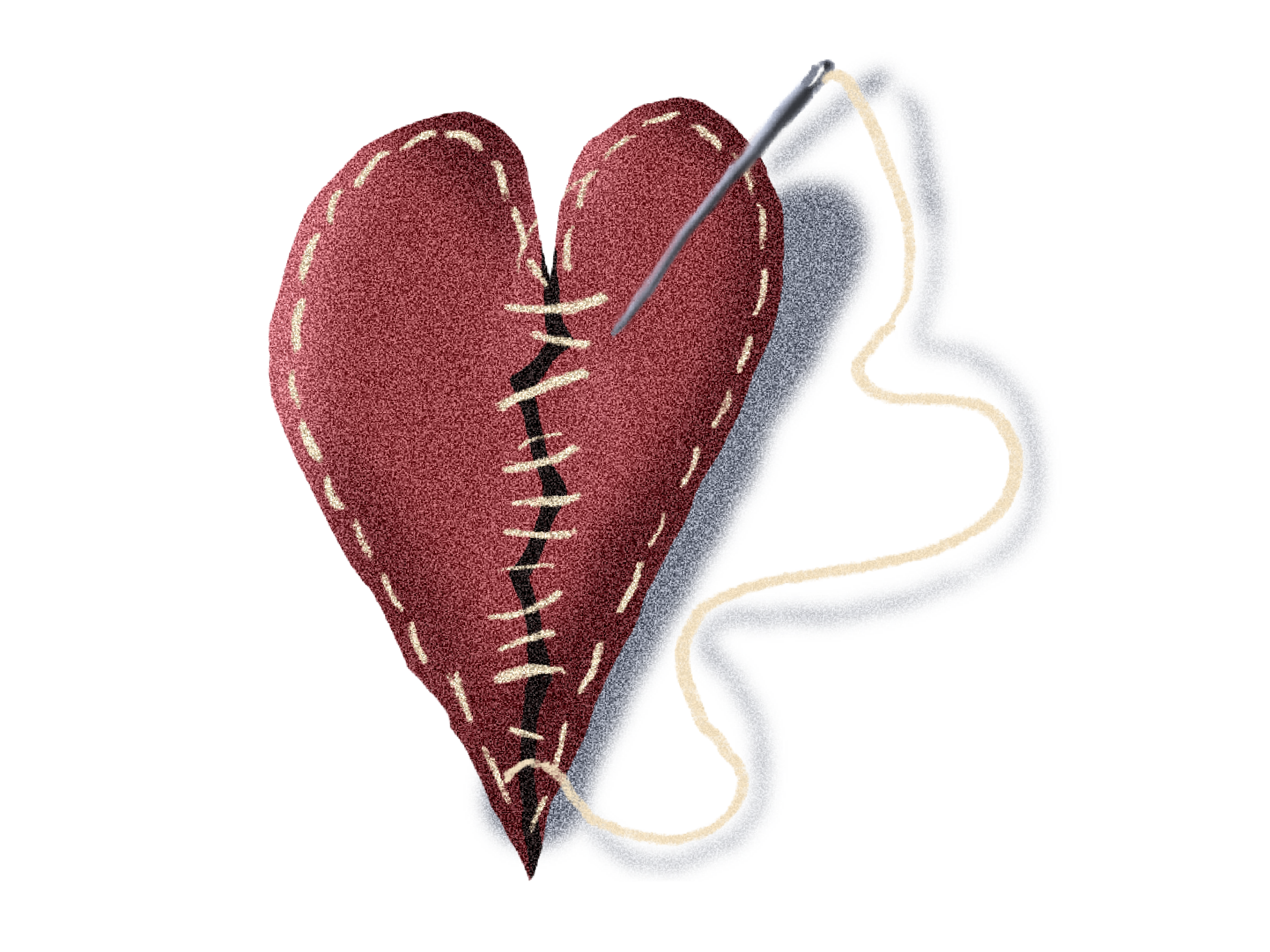
We ignore red flags, shrink ourselves into a mold to stay chosen, confuse attention with authentic affection and enter a constant state of silent panic when initial infatuation wears off.
Oxygen is necessary for survival. Contrary to popular belief, romance is not. So, why do we treat it like it is?
It is uncomfortable to admit that much of our identity is shaped by how we want to be perceived. We want to sport designer bags to show others we have achieved an enviable status.
Romance is no different. When we have a partner, we show others that we are achieving a relational status that many desire.
With nobody texting us, flirting with us or validating us, the version of ourselves that does not perform or wait for others is revealed. That version is often quieter, lonelier but ultimately more honest.
There is freedom in that state of emotional independence, but there can also be fear. There is no one to project our meaning onto and no one to absorb our uncertainty.
Independence asks us to sit with who we are and can feel heavier than a breakup. The majority of the time, independence is when we realize we like ourselves way more than we thought we would.
When we center our lives around romance, we lose sight of more important things: loving ourselves, creating genuine friendships and building a future of fulfillment.
We become lost in a sea of wanting to be seen and desired, and in the process, stop seeing ourselves.
Romance is not your lifeline; it is a choice and not a necessity. We should treat romance as such.
I am someone else entirely when I remove the need for romance. Maybe that is the version worth meeting first.
Riley Altiere is a freshman journalism major from Alpharetta, Ga.