




























President Donald Trump signed an executive order on Friday, April 3, entitled “Urgent National Action to Save College Sports.” Though the order, which would go into effect on Aug. 1, sets limits on the transfer portal and NIL, it is unlikely to have any major effect on college sports.
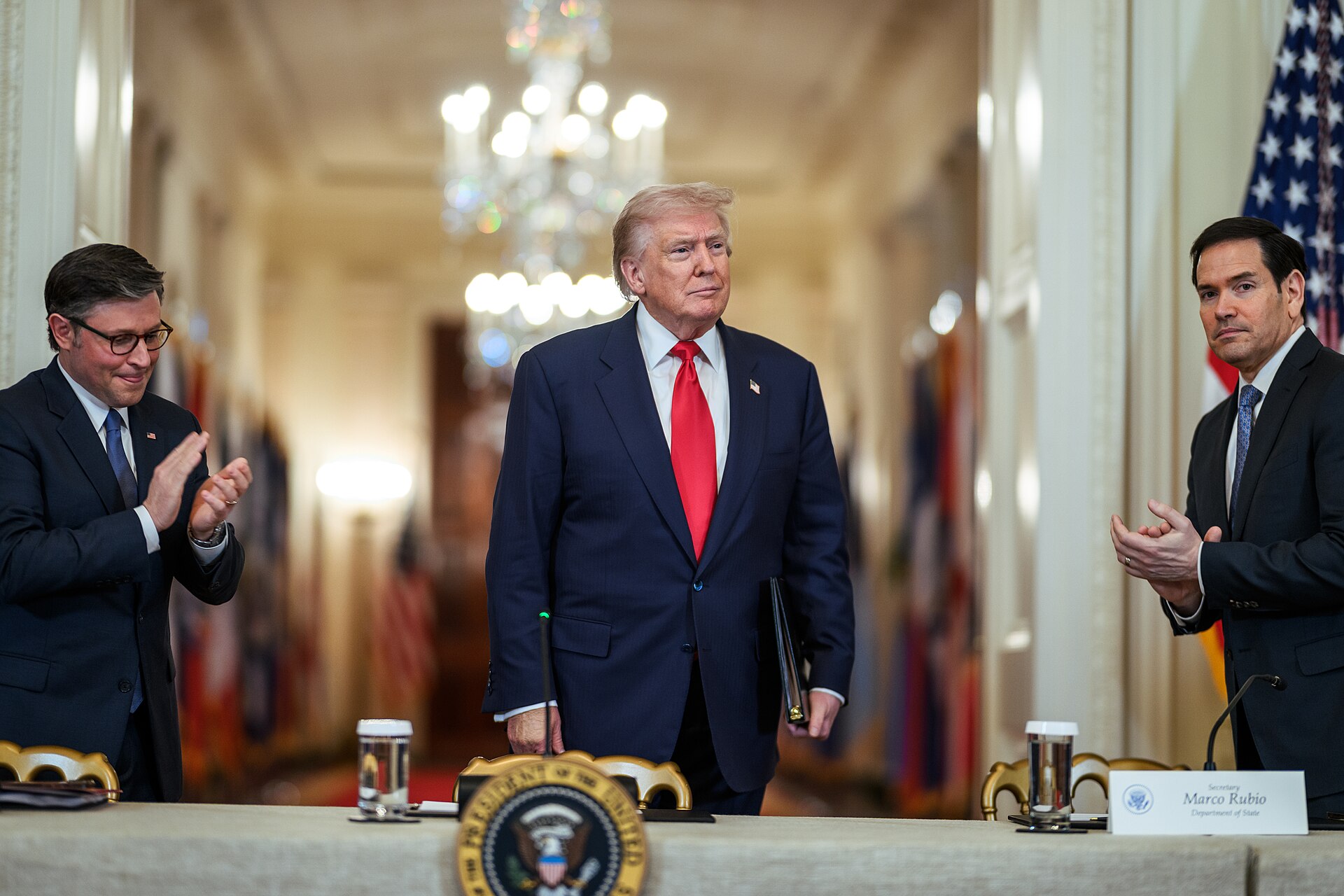
The order calls for the NCAA to update or clarify its rules before Aug. 1 to protect scholarship and competition in women’s and Olympic sports. It aims to limit student-athletes to transfer schools only one time in a five-year period by forcing athletes who transfer multiple times to sit out from competition for a season.
“The order grants the NCAA the ability and suggests the organization limit athlete transfer movement, cap player eligibility, implement funding requirements for women and Olympic sports and prohibit NIL collectives,” Yahoo Sports reporter Ross Dellenger said.
If colleges do not comply with the order, they would be at risk of not receiving federal grants or contracts.
While the order will likely be sued and taken to the courts, its intent is not actually to make changes to college sports. Instead, its purpose may be to spark Congress to pass the Student Compensation and Opportunity through Rights and Endorsements (SCORE) Act.
The SCORE Act would allow the NCAA to set transfer regulations, provide the NCAA with some antitrust immunity and prevent the organization from restricting student-athletes’ ability to enter NIL agreements. The act will be amended and reintroduced to Congress sometime this month.
“The order also calls on Congress to quickly pass legislation to address these critical issues,” a White House fact sheet published on April 3 said. “While Congress is strongly encouraged to expeditiously pass legislation, further delay is not an option given what is at stake and the turmoil and instability currently facing universities across the nation.”
Tom Mars, a notable college sports lawyer who helped Ole Miss quarterback Trinidad Chambliss earn another year of eligibility, took to X to explain why Trump’s executive order would not work. He shared screenshots from a text conversation with a “fellow Republican.”
“An EO is just a directive to an agency of the executive branch. It has no effect beyond that,” Mars said. “The NCAA and the P4 (Power Four) commissioners don’t report to the president. What’s more, the United States Supreme Court has said that an executive order does not overrule what federal courts have decided.”
Darren Heitner, founder of Heitner Legal, a law firm that specializes in sports, entertainment, copyright, trademark and gaming, took to X to offer support to student-athletes who would be affected by the order.
“If you’re an athlete restricted from transferring because of an expected executive order, then feel free to reach out,” Heitner said. “We will seek emergency relief, as it is an illegal restraint, and will communicate with attorneys general to support such efforts.”
Ole Miss students shared their opinion on the government getting involved in college athletics.
“The government shouldn’t have involvement in college sports just because they’re just too high up to mess with the lives of young kids,” sophomore general business major Leighton Buckmeier said. “At the same time, they’re bringing in so much money that it doesn’t seem right.”
Former collegiate bowler at Blue Mountain Christian University and sophomore law study major Michael Johnson weighed in on the matter.
“I feel like there shouldn’t be any government (involvement) in NIL because that’s more personal for the players,” Johnson said. “It’s something that they earn for being (the) player that they are.”