






























Everyone has some sort of insecurity. Whether you have always been miserable at math, hate the sound of your own laugh or boast a blob-shaped birthmark on your left knee, you likely have a trait that sets you apart from others.
Many of us learn to accept our differences, but some shame themselves and project their insecurity onto others. Others reject them entirely, pretending their entire lives they don’t have one at all.
Imagine that you have an invisible birthmark. Every glance in the mirror tells you something is out of place, yet you lack the words to describe it. You constantly feel as if you must change everything about yourself to be adequate but have no idea what or how to start.
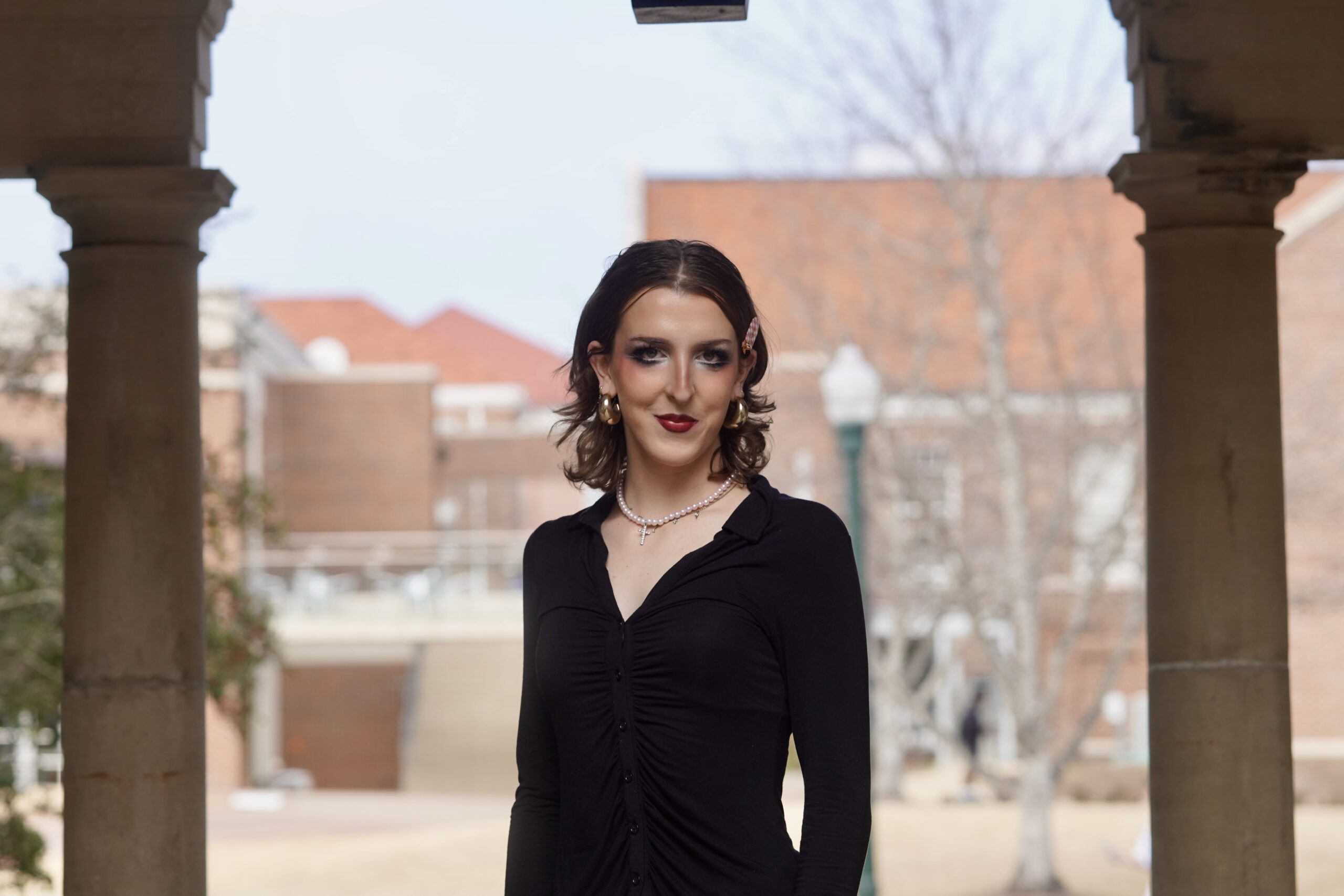
For 18 years of my life, this was my reality each time I saw my reflection. I always felt deeply insecure but never could place a finger on why.
Gradually, through years of seemingly unproductive introspection, I recognized the issue as gender dysphoria. I could then begin the painful process of understanding why I had always felt so different.
Gender dysphoria is defined by the American Psychiatric Association (APA) as a “marked incongruence between one’s expressed gender and assigned gender,” which, when not treated, can cause severe anxiety, depression or even suicidal ideation.
It is easier to convince a skeptic in the validity of being transgender when one looks at medical outcomes. Gender affirming care, which includes a range of medical and social interventions designed to support an individual living as their truest self, has been recommended by leading medical organizations as a tool to mitigate gender dysphoria.
Research from the Stanford University School of Medicine, which underwent the largest-ever survey of 27,000 transgender adults in the United States, found that individuals who started hormone replacement therapy in adolescence were less likely to experience major mental health issues and suffer from substance abuse than those who started later in adulthood.
Gender affirming care saved my life. Without hormone therapy and people in my life that supported me, I might not be here today.
I had been waking up each day and presenting myself as the most palatable version of me, but I was tired of trying to force myself into an archetype that made no sense for me. I had grown into a body that I hated, not because I hated myself, but because I had been forced to live my entire life as something I wasn’t. This realization defied most everything I knew.
During International Transgender Day of Visibility, a time dedicated to affirming the inherent beauty and value of transgender people, I celebrate who I am as a trans woman. Unfortunately, however, I must spend the day fighting for my right to exist.
For me, International Transgender Day of Visibility is a yearlong protest.
Gender is supposedly innate; we are born into it and cannot ever break out of it. I recently heard a metaphor that perfectly encapsulates what being trans feels like.
Imagine you were kidnapped as a baby girl. The circumstances are unimportant, only that you were taken before you remember. You are raised as a boy, expected to become a man and perhaps could always sense something was off.
Whether you like it or not, gender is a social construct, meaning that the rules, behaviors and expectations are created by culture rather than biology. We don’t exit the delivery room as little boys and girls — but as infants.
We spend our formative years in life attempting to understand how to exist. Our impressionable eyes register speech and behavior which we then categorize as masculine or feminine, adopting respective traits for ourselves.
I distinctly remember being jealous that my little sister received a princess play set for Christmas and I received a Captain America shield, using pastels to paint my five-year-old fingernails, then being reprimanded, and sneaking into my parent’s bedroom to apply makeup.
For practically all of us, we are segregated by gender from birth on the assumption that the coed is dangerous. We perpetuate those beliefs as children, internally solidifying gender rules passed down to us from our parents by theirs.
This context is important to understand because it permeates every conversation our society can have on gender.
In 2026, the term “transgender” is more loaded than a hot potato, tossed through the game of politics as an issue of unrivaled importance.
While discussions should be based on lived experience and what is best on ensuring happiness, transgender women are demonized. They are deemed as delusional, or even worse, predators. To voluntarily rebuke one’s masculinity is an insult to the patriarchal system that governs our lives.
This phenomenon is especially relevant in debates over bathrooms. In 2024, Mississippi became the 12th state to restrict transgender students from using their preferred bathrooms, a precaution devised supposedly to protect women’s spaces from “predators.”
This might seem like a fringe issue, and that is because it is. The trans bathroom debate is a fabricated dilemma designed to distract you from the issues that really matter.
Nine hundred U.S. billionaires saw their wealth increase by a combined 18% while the bottom 90% stagnated. Remember Winter Storm Fern? Extreme weather like that is only going to become worse and more common with the looming threat of climate change. Half of Americans struggle paying their healthcare costs, and one-third of Americans are skipping meals and other daily necessities to afford them.
That being said, many Southern state legislatures maintain preventing transgender people from relieving themselves as their utmost political priority.
According to the Movement Advancement Project, a nonprofit organization that tracks LGBTQ+-related legislation across the country, 19 states restrict a transgender person’s ability to use the bathroom that aligns with their chosen identity.
In 2024, Mississippi Governor Tate Reeves signed into law SB 2753, known as the SAFER Act with the intention of “keeping our daughters safe,” which he justified in a highly partisan statement on X.
I would believe that Reeves and other anti-trans Republicans were well-meaning if their track record reflected well for protecting women’s rights. The fact that far-right politicians are spending such an outsized policy platform for 0.41% of the population, or around 9,600 of the transgender adults in Mississippi, points to a more pernicious reality.
The fixation on trans issues is purposeful. It is far easier to aim a campaign at a scapegoat than to overhaul the systems of inefficiency and oppression that continue to hinder the Magnolia State from its greatest potential.
This is very clearly only an attempt to erase trans people from public life –– to render them effectively invisible.
Our political conversations are dominated by dramatized caricatures of scary trans women, while all we want to do is live the American dream. These very issues, imagined for the sake of division and distracting collective action, have dangerous consequences for real people.
Transgender women are told to use the men’s restroom because cisgender women are supposedly unsafe in the same room as us. Following that logic, would an assailant-to-be really be deterred by a gendered sign on the bathroom door, and in order to commit a heinous act, transition?
Transgender people deserve to not only be visible but safe. Transgender women are far more likely to be assaulted in the men’s bathroom than they are to ever assault a woman.
Transgender women, such as me, comply with such regulations and are then harassed, or worse. For us, it is not merely a matter of relieving oneself but of basic security. In fact, trans people are more than four times more likely to experience violent victimization than their cisgender counterparts, despite making up less than 2% of the population.
The bathroom debate reflects a broader cultural regression –– from banning young trans girls from playing in sports, forcing people like me to put ‘M’ on my birth certificate or making life-saving care that much harder to access.
I cannot expect or demand anyone to affirm or accept my womanhood, especially in Mississippi. I do not, however, require that to be secure in my own identity.
I will continue to be seen, even if I have to use the men’s restroom and confuse every male patron. I always will be and always have been the woman that I am today, and nothing and no one can dim my light.
Lenora Collier is a sophomore international studies major from Hattiesburg, Miss.