























No. 17 Ole Miss Baseball is 11-10 in SEC play after losing the series to No. 5 Georgia at Swayze Field on April 25-26. The weekend was a roller coaster of highs and lows for the Rebels and encapsulated the story of the 2026 Ole Miss Baseball team.
The Rebels fell to 4-7 in SEC play after being swept by then-No. 6 Mississippi State at home March 27-29 and getting shut out in game two against then-No. 21 Florida, but a six-game SEC win streak pushed them back up to 10-7.
Now, after scoring only one run in 14 innings in the latter half of the Georgia series, there is some cause for concern. Tristan Bissetta and Judd Utermark were unproductive against the Bulldogs. They totaled four hits and 11 strikeouts in the series.
Utermark also struck out four times against Mississippi State in the Governor’s Cup on Tuesday, April 28.
Ole Miss needs those two bats to stay hot in order to succeed. The duo’s combined 36 homers and 91 RBIs this season are a large part of the offense’s success. Without these two, winning becomes much more difficult.
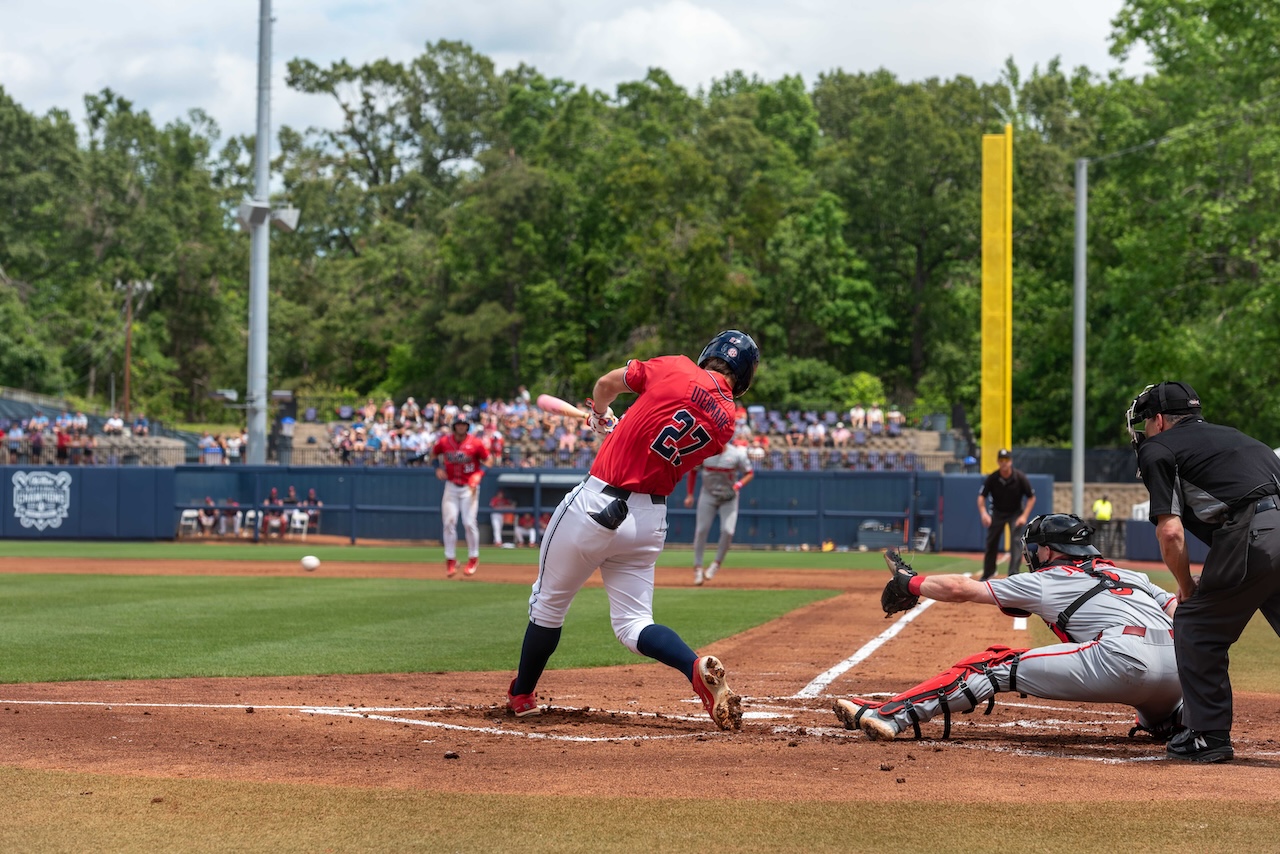
The first big test of the season was the BRUCE BOLT College Classic on Feb 27-March 1. Ole Miss beat Ohio State but lost to Baylor and then-No. 9 Coastal Carolina. The biggest concern coming out of the classic was the Rebels’ reliance on home runs. Twelve of Ole Miss’ 15 runs came from homers; the Rebels did not produce much outside of this.
Bissetta’s two homers nearly carried the team to a victory against Baylor, but the Rebels lost in 10 innings. They only scratched across two runs against Coastal Carolina. Go-ahead or game-tying homers shifted momentum in their favor throughout the weekend, but they could not make this last.
Ole Miss began SEC play with a dramatic comeback victory in game one against then-No. 2 Texas on the road. The Rebels trailed the Longhorns, 7-3, entering the ninth inning; however, they scored five runs, four off a Bissetta grand slam, to take the lead. Texas forced the game into extra innings, but the Rebels managed to steal the victory.
In game one, Bissetta and the Rebels showed that they could compete in the tough SEC. Despite being down by four against a top team like Texas, they clawed back.
Hunter Elliott was not sharp in his SEC season debut. He allowed four earned runs, and more concerningly, he threw 92 pitches in just five innings. He had eight strikeouts, but he was not efficient.
The bullpen was strong in nonconference play. In game one against Texas, the bullpen was also solid, aside from Hudson Calhoun giving up a three-run homer. The bats were lively, and they got timely hits.
However, that high did not last long. The Rebels lost the next two games against the Longhorns by a combined 15 runs. Starter Cade Townsend left game two after just one inning, so the bullpen was overworked. Still, the offense stalled in games two and three. The Rebels were 3-of-22 with runners in scoring position and only scored four runs across these two games.
The Rebels rebounded well with a 5-0 victory in game one against then-No. 15 Kentucky, but, once again, they relied on homers. They went 1-of-6 with runners in scoring position. In game two, they lost, 3-1. They totaled four hits and scored one run off a homer.
The Rebels exploded for 12 runs in game three, including seven runs off homers, in an electric rubber match. The Rebels won, 12-9, and took the series.
While the Rebels were still too reliant on the homer, this was a promising series. Will Furniss spoke about Ole Miss breaking out of the slump after the 12-run explosion against the Wildcats.
“All it takes is one swing. … We go through a little bit of ruts,” Furniss said. “We can’t control when they happen. These last couple weeks (are) just a rut. We know our offense is super talented. We’ve got the guys to do it.”
Furniss’ comments were a bit premature. They lost a midweek game to Memphis before getting swept by then-No. 6 Mississippi State at the end of March; the Rebels were outscored 18-6 by their in-state rival.
Bissetta’s batting average dipped from a .369 to a .342 after the Mississippi State series; during the four-game skid, Bissetta went hitless and struck out 10 times.
The next week, a game-one victory over then-No. 21 Florida on the road sparked hope. However, the Rebels then went on a 20-inning scoreless streak in the series. The Rebels lost game two, 2-0.
The turning point in the season was Utermark’s two-run homer in the ninth inning of game three against the Gators to break the drought and lift the Rebels to a victory, 5-2. This marked the beginning of a six-game SEC win streak that propelled the Rebels into the rankings and put them in the regional hosting conversation.
The Rebels rode this momentum to a sweep of then-No. 24 LSU on April 10-12. The Rebels batted .394 with runners in scoring position in the series and beat the Tigers by run rule in game two. The offense clicked, and the team looked like it had pieced everything together. Ole Miss then defeated No. 22 Southern Miss in a midweek matchup, 10-3.
The next weekend, the Rebels traveled to Knoxville, Tenn., to face the Volunteers who, though unranked, were coming off a sweep of Mississippi State on the road.
The Rebels secured the series in two games due to the ever-dangerous 1-2 punch of Elliott and Townsend and an offensive explosion of 15 total runs across both contests. The Rebels dropped game three, but they were 8-1 in their past nine games.
Against No. 5 Georgia this past weekend, however, Ole Miss reverted to its old ways of only scoring runs off homers. Of the 18 runs scored against the Bulldogs, 16 came via the long ball. In game two, despite seven batters reaching base on walks or hit by pitches, Ole Miss did not score in extra innings, and the team’s only run in game three was on a double play.
This being said, the Rebels played well against Georgia — arguably the top team in the SEC. They won game one with an 8-run comeback win and had Georgia on the ropes in game two but failed to capitalize on numerous opportunities.
Ole Miss’ streakiness is an issue. If the Rebels are unable to quickly get through low points, they will certainly fail in the postseason. This roster is capable of greatness — but it is also capable of another regional tournament exit.