





























Pop legend Michael Jackson’s highly-anticipated biopic “Michael” hit movie theaters on Friday, April 24. The brainchild of English producer Graham King, who also produced “Bohemian Rhapsody” (2018), the film follows Michael from his days as a member of the Jackson 5 music group in 1966 to the “Bad” tour in 1988.
The movie is the on-screen debut of Jaafar Jackson, Michael’s nephew through his brother Jermaine. Jaafar’s performance as his uncle is what ties the biopic together. He truly immerses himself in the character of Michael and carries the film through his stellar acting, singing and dancing.
Academy Award nominee Colman Domingo portrays the Jackson patriarch and Jackson 5 manager, Joseph Jackson. The tense relationship between Joseph and Michael is key to the conflict of the film; Michael’s insecurities and health issues that are persistent throughout his life are a direct result of his father’s abuse.
However, the film could do a better job of setting up this dynamic. The first act of the movie glosses over Michael’s time in the Jackson 5 and the violence he endured from his father, boiling the abuse down to one scene in which Joseph calls Michael “Big Nose” and beats him with a belt for talking back.
This setup pales in comparison to the emotionally-jarring moments later in the film when we see Michael suffer from the repercussions of his father’s roughness. He undergoes multiple nose surgeries, obsessed with achieving facial symmetry and looking “perfect.”
The film also focuses a lot of its emotional weight in its third act, when Michael suffered second- and third-degree burns to his scalp after a pyrotechnic malfunction on the set of a commercial shoot for Pepsi in 1984. At the hospital, Joseph has just one cruel question for Michael’s doctor: Can he still perform?
More generally, the movie covers so many years so quickly that it feels like a highlight reel of Michael’s early career. It skips from the “Off the Wall” era to the “Beat It” and “Thriller” video shoots, with no true sense of progression or deep insights into Michael’s creative process in crafting his bodies of work.
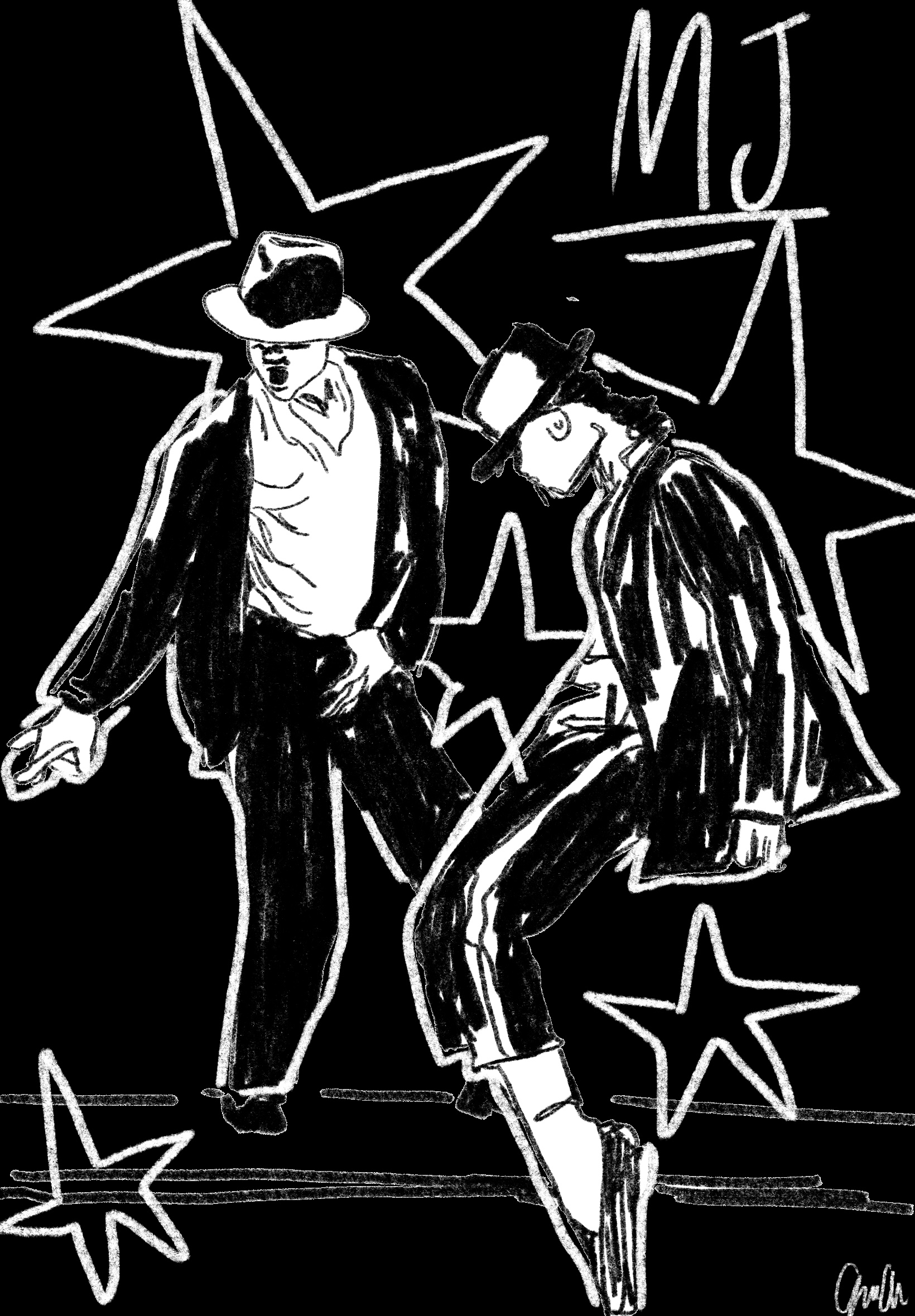
Notably, “Michael” ends in the year 1988, which cuts out a key period in the singer’s life, rife with legal controversy and accusations of child sexual assault in 1993. According to Variety, the filmmakers had originally planned to include this period of Michael’s life in the film, but the Jackson estate uncovered a clause in the settlement with one of the alleged victims wherein that victim was not to be depicted in any movie.
Also, three of Michael’s siblings — Rebbie, Randy and Janet — are nowhere to be seen in the movie and were not involved with the film’s production. Even Michael’s daughter Paris is skeptical of the film; she wrote online in Sept. 2025, “The narrative is being controlled and there’s a lot of inaccuracy and there’s a lot of just full-blown lies.”
“Michael” does, in fact, suffer from flat-out historical inaccuracies. For example, when the Jackson 5 performs at the Regal Theater in Chicago in 1968 — the performance in which the group is recruited by Suzanne de Passe, the creative assistant of Motown Records — they are shown singing the song “Never Can Say Goodbye,” which was not written until 1970 nor recorded until 1971.
The film is fit for fans who want to relive the best moments of Michael’s early career via near-perfect reenactments of performances and music videos. However, it lacks the nuance to truly show an interesting — and imperfect — image of the “King of Pop.”