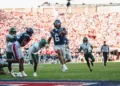











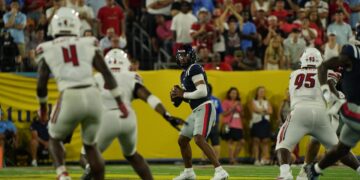
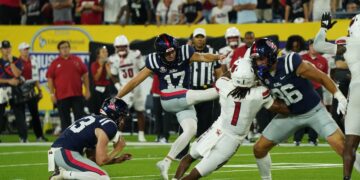
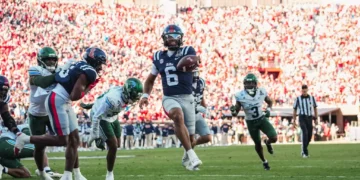














The No. 9 Ole Miss Rebels opened their season against the No. 24 Louisville Cardinals on Sept. 6 in Nashville at the Liberty Mutual Music City Kickoff. The Rebels defeated the Cardinals 42-38, but it was nowhere near pretty.
Despite the victory, many questions remain unanswered on what the Rebels look like and how they will fare against the rest of their opponents this season.
Where was the offensive spark?
Though the scoreboard may not reflect it, the Ole Miss offense has much to figure out. The first offensive drive included an overthrown snap and a dropped pass by running back Kewan Lacy, which was very telling of how much fire the Rebel offense came out with against the Cardinals.
The first half’s play-calling felt very basic. With four plays of 20-plus yards in the whole game, it felt extremely sluggish for a team used to explosive and long-yardage plays.
Quarterback Trinidad Chambliss seemed hesitant of other pass catchers in the first half and had his eyes set on Lacy too many times. In the second half, Chambliss spread the wealth a bit more and his spark returned.
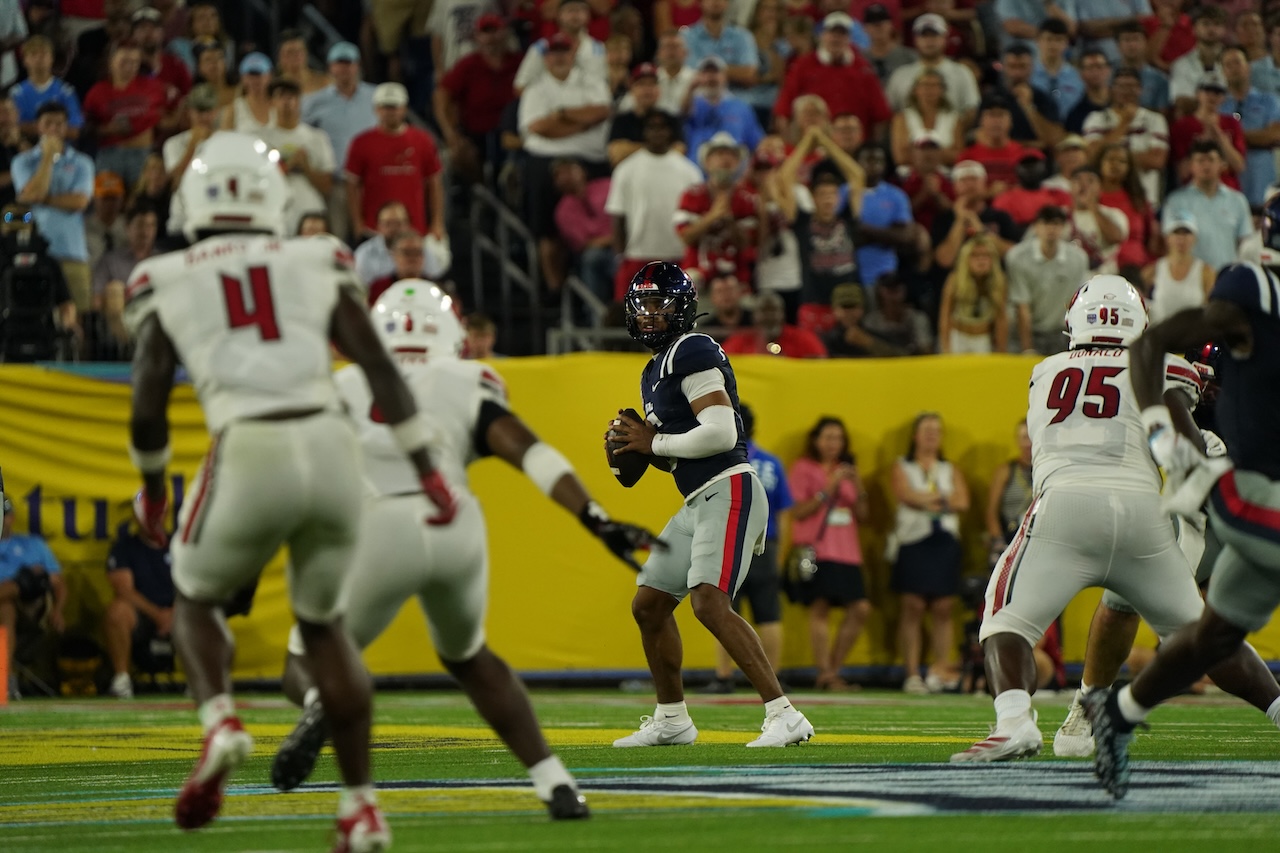
The Rebels put up 31 of their points and 261 of the 336 total yards in the second half. Chambliss threw to seven pass catchers, but he did not target a tight end until after halftime.
In the second half, Deuce Alexander was his most prominent target, catching five passes for 159 yards and two touchdowns. Notably, transfer Johntay Cook II did not catch a pass and Darrell Gill Jr. hardly saw the field.
How important is the running back depth?
Lacy was supposedly taking less snaps this season because of a deeper running back core, but the other backs did not see the field much until Lacy exited the game due to a small injury after the half.
JT Lindsey and Makhi Frazier found their way into the rotation in the second half and proved exactly why it is important to have depth in the backfield.
Lindsey and Frazier’s runs got the ball down the field on touchdown drives. With Lacy out, it was vital to the offense to still have backs that could be physical and move the ball. Both backs recorded seven carries and were efficient, but they were unable to have the same explosiveness that Lacy demonstrated in 2025.
Preserving Lacy was also a top priority heading into this season because of the extra options at the position. From an offensive standpoint, it is preferable that Lacy sees fewer carries so he can last longer at a higher level. Additionally, the coaching staff must trust the other backs and know they can get the job done.
Who will step up in the receiving core?
WR1 is one of the most important titles one can have as a Rebel wideout. Each year, there is a clear answer as to who holds the title. This year, Alexander seems to be that guy, but what happens from there?
Alexander is the most impactful returner to the Ole Miss receivers. In the third quarter, he scored twice on 62 yard-receiving touchdowns. Despite exiting the game with a cramp, Alexander was the most efficient Rebel receiver by far.
Cook did not contribute as much as anticipated. On one target, Cook overran Chambliss’ pass and was not able to recover it. His performance fell short of expectations.
Horatio Fields caught five passes for 47 yards on seven targets. Fields was also expected to have a large showing, and his performance definitely factored in, but it was ultimately overshadowed by Alexander.
Traylon Ray caught two passes on two targets and charted 30 yards. His catches alongside three grabs from tight end Caleb Odom showed more of what the receiver core has to offer. Yet, the depth of this position is a major question mark going into Week 2.
What happened in the secondary?
The Rebel front seven looked solid against the Cardinals, in the first half, but the secondary struggled all throughout the matchup.
Starting cornerback back Antonio Kite left the game early and fall camp standout safety Sharif Denson did not compete for the Rebels in the opener. These two missing pieces affected how the secondary looked against the Cardinals and the quality of their performance.
They consistently did not break up passes and allowed big plays down field. Safety Jaylon Braxton took multiple poor angles on big gains and was unable to break up a two-point conversion late in the third quarter.
The defensive side of the ball went into a lull in the third quarter and allowed 18 points in 15 minutes, but the secondary continued to come up short late into the game.
Safety Anthony Robinson III allowed a major touchdown in the third quarter that tied the game at 24. In the fourth quarter, Robinson gave up another touchdown to put the Cardinals within one score of the Rebels, 38-31.
Ole Miss showed many snippets throughout the game of how well they are capable of playing, but correcting these mistakes and determining what needs to be fixed will be vital for success in the rest of the season.