






























Ole Miss Football will begin its most important season in program history on Sunday, Sept. 6. Winning in 2026 is crucial for the long-term success of the program. Head coach Pete Golding and his program have much to prove in their first full season together.
Success for Rebel football has been redefined. Last season, Ole Miss won two playoff games, including a Sugar Bowl win over Georgia, the SEC champion. Winning double-digit games in the regular season and advancing to the College Football Playoff is no longer good enough. Now, the team must continue to win in the postseason. Athletic director Keith Carter echoed this sentiment in an interview with The Daily Mississippian.
“I think (Golding) totally understands now, like we all do now, that the expectation is that we want to get in the playoffs and we want to make deep runs,” Carter said.
This season is another “last dance” for several of the team’s 2025 heroes. After the 2026 season, quarterback Trinidad Chambliss, linebacker Suntarine Perkins and running back Kewan Lacy will likely be drafted to the NFL.
After the 2024 season, eight Rebels were selected in the NFL Draft. Still, the Rebels had historic success in 2025 despite significant roster turnover because they successfully replaced their lost talent.
To succeed beyond 2026, the Rebels will need to replace a significant amount of talent again. The best way to do this is to attract top prospects from the transfer portal and high school.
Continuing to win means that high-quality transfers and recruits will want to come to Oxford. The transfer portal opened just after the Sugar Bowl on Jan. 2 and Ole Miss landed big-name players early. Jay Crawford, Michai Boireau, Keaton Thomas and Jonathan Maldonado all transferred to Ole Miss in the short span of days between the Sugar Bowl and the Fiesta Bowl.
The Rebels cannot pitch 2025 success to the 2027 portal class. Having some one-off great years does not make a program elite. Golding and the Rebels must succeed in the playoffs again to keep the momentum going on the field, in the portal and on the recruiting trail. Winning in year one will further legitimize Golding and his staff and keep good players flowing into Oxford.
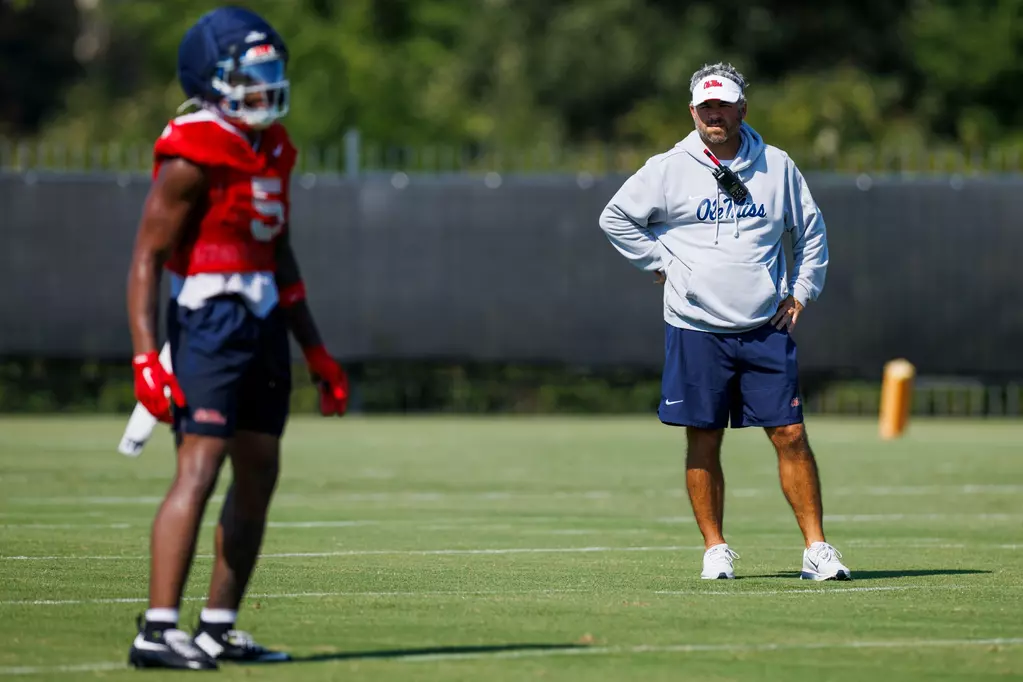
This is the first year in the name, image and likeness era without Lane Kiffin. Golding has structured the program to succeed without Kiffin by bringing in a strong coaching staff and professionalizing practices, but that must translate to success soon. Winning in 2026 will separate the program from its former head coach; failing to do so will prolong the idea that Ole Miss cannot win without Kiffin.
Golding and his staff proved they were elite recruiters over the summer. The Rebels currently have the No. 14 2027 recruiting class in the nation, per 247sports, which includes 11 four-star and 11 three-star prospects. Comparatively, Ole Miss’ 2026 recruiting class featured eight four-stars and 14 three-stars.
While the new Rebel football administration has taken a step forward in recruiting in a short period of time, acquiring high school talent remains a volatile business. A top-15 class in August may not be so highly ranked in December.
Moreover, retaining recruits is difficult in an era when players frequently, and abruptly, switch their commitments. Within less than two days in June, defensive lineman Ben’Jarvius Shumaker committed to Ole Miss, shut down his recruitment (affirming his commitment to the Rebels), flipped his commitment to Colorado and then recommitted to Ole Miss.
The staff’s stellar work in bringing in top high school recruits could take a hit if the team does not perform well this year. Winning serves as a powerful incentive for one of Ole Miss’ strongest recruiting classes in recent memory to remain committed to Oxford.
Golding and his staff retained many top players, including homegrown talents like defensive tackle Will Echoles and defensive end Kam Franklin. They also hauled in the No. 2 portal class and No. 22 recruiting class, per 247sports.
Expectations are at an all-time high. The Rebels’ defeating the top teams in the conference no longer warrants students rushing the field in celebration, as proven when students did not storm the field after the victory over then-No. 4 LSU last season.
“We’re judged by the scoreboard, and (Golding has) got a lot to prove as a first-time, full-time head coach with his first full season,” Carter said. “We think the expectation is up there pretty high.”
Now, it is up to Golding and Chambliss to deliver consecutive seasons of greatness, something Ole Miss has not been able to do in recent years. After a Peach Bowl win in 2023, the Rebels fell short of the playoffs in 2024. In 2021, they won 10 games and earned a place in the Sugar Bowl, then followed this up with an 8-5 season.
2026 is also vital on an individual level, too. The Rebels have two strong cases for an award that no Ole Miss player has ever won before: the Heisman Trophy. The Ole Miss Athletics Department began Chambliss’ and Lacy’s Heisman marketing campaigns in July. If either player wins the Heisman, the national image of the program will be instantly boosted.
Oxford would be known as a place where top-tier athletes go, and, perhaps more importantly, Ole Miss would be known as a program that can identify top-tier athletes.
Seven of the last nine Heisman Trophy winners, excluding 2024 winner Travis Hunter from Colorado and 2025 winner Fernando Mendoza from the new heavy-weight program Indiana, all played for “blue-blood” programs, which are historically elite programs like Oklahoma and Alabama.
The Rebels have a 23% chance to make the College Football Playoff this season according to ESPN. Surpassing those expectations in year one with a new head coach is critical for establishing long-term success in a hostile SEC environment.