






























After winning over readers with its mix of romance, academia and workplace tension, Ali Hazelwood’s “The Love Hypothesis” has officially made the jump to the screen, premiering Sept. 23 on Amazon Prime Video.
The film follows Ph.D. student Olive Smith (played by Lili Reinhart) and her awkward encounters with one of the professors at her university, Adam Carlsen (Tom Bateman). After discovering that her best friend Anh (Rachel Marsh) is interested in her ex-crush Jeremy Langley (Nicholas Duvernay), Olive decides to “fake date” Adam in an attempt to convince her friend that she has moved on and encourage Anh to pursue Jeremy.
This premise sounds absurd and leans into an overused trope. So, what is it about “The Love Hypothesis” that makes the movie so enjoyable?
In movies where the plot seems disconnected from any possible reality, it can be expected for the acting to be subpar, but the two lead actors here do a surprisingly good job. Reinhart’s performance is full of convincing emotional breakthroughs that feel natural and relatable. Her male costar, Bateman, is able to convey Adam’s reserved personality while remaining charismatic, although the character is known for struggling to produce passionate facial expressions.
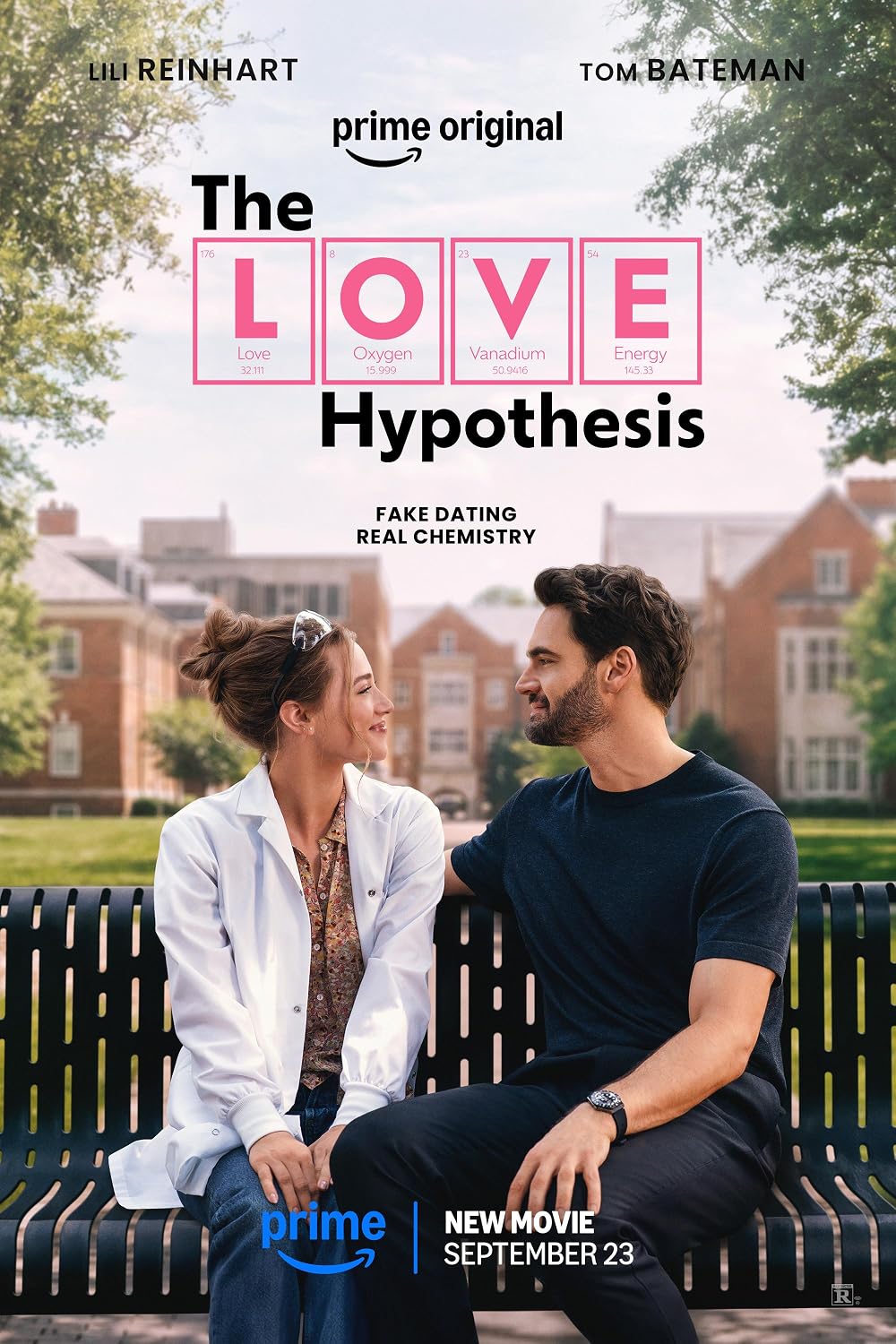
Olive’s playfulness and awkwardness, paired with Adam’s stern demeanor, bolster scenes full of hilarious moments and unexpected chemistry that builds up and feels authentic.
While the romantic elements work well, the script feels slightly forced at times — the progressive message is told rather than shown. Since Olive is a woman working toward a successful career in science, a male-dominated field, the movie attempts to show the sexism and pushback she faces.
Instead of letting her on-screen experiences show her misadventures, on-the-nose dialogue full of exposition is presented to the audience many times in the first twenty minutes of screentime. The characters that suffer the most from this lack of depth in dialogue are Olive’s best friends, Anh and Malcolm Browne (Jaboukie Young-White), but their laughter-inducing scenes are almost enough to convince the audience to ignore the moments in which the bluntness of their lines dumbs down the script.
Rom-com classics, such as “How to Lose a Guy in 10 Days” or “The Proposal,” have maintained their charm throughout the years despite their unbelievable plots. The stories succeed in their delivery due to sarcastic humor, charismatic actors and romantic montages to iconic songs.
As movie trends have changed to become more realistic, rom-coms are now mostly found in book adaptations. Fans that are married to the source material can now let out a sigh of relief knowing that “The Love Hypothesis” has done justice to the genre.
While minor plot points are changed, such as the elimination of the scene from the book when Olive sits on Adam’s lap in the middle of a lecture (and let’s be thankful for the erasure of that awful scene), the essence of both main characters remains the same. Olive is still full of quirky jokes and witty behavior, and Adam is still a serious, ruthless professor with a soft spot reserved for our heroine.
The setting also does not feel plausible at times, since Olive and her friends behave more like undergraduates — they hang out at a fraternity-like house and watch lectures — rather than actual Ph.D. students. Yet, “The Love Hypothesis” does what rom-coms do best: it makes painfully self-aware jokes that invite the viewer into the absurdity of it all, mixed with an endearing love story.
Although most will anticipate an eye roll by simply reading the synopsis, a lot of viewers will be taken by surprise and find themselves invested in the characters’ development. By the end, they may be rooting for the couple.