






























This semester, Starship rolled out a cutting-edge lineup of delivery robots on the University of Mississippi campus, with models that look cuter than the older ones and possess more precise motion detection.
For most of us, the Starships have always been just another part of campus. When you walk to the Student Union, it is not unusual to find a line of Starship robots patiently waiting for food right alongside you.
In fact, most people feel genuine affection for these robots. I certainly do. We instinctively step out of their way, wait for them to cross the street and even say “thank you” when they deliver our food — all as if they were fellow human beings.
However, our affection for these robots is not accidental. It is the result of purposeful design choices made by their creators. These choices trigger a biological response in humans, enabling what is essentially weaponized cuteness.
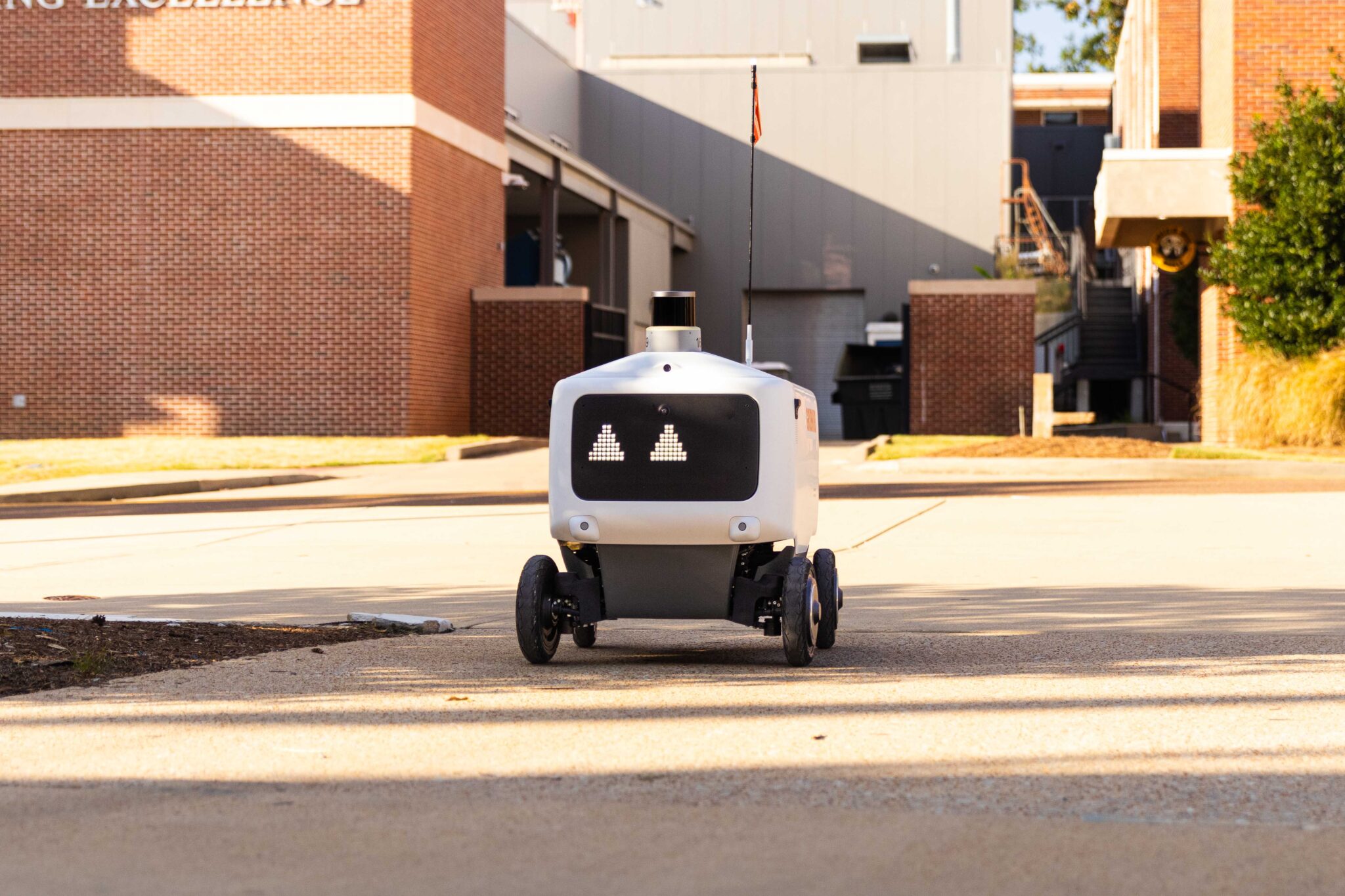
Why do we feel so protective of these robots? They are just pieces of plastic and metal created for human convenience. The evolutionary biology theory behind this is called the Kindchenschema, or baby schema. It is a framework that outlines certain physical traits that trigger empathy in humans. These traits include large heads, round bodies and short limbs.
A study conducted on baby schema in human-robot interactions found that perceived cuteness can be correlated with increased positive emotions and caretaking behaviors. This means we view robots as vulnerable beings rather than technological machines.
From a functional perspective, the anthropomorphization of the Starships is a necessary survival mechanism for the robots. Imagine if the cute Starship you know actually looked like a cold metal cage with no face or discernable personality. People would likely treat it with suspicion or hostility.
The cuteness schema reduces our negative perceptions of autonomous tech. It is the reason we feel sorry for the machine when it tips over, and the reason we go out of our way to help it.
There is a clear ethical problem here, though. Should tech companies be able to exploit our human emotions for profit?
By designing robots to play on human biology through the baby schema, tech companies are engaging in a form of anthropomorphic deception. When we view a machine as a harmless, friendly creature, we are less likely to question its true nature as a data-collecting device. We end up extending real human empathy to protect and drive profit for a tech company’s commercial product.
I believe that it is fine to appreciate these robots and even treat them kindly; that is simply human nature. However, we should not forget that these robots are commercial tools that have been engineered for a purpose. Their cuteness is a tool.
By recognizing this, we can interact positively with robots while also keeping intact the critical skills necessary to navigate the growing technological industry.
Vidya Adlakha is a senior biological sciences major from Ocean Springs, Miss.