

























I remember when, back in 2020, seemingly everyone was environmentally conscious. “Save the Turtles” was a mantra repeated by consumers and advertisements alike. Metal straws were prominent, and recycling became a common practice. Can we bring that back?
The COVID-19 pandemic quarantine days had a powerful effect on the environment and, subsequently, our concern for the planet. Research shows that during quarantine, emission rates decreased, and the quality of air and water was enhanced due to city shutdowns. However, when the pandemic ended, the “trend” of taking care of the environment did, too, and the quality of air and water returned to its former polluted state. Six years have passed since COVID’s peak, and less than three years remain until we can limit global warming, according to the Climate Clock.
While individual students may have little power to affect climate change, any small action makes a difference, especially if everyone works together — which is exactly why it is so important to recycle.
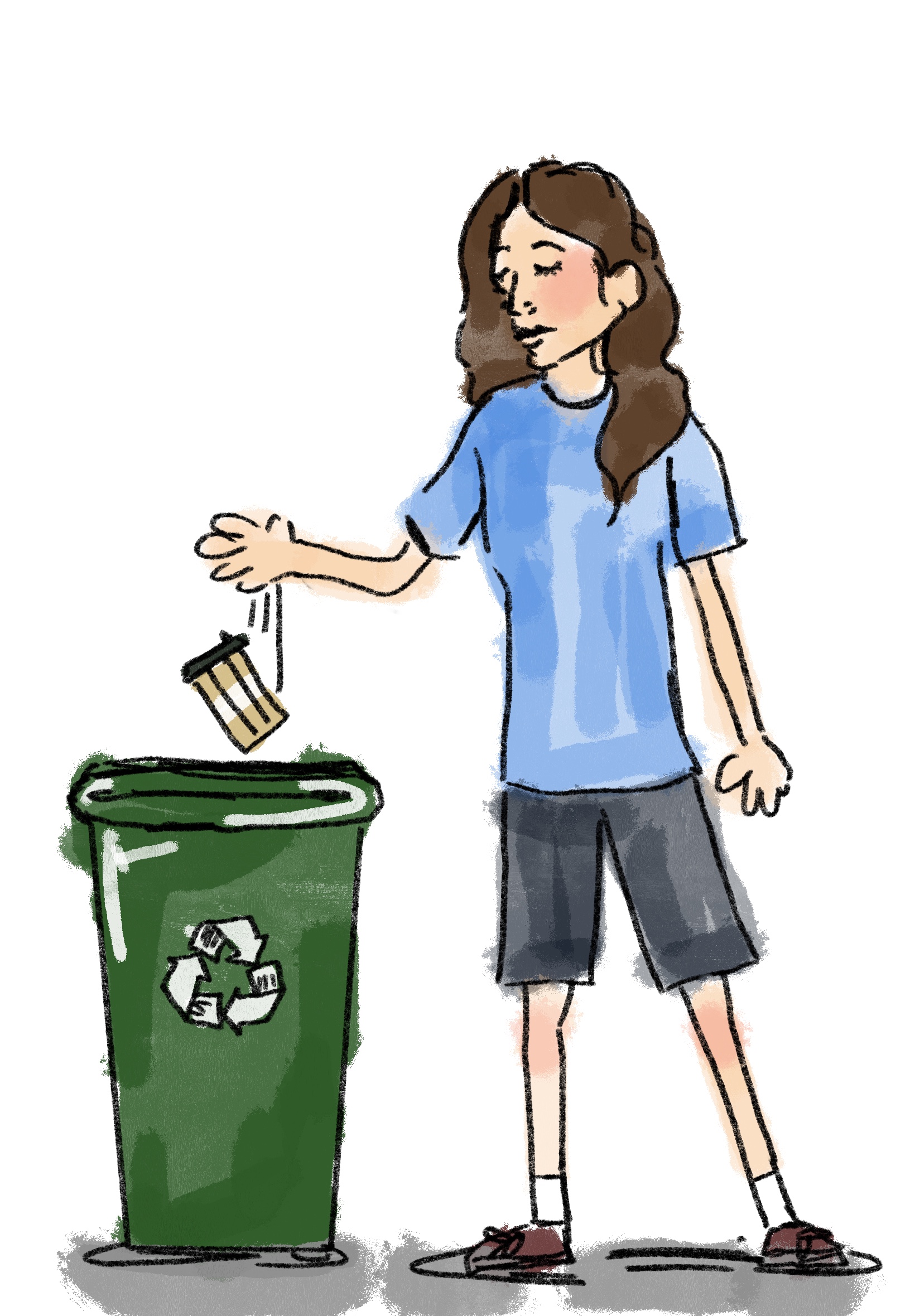
Mississippi is one of just five states with a residential recycling rate below 10%. The average American generates 4.9 pounds of trash daily, which adds up quickly; as of 2018, 146.1 million tons of municipal solid waste were in landfills, when 54% of said waste could be recycled or composted. Think of every candy wrapper, soda can or energy drink that you and your peers have thrown away just this week that will soon join that number.
Val Perez, a freshman nursing major from Olive Branch, Miss., thinks students don’t recycle enough.
“I do not think people our age recycle,” Perez said. “We need to recycle for the health of our planet.”
Though she recycled often back home, Perez said she does not do so as often here at school.
Within the next few years, the global temperature will increase by 1.8 degrees celsius, catastrophically impacting the globe, according to the United Nations. If you think the walk to class is hot now, imagine it four years from now, or even just next year. Terrifying natural disasters will follow this temperature increase, which will be detrimental to human health, food security and water and energy infrastructures.
There is no justification for being ignorant in this matter.
Although we are students, we are still adults with shared responsibilities. It is your duty to register to vote, to write to your senators and to recycle.
If we can reduce, reuse and recycle people and partners in our daily lives, then we should extend that practice to plastics, paper, metal and compost. Throwing away an item in a different colored bin is the least we can do for our planet.
Keep an eye out on campus for recycling bins. Any questions regarding waste can be directed to the University of Mississippi’s Environmental Health and Safety Department. The university also has an Office of Sustainability that offers a Green Student Intern Program, volunteer opportunities, sustainability funding and a recycling guide, all available on its website.
Additionally, the City of Oxford offers recycling drop-offs for residents who do not have access to recycling at their residences. There are plenty of ways to be involved and make a difference; we all need to go back to being conscious and saving the Earth, not just the turtles.
Nataly Tello is a sophomore English and journalism major from Hernando, Miss.