



























For over 175 years, the University of Mississippi’s logos, colors, mascots and visual identity have evolved to represent the university’s complex culture. While some symbols have remained the same throughout the university’s history, others have changed as UM has grown and responded to shifting perspectives, traditions and expectations.
Colors
In 1893, the university’s first football team chose the iconic colors that would represent it for years to come. Selecting the crimson red of Harvard University and the navy blue of Yale University, Ole Miss wanted to embody the spirit and rigor of the two Ivy League schools. The team also thought these colors were aesthetic when paired.
The team first wore powder blue helmets during the 1948 football season and then again from 1983 to 1994. The origin of the powder blue is unknown to football alumni and faculty but can be attributed to a decision by legendary football coach Johnny Vaught.
Will Lewis, a 1958 Ole Miss alum and owner of Neilson’s Department Store, spoke on the history of the university’s colors.
“The colors red and blue were established way back … by professor (Alexander) Bondurant, who was also the football coach,” Lewis said. “That color was maintained by us all the way through until recent history when, somehow or other, this powder blue came in.”
Rebel nickname
Many of the school’s traditions can be traced back to The Daily Mississippian, formerly known as The Mississippian. Before the Rebel moniker, the school’s athletic teams had been called a variety of names, including the “Red and Blue,” the “Mighty Mississippians” and the “Southerners.” “The Flood,” which was coined after the Great Mississippi Flood of 1927, was also used briefly.
However, in 1936, The Mississippian hosted a statewide contest to change the football team’s nickname, claiming that the Flood was neither strong nor recognizable. As students returned to school in the fall, entries were tabulated and turned over to a committee appointed by the athletic department and The Mississippian.
“The University of Mississippi football team needs a new name,” Dan M. Russell, editor-in-chief of The Mississippian from 1935-36, said in an editorial. “Once called the Flood and more lately labeled the Red and Blue, it is now like a man without a country, a child without a home. It has no real nickname with which to be properly identified.”
The paper gathered over 600 suggestions and votes from fans, students and other Mississippians statewide. The Mississippi narrowed the suggestions down to 42 top contenders, which were then sent to prominent sports scribes to vote on. 18 of 21 responders voted for the Rebels, two voted for the Raiders and one voted for Ole Miss.
“The name, ‘Rebels,’ is suggestive of a spirit native to the Old South and particularly to Mississippi,” Albert Russell, 1936-37 editor of The Mississippian, said in the Sept. 26, 1936 issue. “It has local color and should enhance national interest. Furthermore, ‘Rebels’ is easy to use and hard to forget.”
This name has continued to this day, despite receiving criticism for its ties to the state’s Confederate history. The university’s mascot, however, is another story.
Mascot
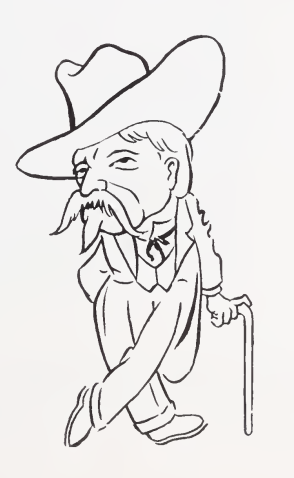
The most well-known official sideline mascot for the Ole Miss Rebels was Colonel Reb, active from 1979 to 2003.
The earliest depiction of Colonel Reb first appeared on the front cover of the 1936-1937 school yearbook. While the origin of Colonel Reb is unknown, some think Billy Hix, the art editor of “The Ole Miss” yearbook, created it. Others believe “The Rebel,” a satirical magazine, may have designed the character.
Many, including late university historian David Sansing, think James “Blind Jim” Ivy, a Black peanut vendor who came to Oxford in 1896, may have inspired the mascot.
Despite the obvious skin tone difference, there is a notable resemblance to Colonel Reb in Ivy.
“If you look at the photo of Blind Jim (Ivy) in the three-piece suit, with the hat, there’s a striking resemblance,” Sansing said in an interview for the Colonel Reb Foundation. “The original Colonel Reb emblem is a spitting image of Blind Jim Ivy, except for white skin.”
Colonel Reb served as Ole Miss’ official sideline mascot from 1979 to 2003, when concerns grew over the character’s ties to Confederate symbolism. Then-Chancellor Robert Khayat and Athletic Director Pete Boone removed Colonel Reb from the sidelines.
“The university itself has to keep its eye on the focus and moving forward — making it possible for you to have a wonderful experience as a student, and be safe and challenged intellectually, socially, culturally. That’s what you do,” Khayat said in an interview with The Daily Mississippian.
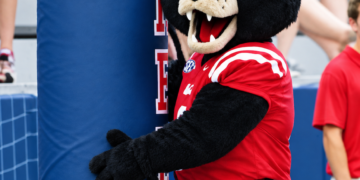
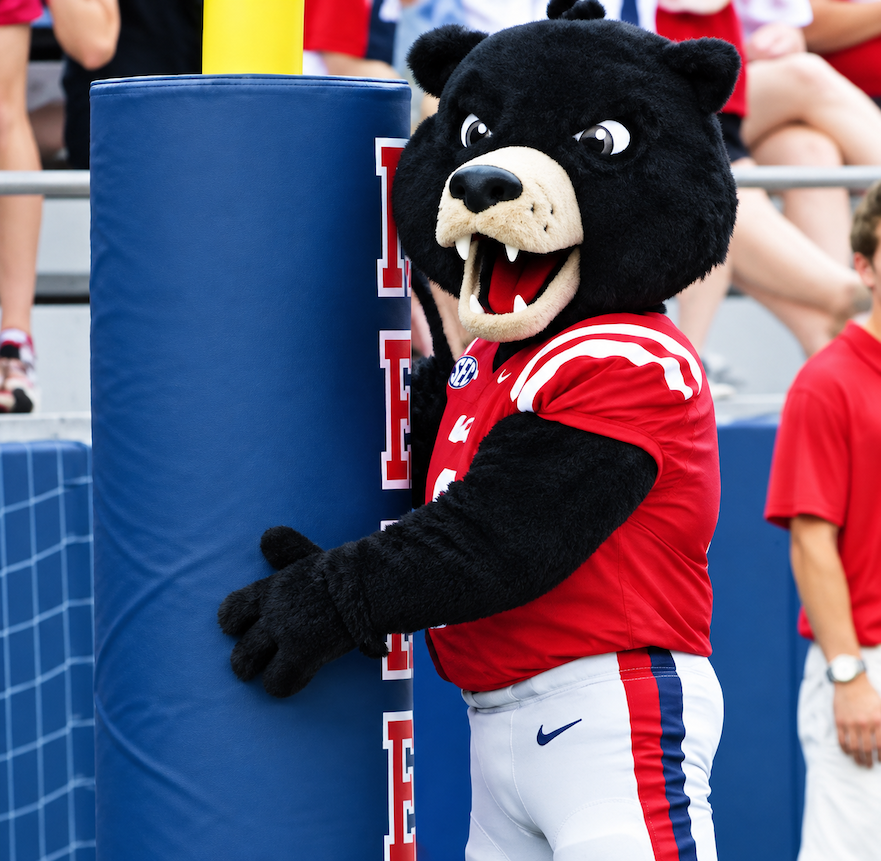
For nearly seven years, the university went without an official on-field mascot until Oct. 14, 2010, when the Mascot Selection Committee selected the Rebel Black Bear using input from students, faculty, staff, alumni and season ticket holders. The Rebel Black Bear made its anthropomorphic debut in April 2011.
Countless entries were submitted to the competition, including some pretty humorous ones. Jeff Roberson, a University of Mississippi alumnus and local journalist, helped choose the mascot.
“Some people thought that a good name would be Hotty and Toddy. Hotty would be the girl, and Toddy would be the guy,” Roberson said. “It was kind of an interesting time, but there are a lot of emotions and a lot of opinions when it comes to mascots.”
The mascot was inspired by Mississippi’s native black bear population and William Faulkner’s novella “The Bear.”
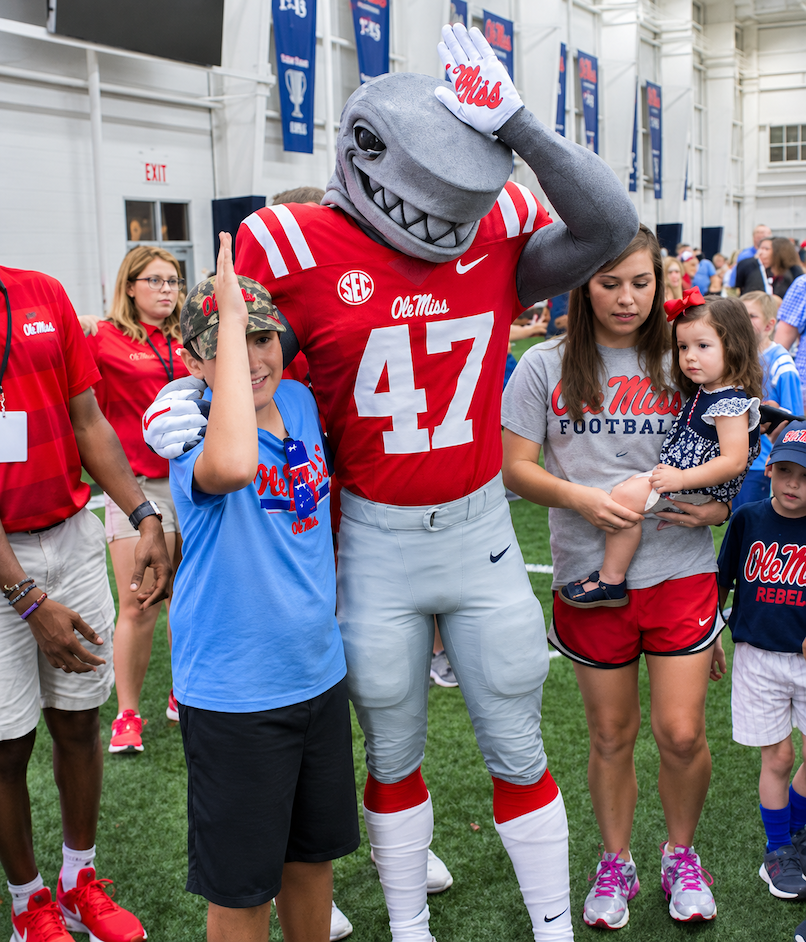
The Landshark became Ole Miss’ most recent official mascot in October 2017, and the name “Tony” was revealed in August 2018. This name honors Tony Fein, a linebacker in 2007-08 who is credited with introducing the “Fins Up” gesture.
Ever since, the Rebels have continued to throw up fins and hold school spirit in Tony the Landshark. Although the landshark remains as the school mascot, he has not been seen on the sidelines since 2021.
The “Ole Miss” Nickame
Like Ole Miss’ mascot, the infamous logos have also changed over the years. Since the university was established, the university seal, featuring “University of Mississippi” and its founding date of 1848, has served as a central emblem and can be called the first logo used by the university.
In line with the 1979 mascot, the first official Ole Miss logo besides the emblem was Colonel Reb, with a cane beside the script “Ole Miss” on a bar with “Rebels.”
After the name “Ole Miss” won the 1896 contest for a new yearbook title, the university’s brand took a life of its own. Although the name has controversial origins, it also has come to represent the university’s nearly two-century-long journey as an institution.
“The yearbook was named ‘Ole Miss’ by a lady here in town (named Elma Meek) — I’m talking turn of the 19th century,” Lewis said. “Ole Miss referred to the matriarch of a plantation. She was known as an Ole Miss… and so a lot of people have complaints with that.”
In 2002, the university started using its signature Ole Miss wordmark in red cursive letters.