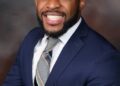







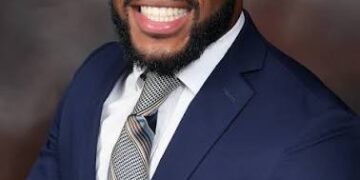












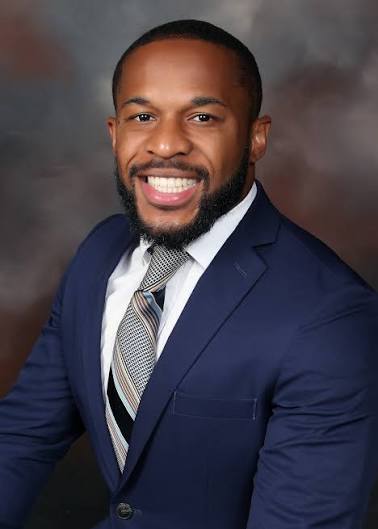
In today’s world of college athletics, often referred to as the “NIL era,” everyone has an opinion on what should be changed in order to “fix” college sports. Louisiana attorney Kordell Caldwell has emerged as one of the leading experts on name, image and likeness deals and spoke with The Daily Mississippian about the legal stance on some of the biggest questions in college sports.
Caldwell does not approach questions as a normal legal expert. Over time, he has built up his reputation as someone who understands all perspectives of NIL deals, in part because he had an NIL contract himself.
In college, Caldwell played football for both Arizona State and Southern University and A&M College in Baton Rouge, La. In 2021, Caldwell earned a deal with Walk-On’s Sports Bistreaux, making him the first law student in the country to sign an NIL deal.
“They reached out to me in 2021, right after NIL first got announced,” Caldwell said. “They reached out and were like, ‘Hey, we really love your story, we’ve heard a lot about you. We would like to do a deal (and) a marketing campaign with you.’”
Caldwell said that his experience allows him to share his unique perspective. He does so through speaking events and his social media channels like LinkedIn or and Instagram (@kordellcaldwell).
“It’s meant a lot to me to share that expertise that I have and to give people those insights, because a lot of people miss the forest for the trees when they talk about NIL,” Caldwell said. “They kind of get stuck to one perspective and the way they’ve always seen things.”
For many fans, NIL deals seem pretty standard. Athletes promote a product or a business, and they earn some money for being famous athletes. Caldwell said that besides NIL, he commonly receives many questions regarding the revenue sharing cap.
Revenue sharing is similar to NIL deals. Per NCAA rules, it allows universities to share up to $21.58 million with athletes. Not only does it allow athletes to benefit from the money they generate, but it also serves for colleges as a “pay for play” to recruit the best players.
Every school is limited by the same cap, but they all seek competitive advantages. One way schools do so is often through collectives, which are organizations outside of the colleges that pool money to help give deals and endorsements to athletes. Ole Miss has the Grove Collective, a group not directly affiliated with, but heavily promoted by, Rebel athletics.
Fans have pointed out that collectives are often used as a backdoor method to circumvent the cap. Caldwell spoke on that point. He also touched on what he thinks the future of collectives could be.
“At some places, there are some people with interest and with abilities that want to see the schools competitive at the top, so (they) can offer (their) own deals to these players that will motivate them to play at the school, but it’s still a third-party deal,” Caldwell said. “(They) don’t work for the school, (they’re) not an agent of the school. Sure, (their) interests are directly aligned, but at the end of the day, they’re the interests (of the donor). You can’t tell individuals how to spend their money.”
Caldwell shared that, in a sense, it is a letter-of-the-law issue compared to the practical effects. Every school looks for competitive advantages, and since giving money is legally allowed, it is likely to ramp up.
That revenue sharing money is not just handed to athletes — at times, it comes with a few strings attached. For example, students must maintain good academic standing and avoid suspension.
With the stipulations, Caldwell spoke about what would happen if a student was to violate his or her end of the contract.
“Every deal is a little bit different … but generally speaking, they have a termination clause or a callback provision, (meaning) if you don’t play this year, then we don’t have to pay you, or at least that we’re going to instill some form of a penalty and significantly cut what you have been paid, or what you will be paid, with the exception of injury,” Caldwell said.
Contracts, whether NIL or revenue sharing, are not available to the public for both privacy and competitive reasons. For example, if a rival school were to find out that an Ole Miss athlete was making $1 million, that school could offer a larger sum to poach the player.
In March, Louisiana journalists sued for access to the records. They reasoned that a public university like LSU needs to share how its money is being spent. The suit was unsuccessful, and states now have some form of a law or standard to exempt deals from public record.
Fans continue to argue for increased transparency, but Caldwell said public access to records is unlikely.
“Journalists would have to get into a real constitutional fight with the states to see to what extent they’re allowed to withhold that information,” Caldwell said. “I don’t foresee that a particular media outlet would have the bandwidth to pretty much take on a state government … because it’s not just attacking the procedure at that point. There’s actually laws on the books, and so they’d have to really attack the law itself.”