































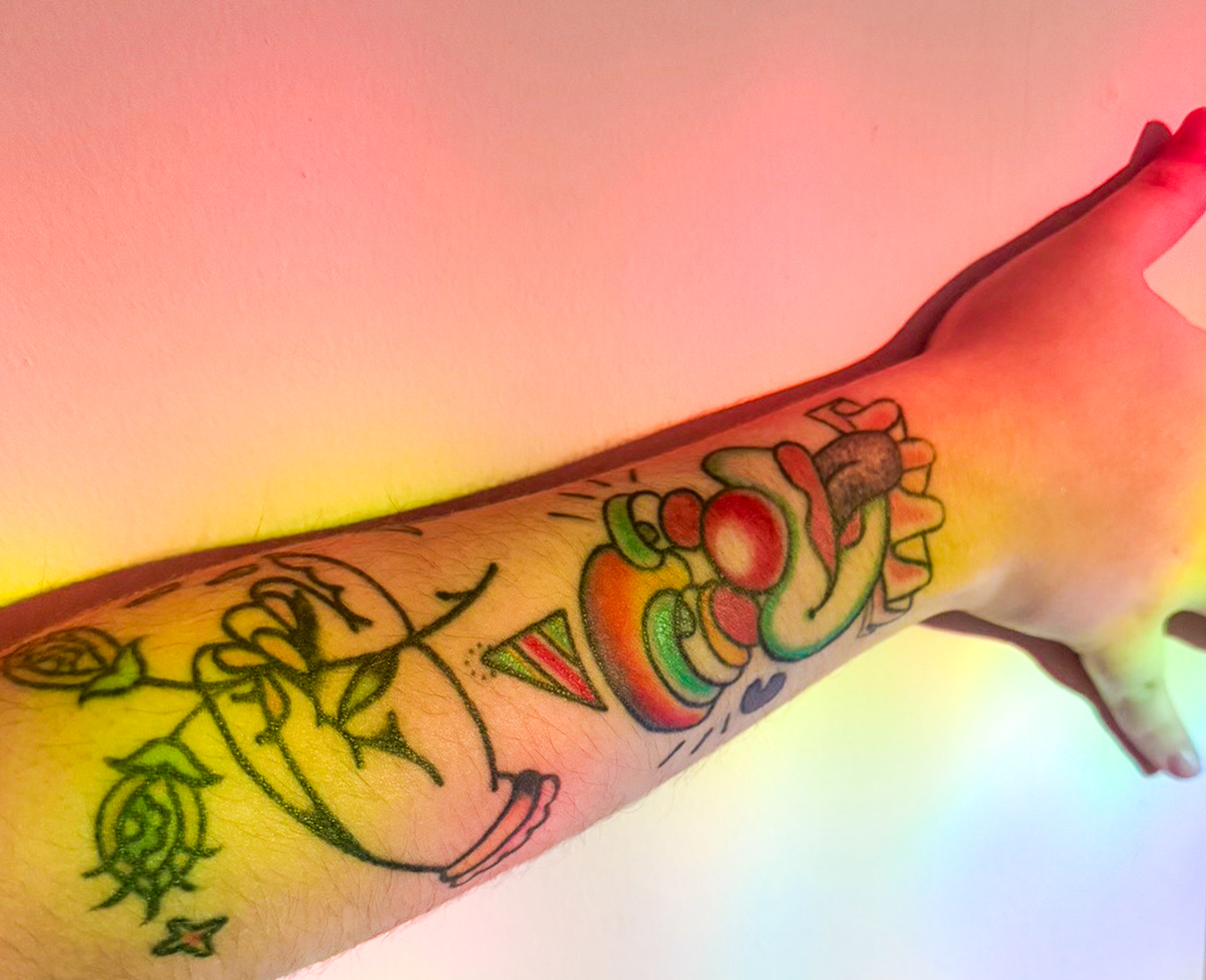
Tattoos are more than just a painfully permanent marking of the body — fundamentally, they are an inherent expression of the self.
The art of tattooing is ancient, spanning 10,000 years across place, time and culture. The earliest recorded tattoo art can be traced back to Otzi the Iceman, whose pre-modern modification has continued into the modern era.
Unfortunately for Americans, the passing of millennia has failed to fully destigmatize the practice. For many, tattoos contain negative connotations.
Here on the University of Mississippi campus, however, tattoos are relatively common. Between Otzi’s primordial era and Oxford’s modern landscape, the historical perception of tattoos being associated with sailors or prisoners has largely dissipated. However, a level of stigma surrounding tattoos and the people that get them remains.
While Pew Research records that 32% of Americans boast at least one tattoo on their skin, prejudice against the practice remains. In fact, nearly 3-out-of-10 of the tattoo-lacking population say witnessing a tattoo negatively impacts their impression, reflecting a bias yet to be expunged entirely.
In professional environments, tattoos remain somewhat taboo. In academic settings especially, being ‘inked-up’ can undercut qualifications and overshadow work ethic.
“Looking different at UM comes with a large social price that compromises opportunities for connections and belonging,” Alana Freimanis, a second-year graduate student in sociology, said.
Freimanis identifies as a gender non-conforming individual and described how their tattoos have set them apart from the crowd in an unpleasant way.
“Residents of Oxford generally show more hostility and judgment in public spaces towards me,” Freimanis said.
Flynn Burchfield, a first-year doctoral student in history, said that he is often the only student in his graduate classes that sports a tattoo.
“I think that’s a shame, because they’re a great form of personal expression and a way to leave marks that have personal meanings upon your body,” Burchfield said.
While some people just get tattoos for decoration, others strive to tell stories with their ink.
Burchfield said that his tattoos reflect the “cover art from albums that saved (his) life ,as well as a deeply personal totem.” Tattoos like these serve as reminders of the experiences a person has lived through and what he or she holds dear.
While tattoos may be permanent, they should never create a burden of shame. As long as they do not symbolize hate or criminal activity, they should be permitted and welcomed in academic and professional spaces.
The practice of tattooing reflects a simple, yet heartfelt desire: self-expression. For many, tattoos are artistic, meaningful and important.
At Ole Miss, where strength is derived from a diversity of creative voices, ink should be worn proudly and perceived without prejudice.
Cedar Bowers is a junior creative writing major from Tupelo, Miss.