






























Gen Z has been described as “chronically online” — a reputation fueled as much by its actual screen time as by its tendency to make countless memes about it. From TikTok trends to the dreaded weekly screen time report, Gen Z has turned digital oversaturation into a brand, leaning into the perception that it is unable to log off.
Some students, however, are starting to push back against this narrative. They are not deleting social media apps but downgrading their phones altogether.
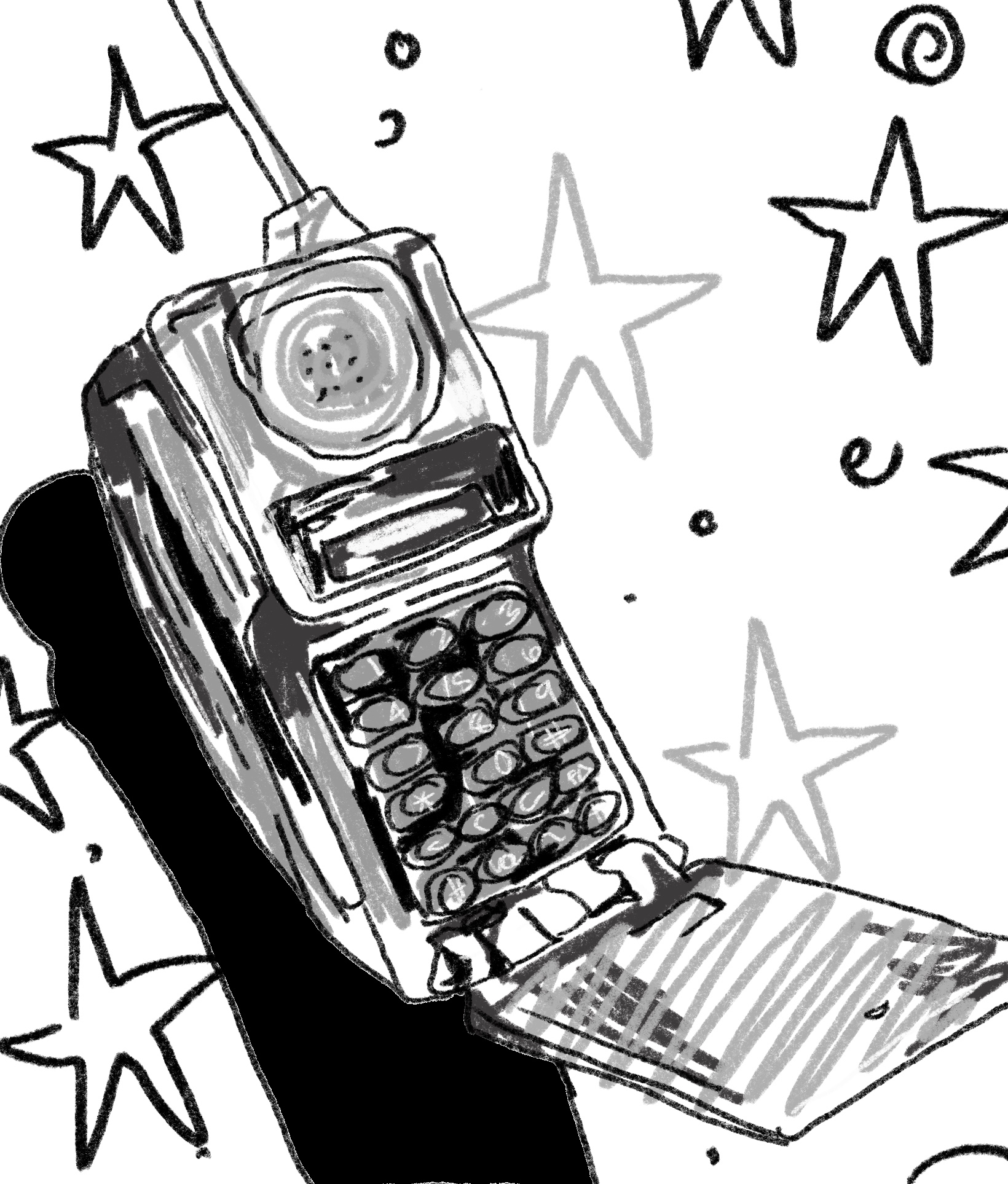
Instead of carrying devices capable of constant scrolling and streaming, a growing portion of Gen Z is turning to flip phones, or “dumbphones.” These phones are designed for less social media engagement and include less features for calling, texting and photographing than their smart counterparts.
Campus culture, however, is not built for dumbphones. QR codes replace menus, professors send announcements through apps, and student organizations advertise primarily on Instagram.
Still, many students say the tradeoff is worth it.
“I’m bad about sitting on the smartphone,” Fletcher Daniel, a junior music education student from Southaven, Miss., said. “I tried all types of apps and methods to not use it, and over a year ago, I found the best thing for me was to just take it away. I find that I’m much more attentive and present when it’s not on my mind.”
By trading his smartphone for a dumbphone, Daniel effectively forced himself back into the present moment.
Daniel described the difference as more than just a habit change.
“Using my smartphone feels like being in and out of life at the same time, while the flip phone is more like having a phone there in case I need it for something specific,” Daniel said.
Without constant digital input, time feels longer and your attention feels more deliberate. Although this might mean missing the trending meme or a late-night notification, it creates better peace of mind, deeper sleep and more present conversations.
What makes this trend notable is the people who are driving it. Gen Z, the first generation raised entirely in a digital environment, is becoming particularly vocal about digital burnout and the negative health outcomes associated with excessive screen time.
This shift aligns with a growing body of research linking excessive screen time to negative effects on sleep, attention span and mental health. Studies have also shown that smartphone use before bed interferes with our circadian rhythms, which is essentially our internal clock, and disrupts proper sleep patterns and quality.
For college students who are balancing school, work and a social life, insufficient sleep can quickly snowball into fatigue, irritability and the inability to process the simplest sentence.
Life without a smartphone, however, brings its own baggage.
Finding a new building means memorizing routes instead of relying on the University of Mississippi’s interactive map. Lecture slides must be understood and written down rather than quickly screenshotted.
At the bus stop or between classes, students are left with their thoughts and an awkwardly long pause that feels more reflective than intended.
Those pauses, however, are where creativity is given a chance to flourish. In a digital world that sells us constant stimulation, having nothing but your own thoughts is a rare chance to actually hear yourself think. When we do not immediately turn to a screen, our brains are given the time to build cognitive independence that allows us to create original ideas.
“The learning curve is 100% worth it,” Daniel said. “If you don’t have maps at your fingertips, it forces you to learn your area better. Everything either becomes comparable to before or requires more attention and intention, which only makes you more aware of what you’re doing.”
For some students, the appeal comes from emotional fatigue rather than technology itself.
“Instagram gives me a lot of stress about staying connected,” Anneka McFarland, a sophomore classics major from Ocean Springs, Miss., said. “A flip phone would cut out that stress and show who really cares enough to reach out when it isn’t convenient.”
It is true that social media provides a sense of belonging that is hard to replicate offline. However, Gen Z is not necessarily arguing that connection is bad; they argue that the way in which we connect isn’t optimal.
Social media is meant to bring us together, yet it has begun to compromise our cognitive health and sleep. The “benefit” of being reachable 24/7 has started to feel more like a burden than a blessing.
The stereotype of Gen Z as incapable of unplugging overlooks this quieter shift. Choosing a dumbphone is not about rejecting technology but about deciding when it deserves attention and when it does not.
We do not all need to carry flip phones to solve the digital burnout crisis, but we do need to acknowledge that the “always-on” lifestyle is optional. By normalizing the use of dumbphones or reduced screen time, we can create a culture where disconnecting is a valid choice rather than digital isolation.
We should stop letting smartphones dictate our daily lives and start making a conscious effort to shrink our digital footprints for the sake of our mental clarity.
Vidya Adlakha is a junior biological sciences major from Ocean Springs, Miss.