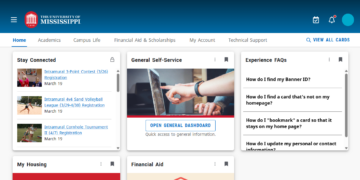






























For the first time since its launch in 2008, myOleMiss will not be used by University of Mississippi students to register for fall classes starting April 13. Replacing the student portal is Experience, a student information service (SIS) of Banner by Ellucian.
The transition is part of a years-long initiative of the university, called Project Encompass, to modernize its information systems. The initiative began in fall 2022, with the platforms of Banner by Ellucian selected for student information services, and Workday selected for administrative and employee services during spring 2025.
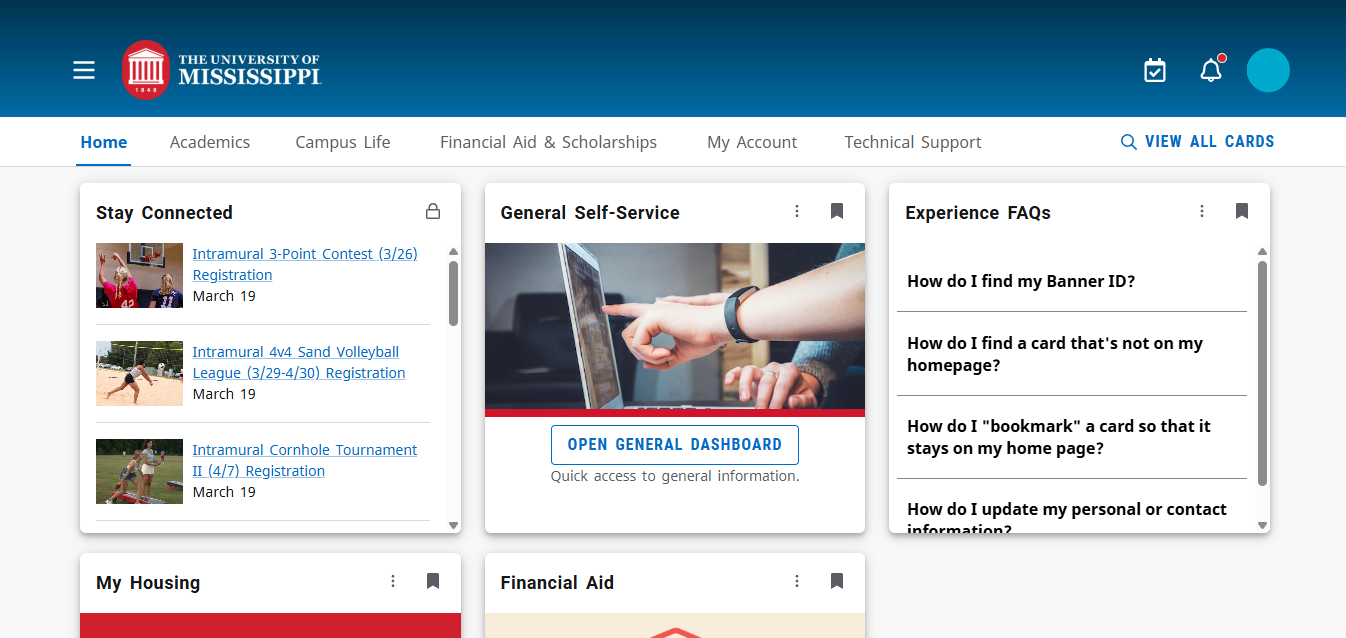
The university launched Experience on March 16 this year, though the platform will not take the place of myOleMiss as the primary academic portal until the fall semester. Starting April 13, students will complete their course registration using the new Experience platform.
Tony Ammeter, associate provost, co-chair of the Project Encompass initiative and the project director for the Banner student information system solution, said the change was to help provide a more user-friendly, streamlined experience for UM students.
“Experience, and the Banner system behind it, provides a more flexible and user-friendly platform that can better support students now and in the future,” Ammeter said. “For example, when Banner is fully implemented, you will have a much better view of your academic program, allowing you to clearly see the courses you have already taken, those you need to take in the next semester and options to chart out the coming semesters right up to graduation.”
Ammeter also said that Experience will provide a better mobile adaptation than myOleMiss.
“(Experience) will be much more mobile-friendly and is designed to grow over time, allowing us to introduce new tools and features that just weren’t possible in myOleMiss,” Ammeter said.
Student reactions to the platform, however, have been mixed.
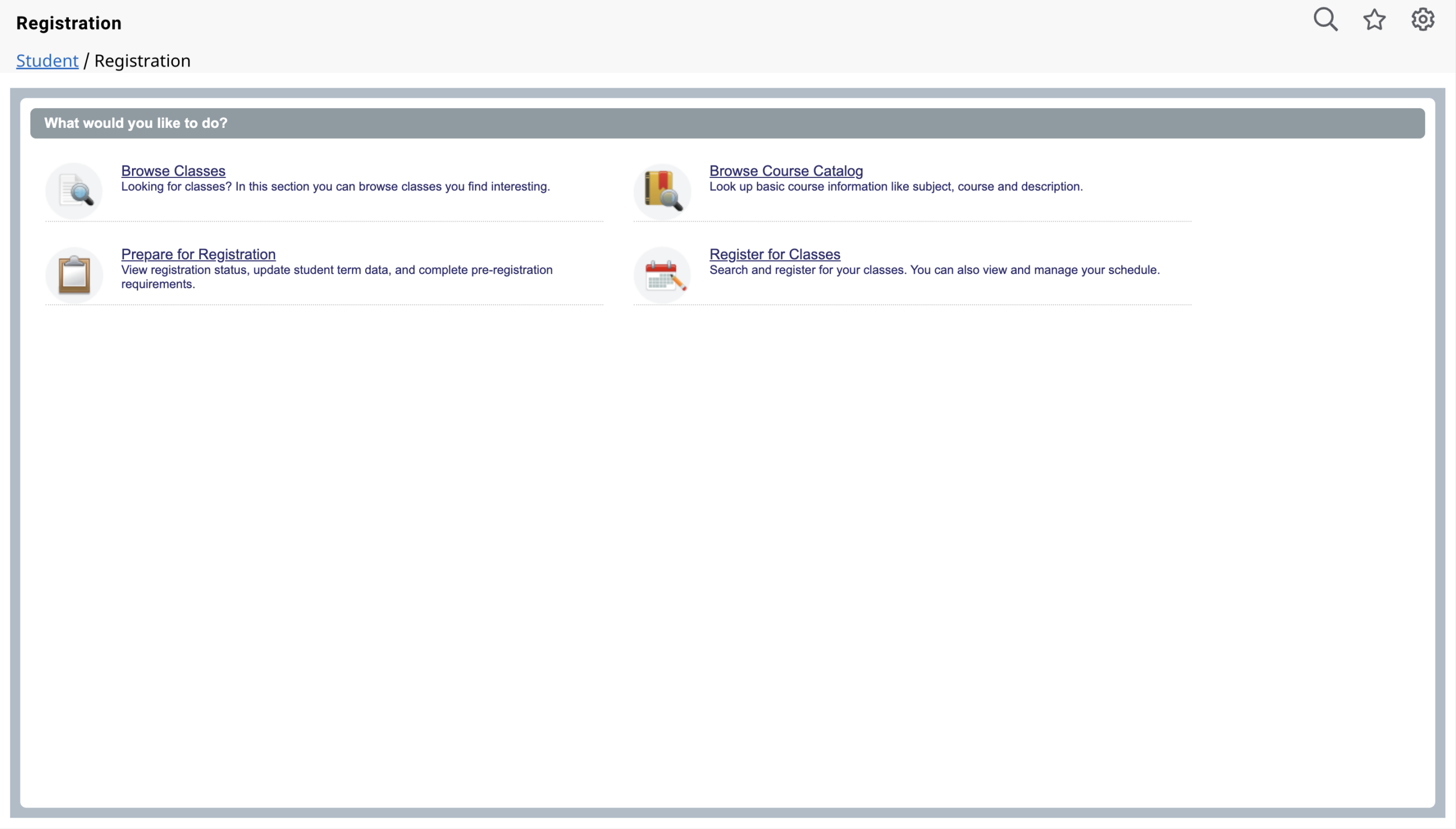
Mary Adeline Morris, a sophomore international studies and Spanish major, has used the Experience platform to browse for classes leading up to registration for fall semester.
“So far, it’s been interesting. I have mixed feelings about it. It’s not the most user-friendly I would say, because it’s hard to find certain aspects, and when registering for classes there’s a lot of steps you have to go through just to be able to see classes,” Morris said. “Additionally, I have had friends who the program has started working (for) and then immediately disappeared when they refreshed it, and they weren’t able to browse for their classes.”
While students have access to some features of Experience, the university sent out an email to students on March 26 stating that the registration self-service card and ability to build a draft schedule will be available after April 6.
Ammeter touted the Banner interface, contrasting it with myOleMiss.
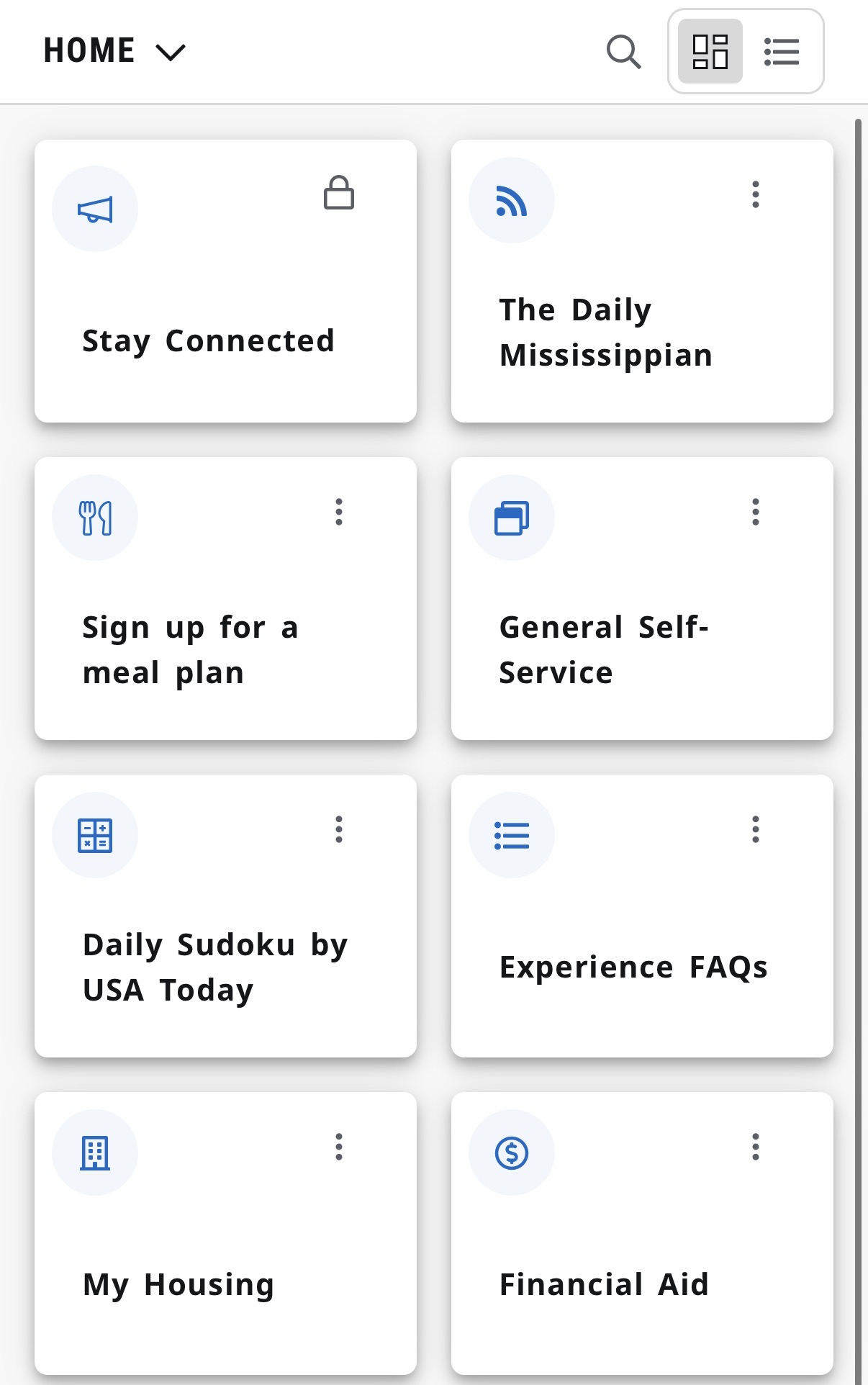
“While myOleMiss is built around menus and links, Experience organizes information into a streamlined, dashboard-style layout that includes modular tiles of content, or cards,” Ammeter said. “As more cards become available, students will be able to quickly access the tools and information they need in one place, without having to log in multiple times. Students can also customize their homepage to fit their needs.”
Cards can include everything from financial aid information, parking and student employee applications, housing information, transcript requests and more.
Preston Brent, a first-year student at the UM School of Law, completed his undergraduate degree at Samford University in Homewood, Ala. Samford uses a Banner program as its SIS.
Brent, having used both systems, believes that beyond the initial headache of an interface change, the new system will not have much of an effect on the student body.
“We used Banner, and it wasn’t that big of a deal. In terms of difference (to myOleMiss), it’s just the user interface, which is kind of annoying when they switch it up because you always get used to the other system,” Brent said. “Besides that, I don’t really feel like there’s too much that I’m aware of that will change from that.”
Morris mentioned the timing of switching to Experience weeks before class registration as “difficult.”
“It seems like a lot of hassle for a system that maybe wasn’t the best, but at least we knew how it worked,” Morris said. “I didn’t really have any concerns with myOleMiss. Maybe it was a little tricky to use originally, but all of us have been using it for multiple semesters at this point to register for classes, so having to learn a new system two weeks before we register is a lot more difficult and not fun.”
Freshman general business major Sam Wise also believes that myOleMiss was a reliable platform.
“I think myOleMiss gets the job done,” Wise said. “It seems slightly outdated — the way the website’s set up, the format is a little interesting, but it seems like most of the things that are necessary, most of the tools you need, are in there somewhere.”
Ammeter acknowledged myOleMiss’ reliability but noted that Experience is better suited for what the university needs.
“While myOleMiss has been a reliable system, it wasn’t built to meet current expectations for usability, integration with other platforms and mobile access,” Ammeter said.
At present, few of the functionalities on myOleMiss have been transcluded to Experience.
“Transitioning student information systems takes time, and the academic calendar does not pause. Because of this, the university is taking a phased approach, with a full launch of Experience and the Banner (student information system) planned for the fall semester,” Ammeter said. “This approach allows students to become familiar with the new system early while ensuring that existing processes continue without disruption. It also gives the university time to build out the capabilities of Experience before it becomes the primary portal.”