
























This Ole Miss Baseball team looks capable of beating any team in the country. The problem is that another version of this team — the one that loads the bases but then gets one out and fails to cash in after a double play, or some other mishap, evaporates the inning — occasionally rears its ugly head.
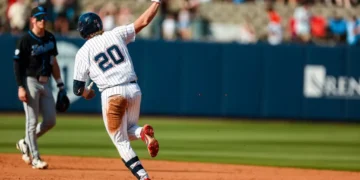
Fans at Swayze Field witnessed the great team on Thursday, March 19, when Hunter Elliott dominated on the mound and Tristan Bissetta hit two homers over the left field wall to lead the Rebels to a win over No. 15 Kentucky.
This team appeared again on Saturday, March 21 with the Rebels putting up 12 runs in a claw-back win to clinch the series against the Wildcats.
The Rebels have been frustratingly inconsistent with runners on base all season. Against tougher competition, this lineup has repeatedly found ways to strand runners on second and third, swing through fastballs with two strikes and choke potentially big innings into quiet zeroes on the scoreboard.
Against Kentucky, Ole Miss was 3-of-20 with runners in scoring position.
This is not due to a lack of talent. Rather, it is a matter of execution — right now, the execution has been sporadic at best.
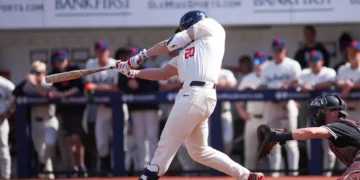
Bissetta has performed as advertised. He is currently No. 5 in the country in homers with 14 (No. 2 in the SEC). He is one of the best power hitters in the conference and is one of only a few Rebel bats that opposing pitchers genuinely fear. In fact, Kentucky even intentionally walked Bissetta to load the bases on Saturday.
Utermark has quietly been excellent all season. He is batting .319 with a .703 slugging percentage. He still strikes out a lot, but he is also walking more this year (18 so far compared to 30 all of last year).
When these two are not driving the bus, the lineup thins out in a hurry. The bottom portion of the batting order has struggled to contribute in meaningful moments, and in a conference as deep as the SEC, a team cannot rely solely on the top of its order to do the damage.
Dom Decker, Brayden Randle, Austin Fawley and Daniel Pacella are all batting under .250. Left field in general, among Pacella, Tate Sirmans and Cannon Goldin, has been a patchwork all season — none of these three have hit well enough to clearly establish himself as the starter.
The Kentucky series win was real and deserved, but it should not paper over the underlying issues. Big innings against a struggling Kentucky pitching staff are not necessarily proof that the situational hitting problems have been solved.
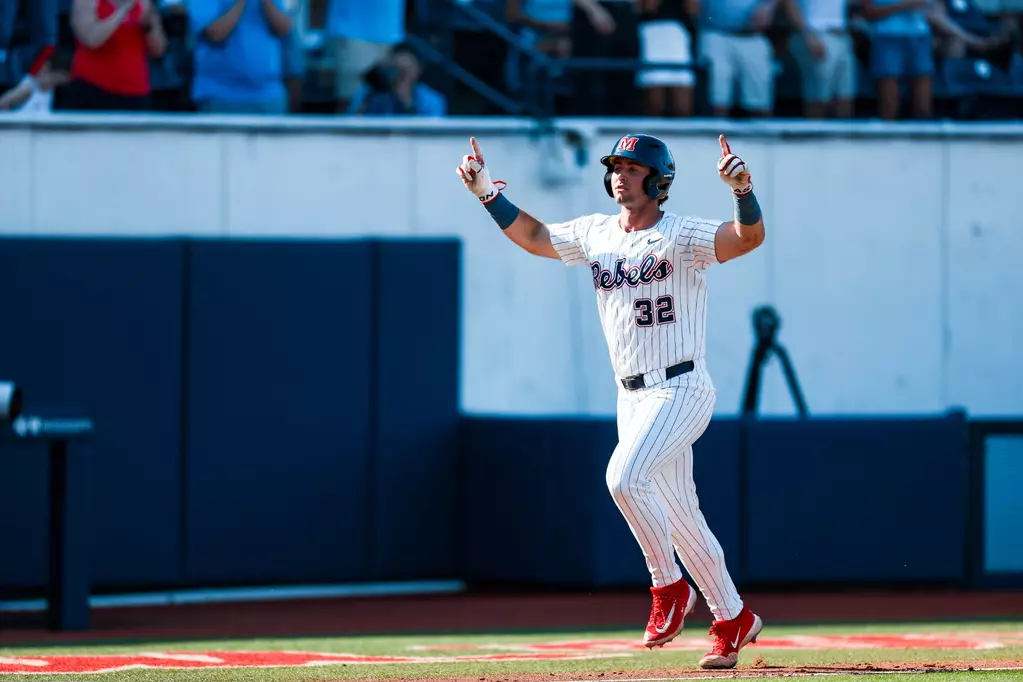
Ole Miss scored 18 total runs against Kentucky. Twelve of these came off homers. Though the long ball was in sync this series, the Rebels cannot lean on it the entire season.
What happens when Ole Miss faces a team who excels in limiting homers? Or what if the wind is blowing toward the infield, or they visit a ballpark which is decidedly pitcher-friendly, like Charles Schwab Field in Omaha, Neb., where the outfield is huge? The team’s RISP numbers must improve.
No. 6 Mississippi State’s fantastic pitching staff (3.50 ERA, No. 6 in the SEC) is coming to Oxford next weekend. They will likely put the Rebel lineup in close, late-inning situations where one run means the difference in the game. Situational hitting problems are glaringly apparent in such scenarios.
Head coach Mike Bianco knows his team is capable of more. So does everybody in the Swayze stands. The question is not whether Ole Miss has the talent to fix their hitting issues but if the Rebels will fix the problems before the season gets away from them.