






























When students excel academically and on campus, they often seek to be recognized by joining an honor society. These societies promise resume boosts, networking opportunities, scholarship opportunities and more benefits exclusive to their members.
While the University of Mississippi hosts a wide array of honor society chapters, many students question the legitimacy and worth of each one.
Jonah Jurss, an associate professor of chemistry and biochemistry at UM and the previous president of the university’s Phi Beta Kappa honors society chapter, explained this phenomenon.
“There are a lot of ‘honor societies’ and ‘who’s who’ sort of organizations out there,” Jurss said. “Some are legitimate, but many are not selective and are, therefore, not prestigious or worth joining.”
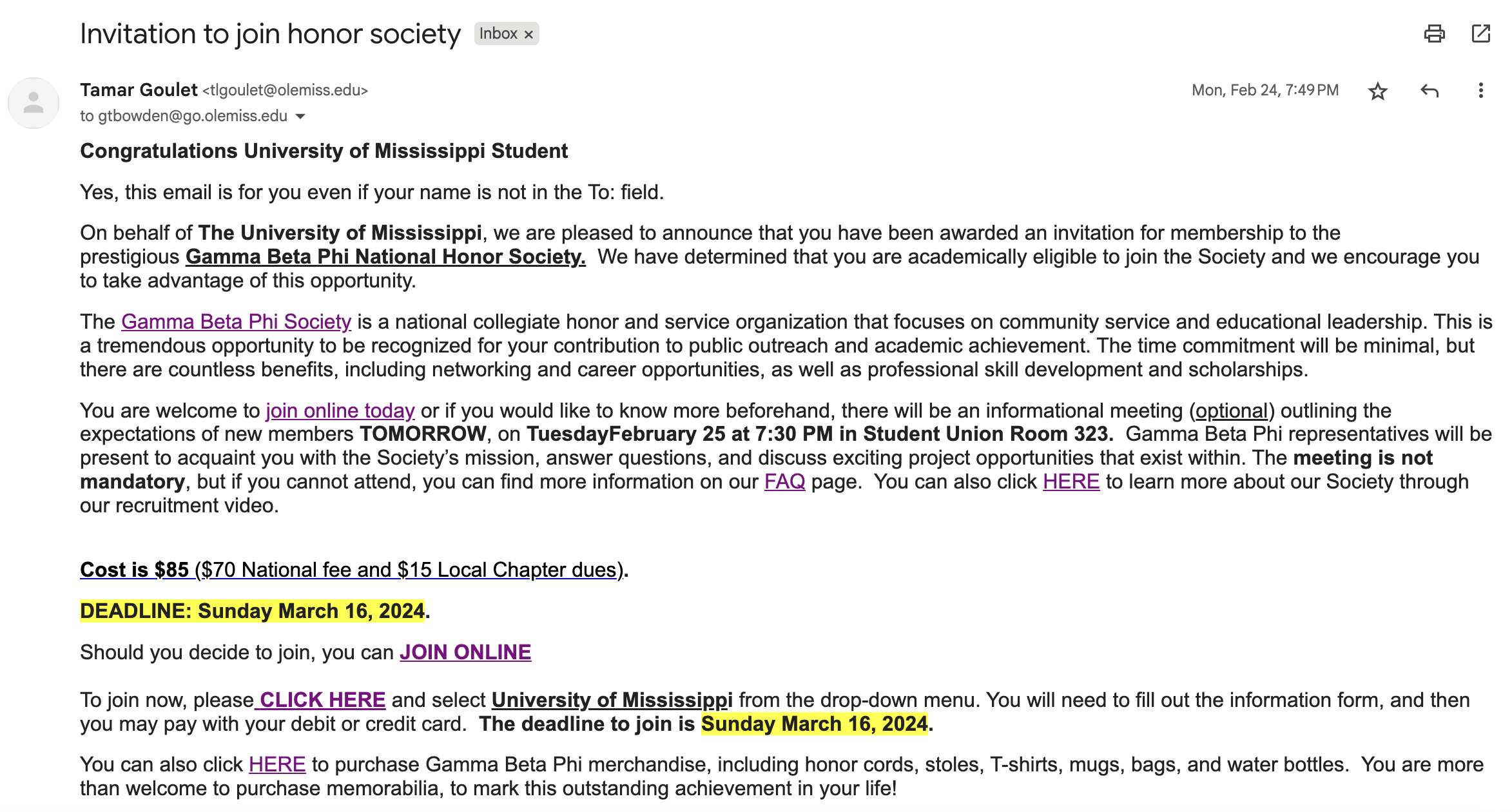
The president of UM’s chapter of the National Society of Leadership and Success, Demetrick Stringer, recognizes students concerned about joining honors societies they discover via email.
“Speaking from a student perspective and not as a member of the organization, you get a lot of emails from different honor societies, and you’re not sure about the validity of what they do on campus, which is a legitimate concern,” Stringer said. “Especially in the way you’re giving such a large amount of financial contribution to an organization, you want to make sure you’re getting an equal amount of enrichment back from it.”
Students inundated with emails from societies of varying prestige must make judgments about whether or not a society is a “scam.”
Senior accounting major Kendyl Lockhart is a member of Beta Alpha Psi, an honor society for accounting, finance and information systems students on campus. She believes her membership assists her in understanding coursework and helps her build connections with accountancy students and future employers.
Lockhart said scam societies have reached out to her in the past.
“I have been emailed by certain societies that I could tell have been a scam,” Lockhart said. “It was obvious that they weren’t actually a part of the school and seemed too good to be true.”
These scam societies have a real effect on the legitimate societies present on the university’s campus.
Daniel O’Sullivan, UM professor and chair of the Department of Modern Languages, serves as vice president of the UM Phi Beta Kappa chapter. He believes that students ignore emails from his organization due to the swaths of emails from illegitimate organizations.
“I get discouraged when students ignore our invitations to join,” O’Sullivan said. “We typically invite graduating seniors (though some juniors are invited) and they have seen so many scam societies reach out to them that they often ignore us.”
UM faculty members recommend that students research societies thoroughly before joining.
Dean of the Sally McDonnell Barksdale Honors College Ethel Scurlock emphasized that students should act with their own discretion in determining which societies are worth joining.
“While many of these organizations are great, students should always conduct due diligence when considering any organization they are invited to join,” Scurlock said. “Students should carefully research the group and read all correspondence.”
Stringer recommended that students contact organizations to ask why they should join to determine not only the validity of the honor society, but also the impact that involvement with the society could have.
“I definitely think that regardless of even the background of an organization, it depends on what that organization does on your campus,” Stringer said. “It’s easy for you to list hundreds of honor societies on your resume, but that doesn’t mean they’ll matter. It’s what you do in those organizations that give them that validity.”
Associate Dean of the Sally McDonnell Barksdale Honors College John Samonds advised students to look at a list of accredited organizations when they receive an invitation, but he admitted that accreditation lists have some missing information.
“I tend to refer students to the Association of College Honor Societies to learn more about the honor society that is inviting them to join,” Samonds said. “Interestingly, it does not include Phi Kappa Phi and Phi Beta Kappa, the two top honor societies at the University of Mississippi.”
Phi Kappa Phi, founded in 1897 at the University of Maine, is the oldest honor society that recognizes academic excellence without restriction to area of study. Phi Beta Kappa, founded in 1776 at the College of William & Mary, recognizes academic excellence in liberal arts and has inducted 17 United States presidents, 42 Supreme Court justices and 136 Nobel laureates. Both are members of the Honor Society Caucus, which coordinates the four oldest independent honor societies in the country.
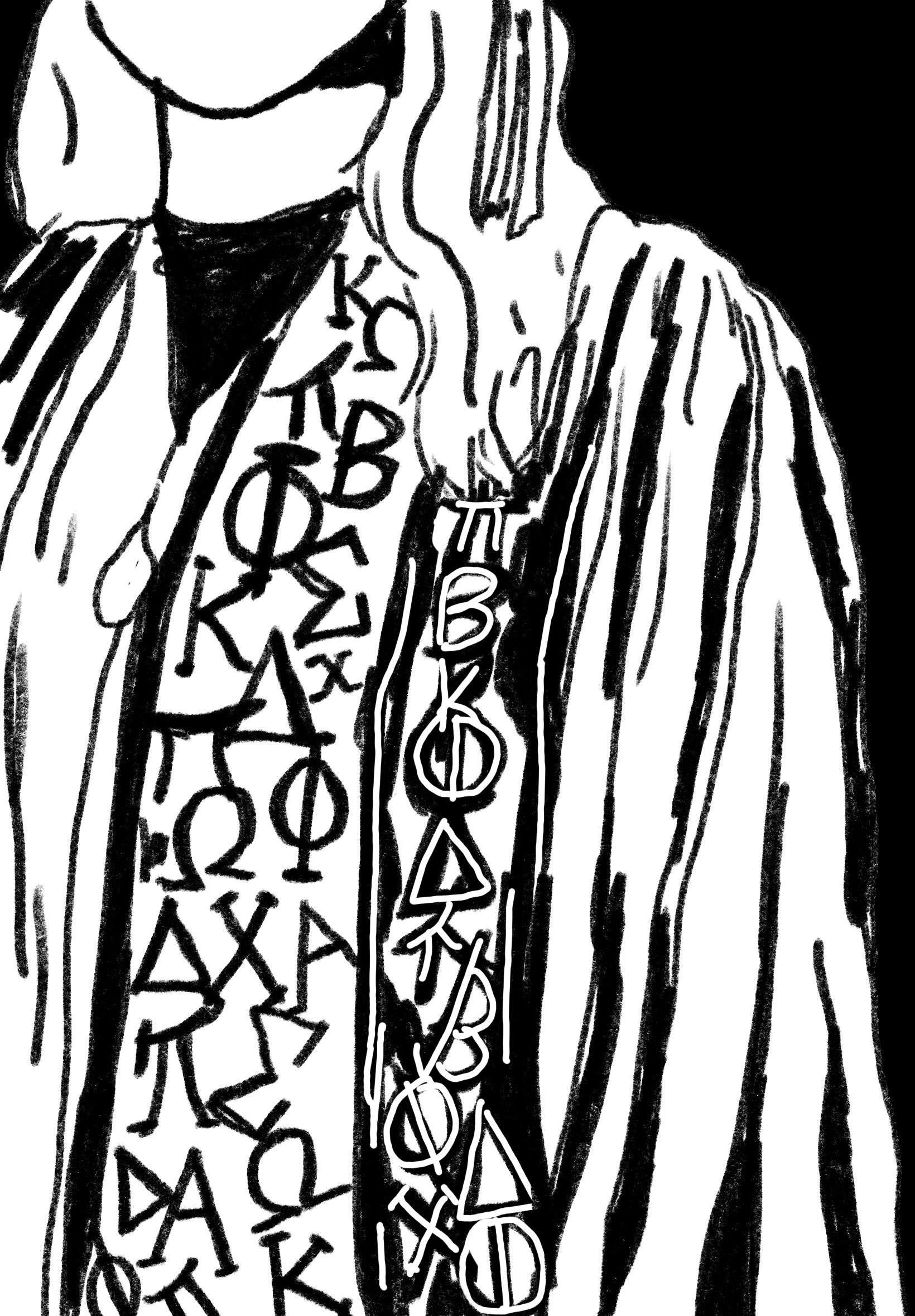
“Phi Beta Kappa is the nationally recognized honorary society for academic and intellectual excellence in the liberal arts and sciences,” Jurss said. “It is widely known and makes a positive impression on people (e.g. job interviews).”
The guidelines set by the Association of College Honor Societies, alongside additional research, can help students decide if an organization is real and a good fit for them.
The university’s official website also contains various pages listing some of the accredited organizations available to students, including one on Phi Beta Kappa. Pages for many other honor society chapters are available through individual schools of study.
Faculty members also clarified that while students should be cautious when accepting membership for societies, invitations are still great accomplishments.
“Students should definitely feel honored when they receive an invitation to join any honor society, because the invite signals that they have met some meaningful academic or leadership benchmark worthy of celebration,” Scurlock said.
Scurlock reiterated the value of honors societies.
“When an honor society has an active campus chapter with faculty or staff advisors, it can offer students valuable opportunities to connect with peers who share similar academic interests and leadership strengths,” Scurlock said. “In addition, membership may open doors for students to take on leadership roles, present their research to peers and/or compete for scholarships.”