














Records, CDs, cassette tapes, film photos and other analog formats continue to find new audiences as people look for something tangible in an increasingly digital world. At the same time, libraries, archives and music stores are working to preserve media in older formats before they are lost forever.
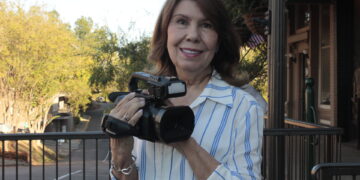
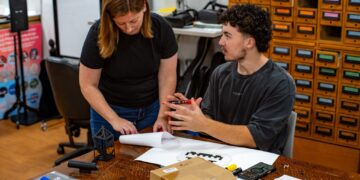
Katherine Tutor, a project coordinator at the University of Mississippi Libraries’ Department of Archives and Special Collections, is digitizing over 16,000 analog audiovisual recordings in an ongoing effort to make historic media accessible to future generations.
“With the passage of time, older formats can physically deteriorate, requiring special interventions to ensure that their content is preserved,” Tutor said. “Many of these rare formats require equipment that is tricky to access or no longer even made, making it difficult to actually listen to or watch a recording. … For decades, a lot of these recordings could not be played in special collections, until now.”
Although the preservation process is long and challenging, digitizing is an important way to protect the information stored on older recordings. However, creating a digital copy does render the original object useless.
“Physical media allows an individual or an institution to retain control over something tangible,” Tutor said. “Unlike a file that can be deleted, compromised by a virus or pulled by a service provider, physical media feels somewhat more permanent or lasting.”
Physical media can reveal characteristics about the time period and culture in which it was created that may not be captured in a digital file. Even when the date of a recording is unknown, its format, appearance and condition can offer clues about when it was created and the people who used it.
“Physical media can bear the imprint of time’s passage, as evidenced by deterioration and discoloration,” Tutor said. “There is also a human element that makes them feel alive — smells, handwriting scrawled on the side of tapes, little imperfections in the audio quality that add to the overall experience.”
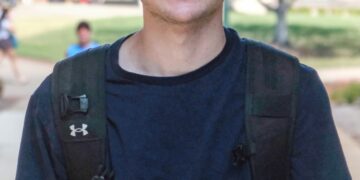
For Roland Hayes, a senior criminal justice major from Seattle, collecting CDs started out of necessity. When the radio in his car stopped working, he turned to Goodwill to find CDs he could play instead.
What started as a way to listen to music on the road eventually became a collection of about 120 CDs. Unlike streaming services, where almost any song can be accessed instantly, collecting requires searching, and sometimes stumbling, across the unexpected.
“For me, it’s the feeling of actually finding the CD, because what I do primarily is I thrift it,” Hayes said. “Streaming services have whatever you want at your fingertips. It makes it less special. But when I find a CD that I’ve been looking for, or one from an artist that I really like, it makes it a little bit more special.”
That sense of discovery also changes the way Hayes listens to music. Streaming encourages listeners to constantly move from song to song, while physical media prompts consumers to experience a piece of art as its whole.
“I feel like a lot of people have been desensitized to music where you can go from place to place, constantly listen to music and always have something going,” Hayes said. “With the CD, you need a setup or something that’s a little bit more bulky, and it makes listening to music more of a special experience.”
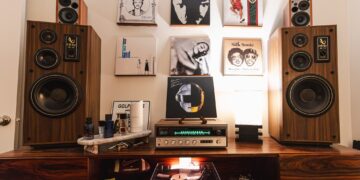
Junior journalism major Evan Farrell from Vicksburg, Miss., said his record collection began with a similar curiosity for the physical experience of music. Farrell purchased his first vinyl this year when Bruno Mars released his new album, “The Romantic.” The only problem was that he did not have a record player.
“So, I started looking into (vinyls),” Farrell said. “From there, I was like, ‘Well, I can’t just have one vinyl.’”
He eventually began visiting End of All Music, a record store on the Square, and now has about 35 albums in his collection. One of his favorite records is by 2026 Grammy winner for Best New Artist Olivia Dean, whose music is being released on a format that has been around for longer than she has been alive.
“I like the contrast between a new artist and an older format,” Farrell said. “I feel like that really works.”
For Farrell, the appeal of records is not only the music itself, but the opportunity to step away from the constant presence of technology.
“I think just the ability to not have a screen in your face (is what I enjoy most),” Farrell said. “When I get home from school, I can just put my phone down (and) play some music, and I’m not having ads in between songs or having to skip to the next song on my phone. It’s just more physical and tactile.”
Oxford’s Ian Kirkpatrick, an employee at End of All Music and a band member of Bassdrum of Death, said that record stores play an important role in connecting communities with physical music.
“I think (record stores are) sort of vital for having any pulse on a culture or anything,” Kirkpatrick said.
Kirkpatrick said listening to a record can become an experience in itself rather than simply a noise to fill the silence.
“There’s something about being at your house, maybe it’s a lazy Sunday and you just throw a record on,” Kirkpatrick said. “It’s just really nice. There’s a ritualistic nature to it.”
Physical music can also create a more direct connection between listeners and the artists they support. Kirkpatrick said purchasing records and other physical products can provide artists with support that streaming alone may not offer.
“Buying physical media helps out the artists themselves,” Kirkpatrick said. “Buying their merch, buying their records at a show, if you go to those, it helps them directly.”
While vinyl has become especially popular among younger collectors, CDs remain an affordable way for people to build physical music collections. Hayes said he has noticed more interest in vinyl than CDs, but part of the appeal of CDs for him is their accessibility.
“Vinyls are cool, though, because you can display them a lot easier than CDs,” Hayes said. “For me, it’s always been CDs, because they’re a little bit cheaper.”
Tutor said younger generations may be drawn to physical media because of its rarity and the experience of being able to tangibly interact with an object.
“People often experience a heightened awareness of an item’s rarity when they’re physically handling it, especially in an archival setting,” Tutor said. “So much of what we engage with online feels ephemeral and fleeting.”
That desire for something tangible is one reason interest in analog formats may continue, even as technology advances.
Farrell said physical media can function as more than a way to listen to music. Records can also become pieces of art, as well as means of supporting artists.
“In such a digital age where everything we do is digital, having a physical copy of something, especially to support your favorite artists, it’s almost an art piece as much as it is a music piece,” Farrell said.
Farrell believes that as technology continues to advance, people may actually become more interested in analog experiences.
“I think as technology improves more and more, people will revert to more analog forms of media,” Farrell said. “I feel like we crave the analog forms of media. People print out pictures from events, you know, so I think it definitely will continue to grow.”