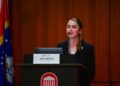















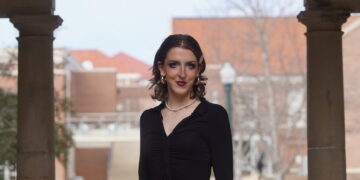






Golda McLellan presented her photography exhibition “Sharing the Past” at the Burns-Belfry Museum and Multicultural Center on Friday, Oct. 17. The exhibition centered on the experiences of community members reacting to historical sites across the South.
Two years ago, McLellan met Castel Sweet, an assistant professor of practice in community engagement at the University of Mississippi. At the time, Sweet was leading trips called “Sightseeing Resistance,” traveling to areas of the South prominent in the history of slavery in the U.S. McLellan went along for the ride and was inspired to create a solo exhibit of photos.
“I just started taking photos,” McLellan said. “Everybody was really encouraging, and it’s kind of blossomed into this over the two years. When Castel approached me about doing a solo show here, I just said, ‘Heck yes.’”
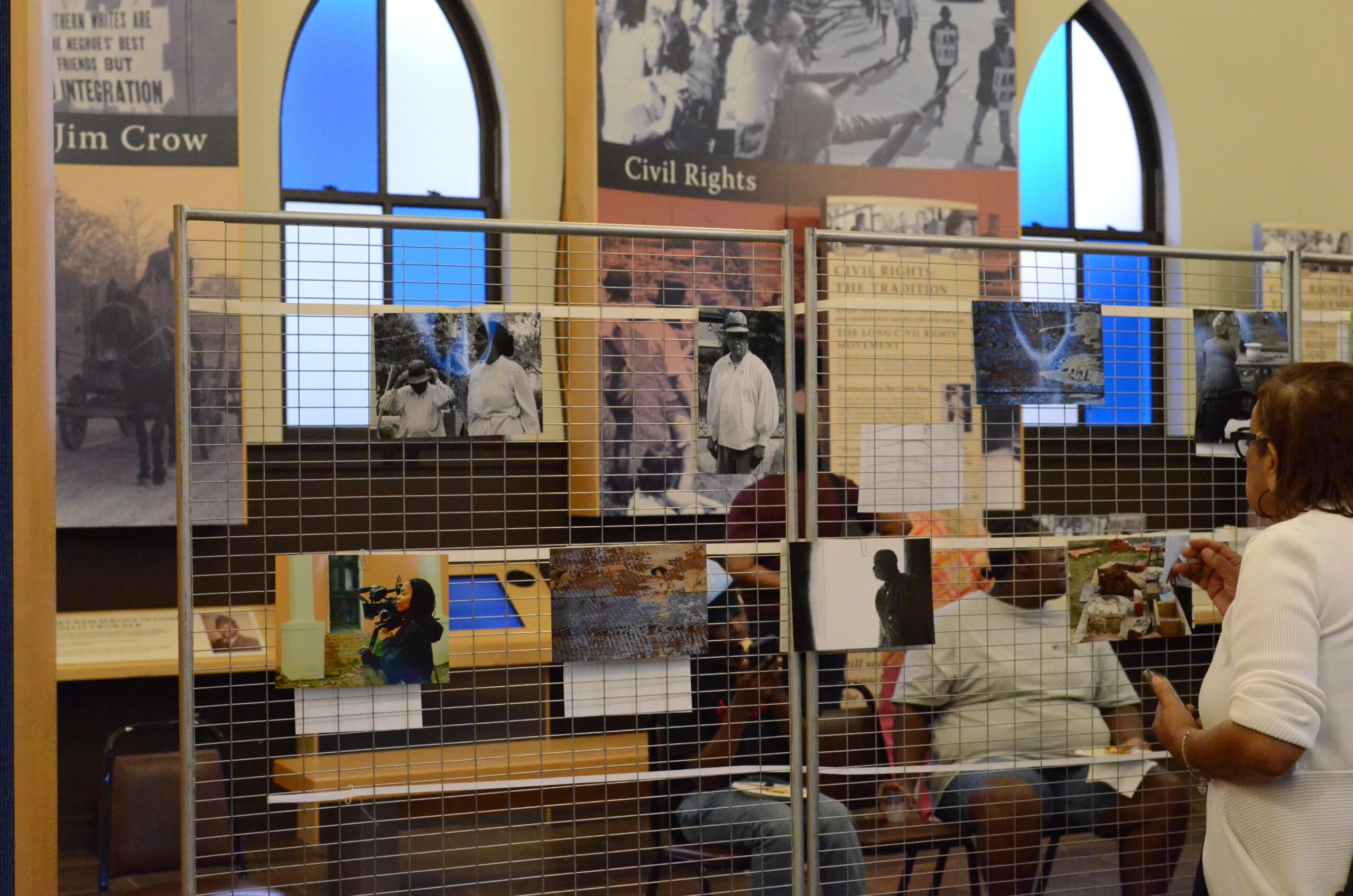
With the exhibit set up in the center of the church, the audience was allowed to move around the area while also sampling the larger, permanent history exhibit of the church itself.
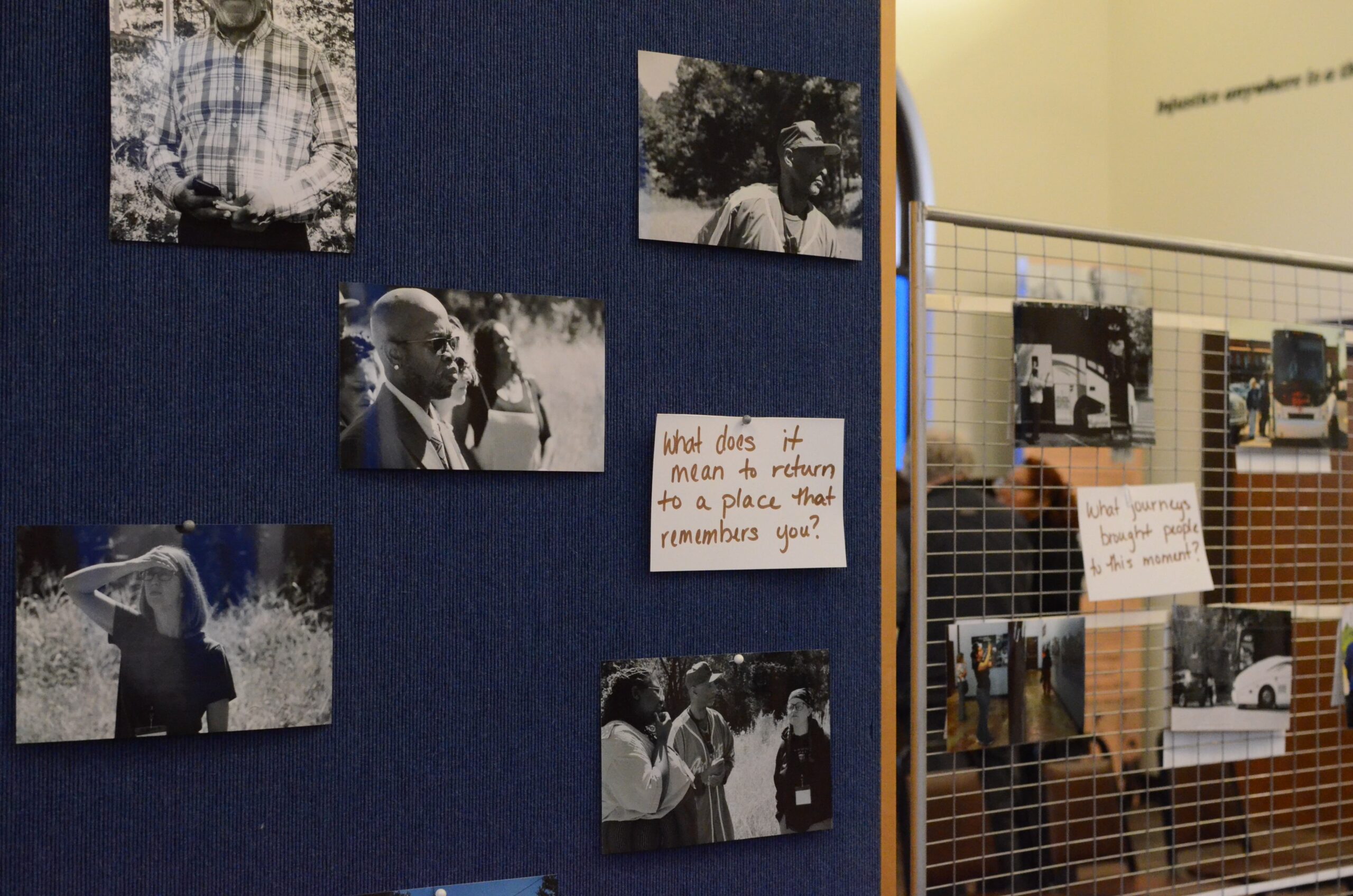
The selection of photos allowed for natural, emotional responses. They were also grouped by a series of eight questions:
What does it mean to return to a place that remembers you? What journeys brought people to this moment? How do we carry history when we move together? Who once stood here, and what did they see? What stories will children tell when they’re older about history? What does it mean to share a story, not just tell it? How do daily acts of making sustain a community? What echoes linger in structures?
McLellan spoke on the question of “What does it mean to share a story, not just tell it?” She mentioned that those photos were taken at the annual “Behind the Big House” exhibit in Holly Springs, Miss., where the lives of enslaved people are interpreted in a day of remembrance.
McLellan’s favorite photos, however, were taken with her experience documenting “What journeys brought people to this moment?”
“(On one of the trips) we were joined by a group from Illinois,” McLellan said. “So, it was really neat to have people outside of Mississippi come see everything.”
She pointed to a relative of Elwood Higginbottom, one of the lynching victims in Lafayette County, as one of her favorite photographs. She then pointed to a woman overcome with emotion — one of the visitors from Illinois.
“But my favorite photo in this section,” McLellan said while pointing to the photo of the woman from Illinois. “She’s just … stunning and statuesque.”
McLellan argues that we should not only hear stories but read them, too, because they provide ways of interacting with the past, reckoning with it and respecting the legacies of those that have come before us.