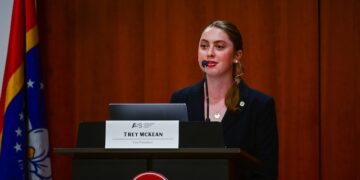


















The Turning Point USA event at the University of Mississippi at The Sandy and John Black Pavilion on Wednesday, which featured Vice President JD Vance and TPUSA CEO Erika Kirk, was marketed as a moment of revival and unity for young conservatives on campus and beyond.
The line was long, the cameras were rolling and the stage was set as a grand celebration of the vice president and the legacy of the late TPUSA founder Charlie Kirk. But if you stepped outside the arena, campus life went on — quieter than usual, but, nevertheless, on.
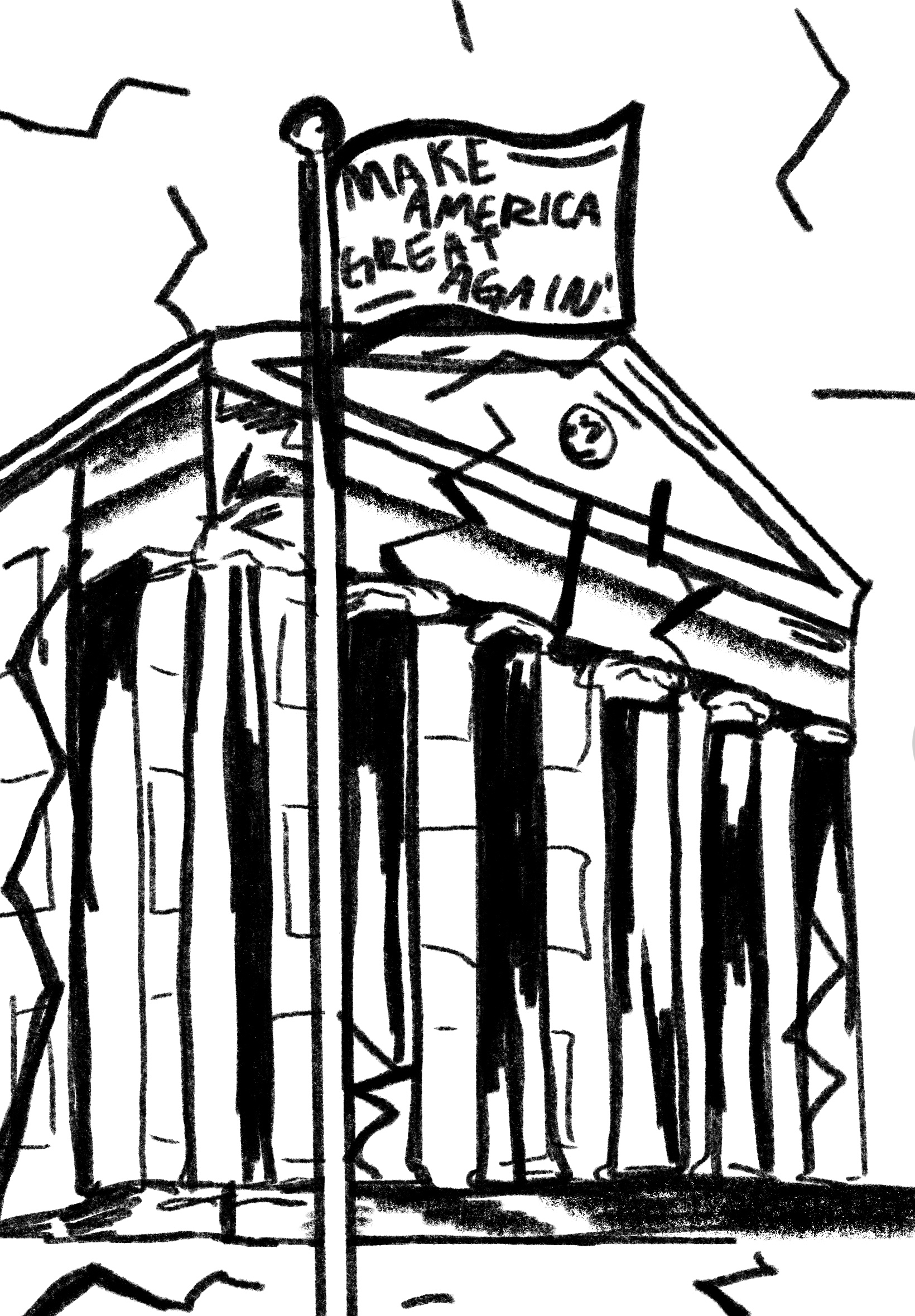
Nearly 9,500 students attended the rally, but more than twice that number stayed home. The silence beyond the arena says perhaps just as much about the state of American politics as the cheers inside.
The vice president told the crowd, “We have got over 10,000 students from across Mississippi … and we know that you are the future of Charlie Kirk’s legacy.”
But the words carried a sense of exclusivity, as if those students present were the only ones with futures worth claiming.
The university, however, has more than 27,000 students, several of whom either disagreed with the event’s message or felt it had nothing to offer them. That is the real silent majority, not the one applauding in the stands, but the one that politics continues to overlook and underestimate.
Vance’s and Kirk’s remarks were filled with moral language and familiar slogans about faith, family and freedom.
“Fall in love, get married and start a family,” Vance urged, presenting a nostalgic image of what young people should strive for.
It was the kind of message that sounds wholesome until you remember what life looks like for millions of Americans today.
According to the U.S. Department of Agriculture, nearly one-in-five American households with children faced food insecurity last year.
With the federal government shutdown, those numbers are likely to grow. The shutdown will delay and halt SNAP and WIC benefits (more commonly known as food stamps), disrupt school meal programs and freeze federal nutrition assistance for families already stretched thin. It will also slow access to Medicaid processing and housing support, forcing millions of working-class Americans to live in uncertainty.
Notions of love and family mean little to those who depend on decisions from Washington to decide whether they can afford groceries, health care or rent next month.
When Vance was pressed by students on issues that demanded clarity, his answers drifted toward abstraction. One student asked a straightforward question about immigration limits, and he mentioned his girlfriend, who studies here on a visa.
Vance avoided specifics and instead referenced 1920s immigration laws that once enforced racial quotas, rambling about how our country must have time to “assimilate.” It was a typical politician’s answer — a non-answer.
Even the corporate backdrop of the event felt off. The program was sponsored in part by Yrefy, a private loan refinancing company that profits from student debt. It is challenging to take a rally about freedom seriously when it is bankrolled by corporations that depend on young people remaining in financial bondage. The disconnect was visible everywhere.
The truth is that the real silent majority at Ole Miss was not inside the arena but outside it — among students who felt unseen or excluded by the event’s tone.
“You can’t change a nation if you are enslaved to fear,” Vance said to the crowd.
Yet fear is not what keeps people quiet. It is fatigue — fatigue with a politics that reduces ordinary people to just numbers and votes.
If this event was meant to be “the turning point,” it turned its back on the very people it claimed to speak for.
Paul Winfield II is a public policy leadership and economics major from Vicksburg, Miss.