































With midterm exams approaching, students across campus are implementing various study habits to make their time as productive as possible.
Exams affect everyone’s study time differently, and students must balance studying with their daily lives.
“Midterms affected me mainly through time management,” Georganna Benedict, a sophomore allied health studies major from Hernando, Miss., said. “I am involved in a lot of extracurriculars outside of school, as well as work.”
Many are spending more time on campus studying than usual.
“My schedule is very spread out, and whereas I would just go home, I’m (on campus) a lot more between classes, just trying to knuckle down and look over notes,” Henry Stuart, a sophomore journalism major from Charlotte, N.C., said.
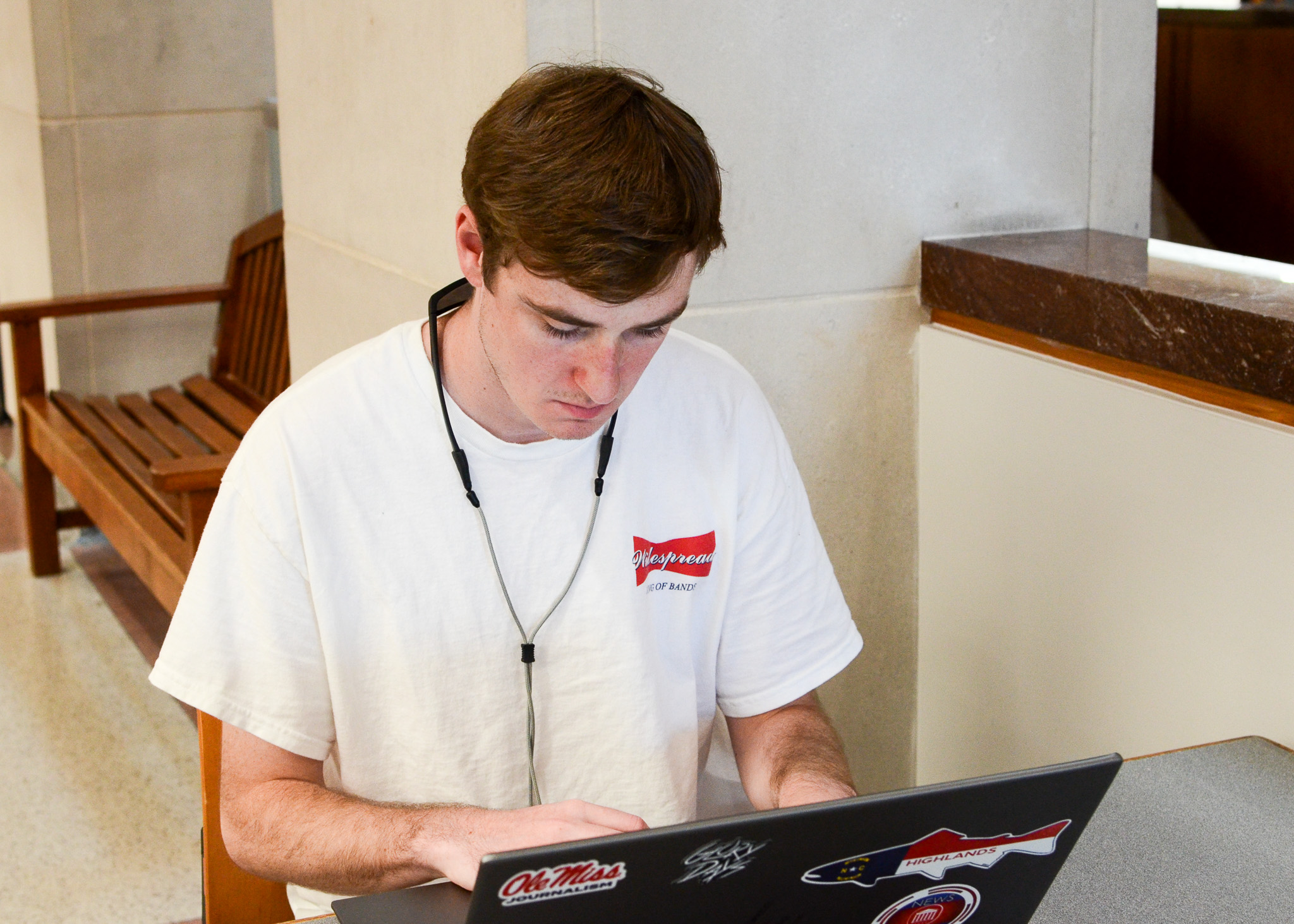
For other students, there is not much difference in the amount of time spent on studying for midterms compared to other exams.
“I don’t study any harder for a midterm than I do for any other exam, to be honest,” TyAnna Hobson, a sophomore allied health studies major from Pontotoc, Miss., said.
Everyone has their own specific study method that works best for them.
“I just did a bunch of practice questions,” William Grem, a freshman biology major from Oxford, said. “I would rewrite notes, I would have study seminars with friends. I would play the same soundtrack over and over. When I would listen to that, it would help me get into the mood faster.”
Stuart found that timed study sessions boosted his productivity.
“I like the Pomodoro method,” Stuart said. “You set a timer for 20 minutes and then you (take) a five-minute break. Mess around on your computer, look at your phone, whatever. Just try to balance the the time that you are actively studying with the time you can give yourself a break.’’
Hobson compiles his lecture notes into study guides.
“I have a very specific study routine where I use Goodnotes on my iPad, and I copy the lecture slides from each class every day onto its own page in Goodnotes,” Hobson said. “I have a sheet for each week, and I combine those to make a study sheet for the final.”
Benedict says that practicing recalling information instead of skimming it helps her the most.
“Read over something, change the topic, come back to it,” Benedict said. “That’s how you retain that knowledge because you have two different cortexes in your brain; one of them can retain that knowledge and the other ones can store it — and you want it to be stored.”
Students also turn to various apps and websites to refine their study routines. Stuart and Benedict both utilize Quizlet, a site and app that features tools such as flashcards, practice tests and learning games.
“Quizlet has been huge,” Stuart said. “I feel like that’s what everybody says, but it’s nothing too crazy.”
Hobson said she is a fan of Goodnotes and the website Notion to stay ahead.
“I use a website on my Macbook called Notion that’s really good for keeping up with due dates and exams I have coming up,” Hobson said.
Lack of motivation is a top struggle for even the most disciplined students, and everyone handles it differently.
“I pray about it,” Benedict said.
Hobson said that her boyfriend helps her manage her mental health when school becomes overwhelming.
“My boyfriend is really good at finding things for me to do, because sometimes I’m really locked in for an extended period, and I don’t socialize,” Hobson said. “That’s not really good for mental health, so we’ll go out for a cute little dinner date or something fun like that.”
Stuart said that motivation is a mindset.
“Honestly, it’s just a mentality that I have of ‘This has to get done,’” Stuart said. “You’ve come so far with making it to college, why would you let yourself have an off day?”