




























As Ole Miss Football approaches its first College Football Playoff berth in school history, The Daily Mississippian interviewed Gary P. Stokan, the CEO and president of Peach Bowl, Inc., regarding the state of the playoff and, more generally, the bowl game scene.
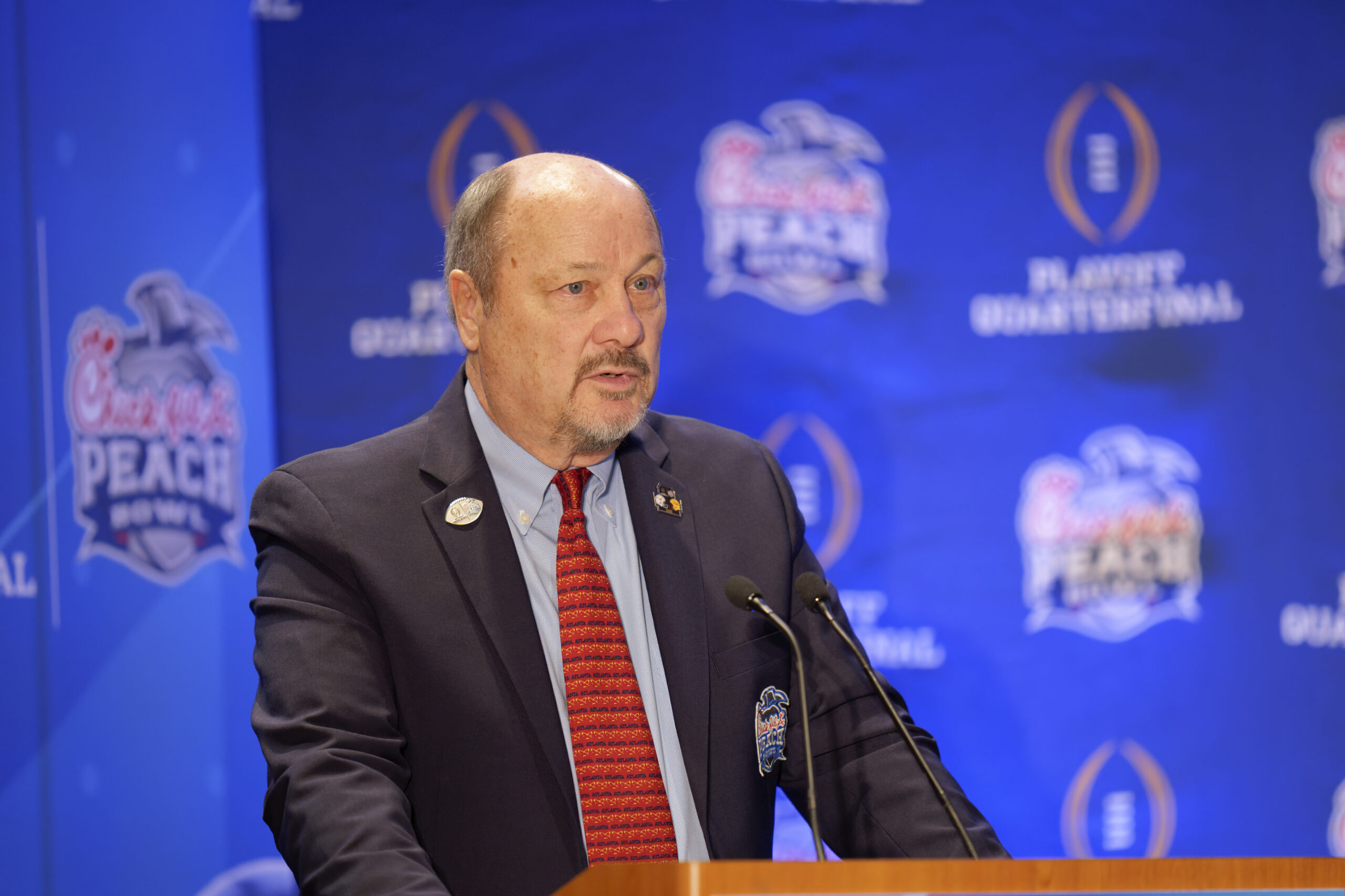
Stokan first touched on the CFP, which was expanded to 12 teams in 2024. He cited increased viewership and attendance of regular season games as evidence that the system promotes interest in the sport even leading up to the postseason.
“I think what it’s done is it’s promoted college football — which is the second most favorite sport in the country, only behind the NFL — to elevate its fandom,” Stokan said. “We saw this through viewership increases, as well as increased attendance, because there’s more teams, probably up to 30 teams that are still vying for those 12 spots into November and early December, whereas … no two-loss team ever made it to the four-team playoff.”
Of course, even with this expansion, teams inevitably feel excluded. Last season, Ole Miss was one of three SEC teams with three losses who missed the playoff.
“I think between South Carolina, Alabama and Ole Miss last year, there were three teams that obviously had a good argument to be a part of the 12-team playoff,” Stokan said.
According to sports writer Michael Katz on X, Kiffin stated that SEC teams should be given more credit because they play in a different league than teams from other conferences — week to week, he claimed, SEC teams are so talented that they cannibalize each other.
Still, two of Ole Miss’ three losses last year came against unranked SEC teams Kentucky and Florida. Ole Miss was Kentucky’s only in-conference win all season. A two-loss Ole Miss team would almost certainly have made the playoff.
But the playoff is not the end-all be-all for the college football postseason; even teams that miss the playoff can benefit from bowl games. Teams competing in bowl games are allotted 15 “bowl practices” by the NCAA. Since players with NFL aspirations will “opt out” of non-playoff bowl games in order to avoid injury, these practices allow younger players to get repetitions and attention from coaches they would not otherwise receive.
“More meetings, getting to be some practices where we can dedicate things to some younger guys, get more development there,” Alabama head coach Kalen DeBoer said ahead of the No. 11 Crimson Tide’s matchup against Michigan in the ReliaQuest Bowl last season. “More so than we would if we were getting ready for a game during the course of the regular season, or the postseason too if you’re in the playoffs. These are added practices that we will take advantage of.”
Stokan detailed the “three strata” of bowl games. The most prominent, of course, are the New Year’s Six (NY6) Bowls: the Chick-Fil-A Peach Bowl, the Vrbo Fiesta Bowl, the Goodyear Cotton Bowl Classic, the Capital One Orange Bowl, the Rose Bowl Game Presented by Prudential and the Allstate Sugar Bowl.
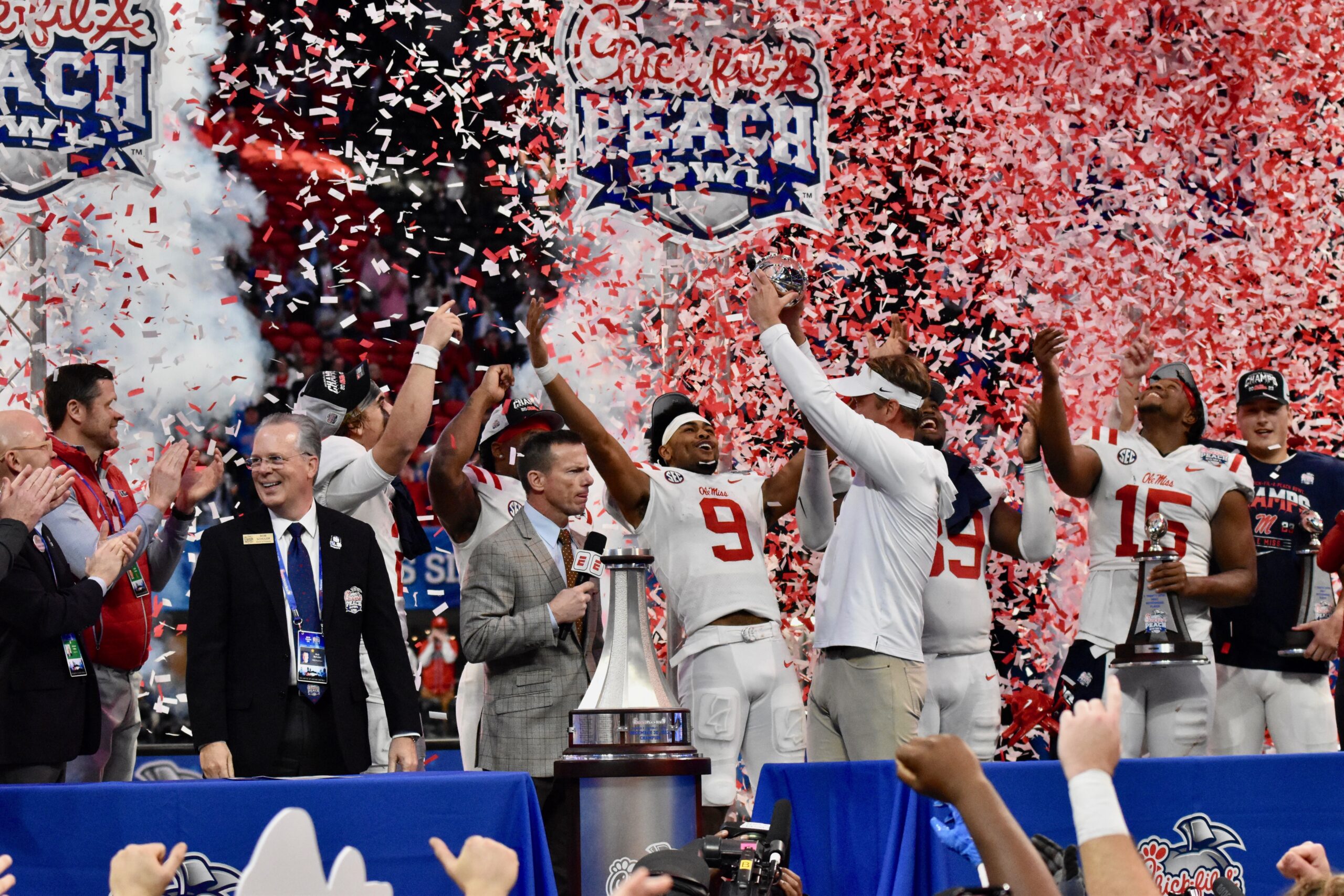
With the expanded playoff, these bowls rotate between serving as quarterfinals — in which case they are still played on either New Year’s Eve or New Year’s Day — and as semifinals, which are played a week later. This season, the Peach Bowl will be a semifinal game.
The second strata still consists of highly-regarded bowl games, yet these bowls are a step below the NY6 bowls. Examples include the TaxSlayer Gator Bowl — where No. 14 Ole Miss defeated Duke in 2024 behind quarterback Jaxson Dart’s 404 passing yards and four touchdowns – the Pop-Tarts Bowl, the Cheez-It Citrus Bowl and the Valero Alamo Bowl.
The third level of bowls, which includes the Famous Idaho Potato Bowl and the Myrtle Beach Bowl, are owned and operated by ESPN Events.
“I think ESPN looks to primarily put those bowls on for advertisement purposes,” Stokan said. “ESPN makes more money in those two weeks of bowl season than they do the rest of the year with anything else, so it’s important programming for them.”
The second strata of bowl games may be in trouble, though, because they neither enjoy the same publicity and viewership as the NY6 bowls, nor do they receive the same funding as the ESPN-sponsored bowls.
“The bowls in the second strata, I really worry about them because they’re really relevant to college football, to their communities, to their states and to players and coaches, as well as fans and media,” Stokan said. “There’s the experience that the players, the student-athletes, get by going to a city that they may have never been to.”
Historically, the Peach Bowl has welcomed teams to Ebenezer Baptist Church in Atlanta, where players hear from major players in the Civil Rights Movement in the 1950s and 1960s. Most notably, speakers have included Representative John Lewis and Ambassador to the United Nations Andrew Young.
“You know, we used to get the teams and sit them in pews together, which you’re not supposed to do, but it was a good learning experience for teams to sit together in Ebenezer Baptist Church, where Dr. (Martin Luther) King (Jr.) actually spoke from the pulpit, and we bring in Congressman Lewis and Ambassador Young, who were part of the top-eight people during the Civil Rights Movement,” Stokan said.
In 1965, John Lewis, later a congressman from 1986 until his death in 2020, was the chairman of the Student Nonviolent Coordinating Committee. On March 7, 1965, Lewis and around 600 others marched in peaceful protest from Selma, Ala., to capital Montgomery, Ala. As the protestors crossed the Edmund Pettis Bridge, they were apprehended by around 150 Alabama state troopers, who attacked them with bullwhips, clubs and tear gas.
Lewis’s skull was fractured in this altercation, which became known as “Bloody Sunday.” Stokan said that Lewis packed an apple, a toothbrush and toothpaste in his backpack the morning before the walk to Montgomery because he anticipated being arrested.
“These student-athletes weren’t even born. Their parents probably weren’t even (alive) during the civil rights movement. But it was a living history lesson to hear some of the stories of Congressman Lewis, you know, walking to the crest of the Selma bridge,” Stokan said.
Bowl games, some of the biggest stages in college football, also serve as platforms for players to audition for the NFL. In 2023, Dart led the No. 10 Rebels to a 38-25 victory over No. 11 Penn State in The Peach Bowl. He posted 379 passing yards and four total touchdowns, which helped him make his case as an NFL prospect.
The Peach Bowl is played at Mercedes-Benz Stadium, the home of the Atlanta Falcons. Unfortunately, Stokan said, there is little coordination between the NCAA and NFL. In December and January, this presents problems when the NFL begins scheduling games on Saturdays in addition to Sundays, which conflicts with college football.
“There’s not been much of a partnership between the NFL and college football, which is a real shame,” Stokan said. “We give the NFL basically a free minor league system that they pay zero money for, and get great stars that we promote, and then they draft them, and they sell a lot of season tickets because of all the build-up that Jaxson Dart has gotten in New York, as an example.”
Alana Akil contributed reporting.