






























A24’s “Primetime” hit Oxford theaters last week on an unusually crowded Thursday night showing. Fueled by an incredible marketing campaign that was all too eager to show off Robert Pattinson’s creepy impersonation of Dateline’s Chris Hansen — specifically his uncanny ability to mimic Hansen’s subtle vocal tics — “Primetime” has been one of the most hotly anticipated films of the fall movie season.
“Primetime” follows Pattinson as Hansen, who hosted “To Catch a Predator,” which was a recurring segment on NBC’s “Dateline” from 2004 until 2007. After the network’s executives move the show into a primetime slot opposite ABC’s “Lost,” Hansen and his team seek out the most vile, shocking and disgusting predators they can find in an effort to boost their ratings as Hansen’s family life falls by the wayside. Meanwhile, Hansen begins to form an odd paternal bond with a young actor, Decoy Dan (Skyler Gisondo).
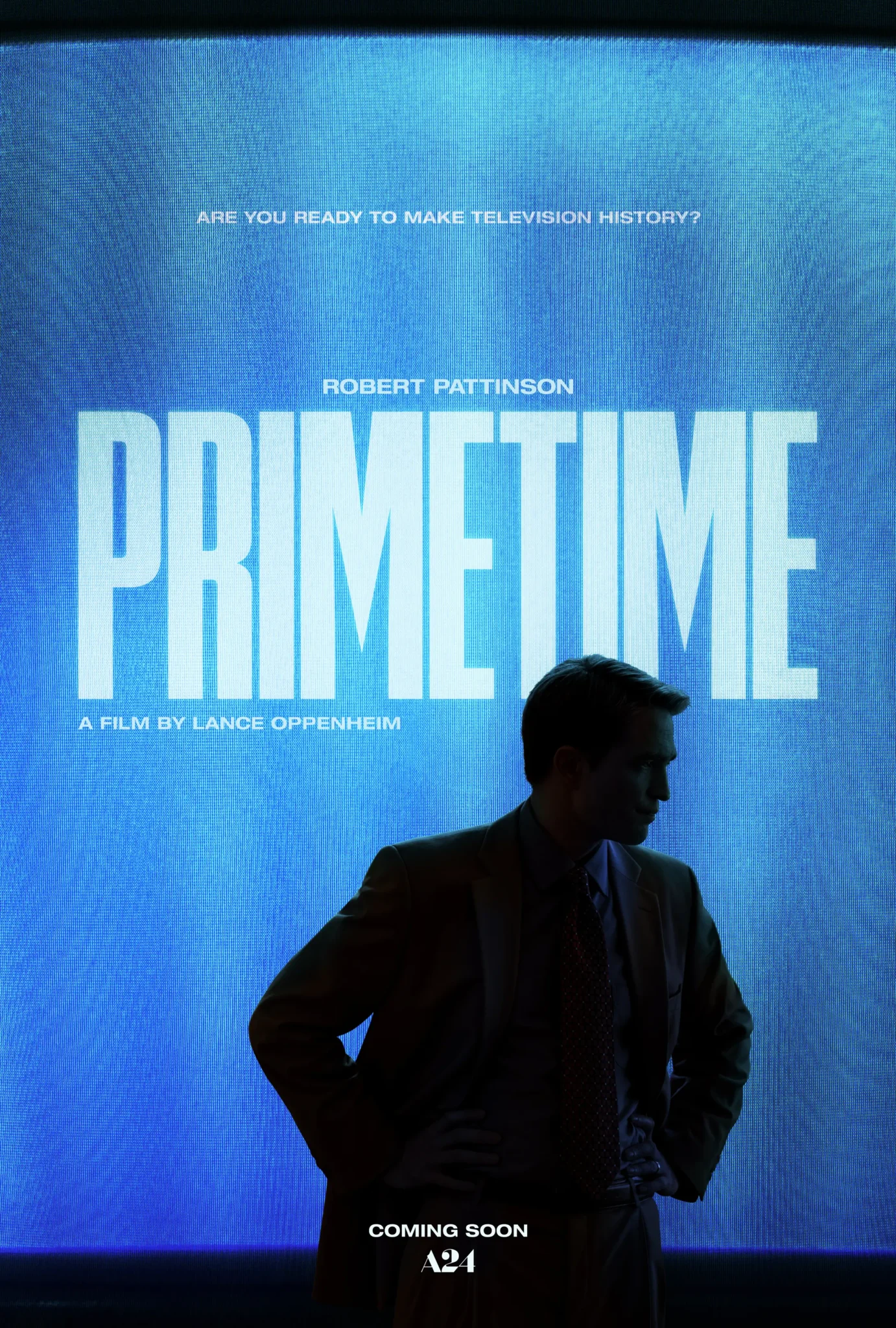
Poster for “Primetime.” Artwork courtesy of A24.
Pattinson’s vocal performance is an uncanny recreation of Hansen’s, and the performance itself is absolutely over the top. Pattinson’s Hansen feels like an otherworldly presence, at times menacingly sly and coy and, at others, exploding with a comical fury reminiscent of Nicolas Cage’s legendary performance in “Vampire’s Kiss.”
The film opens with a disturbing scene of Hansen preparing for a confrontation with a predator by reciting the graphically perverse chat logs. The digital camera focuses on the contortions of his mouth, with the static of the image being almost as distinct as Pattinson himself. The film has a unique, grainy look that aligns itself with director Lance Oppenheim’s documentary work. Oppenheim’s documentaries “Spermworld” and “Ren Faire” utilize similar techniques as “Primetime,” such as overexposed neon lighting and extreme close-ups of faces.
What makes those choices unique for “Primetime,” though, is the extreme seediness of this film’s world. At its core, this is not a thriller about hunting predators and seeking justice, but one about the depraved birth of a new kind of television — a television that sensationalized online pedophilia.
Hansen’s digital sensationalism is explored both narratively and stylistically.
As Hansen explains to Decoy Dan, the show’s work is more important than mere entertainment. To Hansen, his show cleanses the world of an abstract evil so ancient and debased that exposing it on national television is the only option. The viewers of his show clearly agree, as they all eagerly express a gung-ho approval of his work, including a Texas sheriff more than happy to let a television personality take over law enforcement duties in his town.
However, the film’s ambition gets the best of it by the final act. Oppenheim’s multifaceted direction makes the entire film feel like a surreal digital funhouse of humiliation and extrajudicial justice. Hansen lurks in the corner as a boogeyman sculpted from static fuzz, ready to pop out from behind the curtains and transform into this televised freak show’s carnival barker, taking sadistic pleasure in every nervous twitch of the pitiful perverts caught in his web.
This effect is meticulously crafted by a sophisticated system of rapid-fire editing among digital photography, film and security footage. Even as the film veers into abstract art house territory, the chaos of the subject matter feels captured with a documentarian’s eye. The film raises fascinating questions about the line between reality television and reality itself — and then complicates those questions by presenting this story of a 20-year-old TV segment with such a maximalist film.
The film’s finale does not answer any of these questions or concern itself with the ramifications of Hansen’s legacy, though. Oddly enough, the film just stops after the infamous Texas shoot. The blue hue of the nighttime lightning storm makes 2006 look like an ‘80s DePalma thriller, but the visuals do not distract from the general lack of resolution for everyone in the film except for Decoy Dan, who has a showstopping confrontation with a predator in the final minutes of the film.
“Primetime” is a terrific piece of entertainment, with a bold filmmaking style and captivating acting across the board. The period accuracy and 2006 nostalgia hits hard, with a Fergie needle drop in the opening sequence and a smorgasbord of TV references throughout. Phoebe Bridgers gives a solid supporting performance and an excellent end credits song that feels like a throwback to the guitar-heavy alt rock of the time period. However, the lack of resolution holds the movie back from being exceptional.
Ultimately, “Primetime” concerns itself more with the up-close sensory details of this sleazy production, while the sinister implications of the show’s popularity and its host of imitators feel underexplored as a result. What can be said about a justice system that sells itself to a TV show and the audience that tunes into Hansen for a feeling that emulates real justice, while the perpetrators get their cases thrown out? This question has no clear answer, but it would feel more satisfying if the film could still properly conclude at least the arc of Pattinson’s Hansen.