




























When the lights go down and the curtains are drawn up, the audience sees the actors, costumes and set. What they do not see, however, are the months of work that make shows possible.
Long before an actor steps onto the stage, students, faculty and staff in the University of Mississippi Department of Theatre and Film dedicate months to painting sets, creating props and designing hair and makeup for a single show. Combined, their work is what brings a story to life.
Harley Baker, a sophomore pursuing a B.F.A. in theatre arts with an emphasis on design and production, has been involved in theatre since the third grade. Originally, she performed on stage, but she later realized her passion for theatre was with design.
“Transitioning from doing things on the stage to participating in things behind the scenes was a hard transition, but I’ve always known that I’ve loved to design for theatre,” Baker said.
Now, Baker spends months designing hair and makeup for theater productions at UM. She is currently working on looks for Tennessee William’s “The Glass Menagerie” and Brian Yorkey’s “Next to Normal.”
Before actors ever take the stage in front of audiences, Baker meets with each actor to discuss the hair and makeup for his or her character, and she walks the actor through creating a unique look to fit the character’s style. While hair and makeup may seem like a small part of a production, Baker sees them as an integral part of telling a character’s story.
“Makeup and hair are like the cherry on top,” Baker said. “You can have everything else in a show, and if it’s lacking the everyday appearance of a character, you can’t truly follow the storyline of said character.”
For a fall show, designing and assembling sets, as well as creating costumes, can begin as early as March or April. For spring productions, these processes begin around August or September.
Adriana McDonald, a junior pursuing a B.F.A. in theatre arts with an emphasis in design and production, has experienced the preparation process from several different positions. She has worked as a scenic paint charge, props assistant, assistant stage manager and student worker in the props shop.
Currently, McDonald is the assistant scenic designer for “Come From Away” and a prop maker for “The Glass Menagerie.” She is also beginning the scenic design process for “As You Like It.”
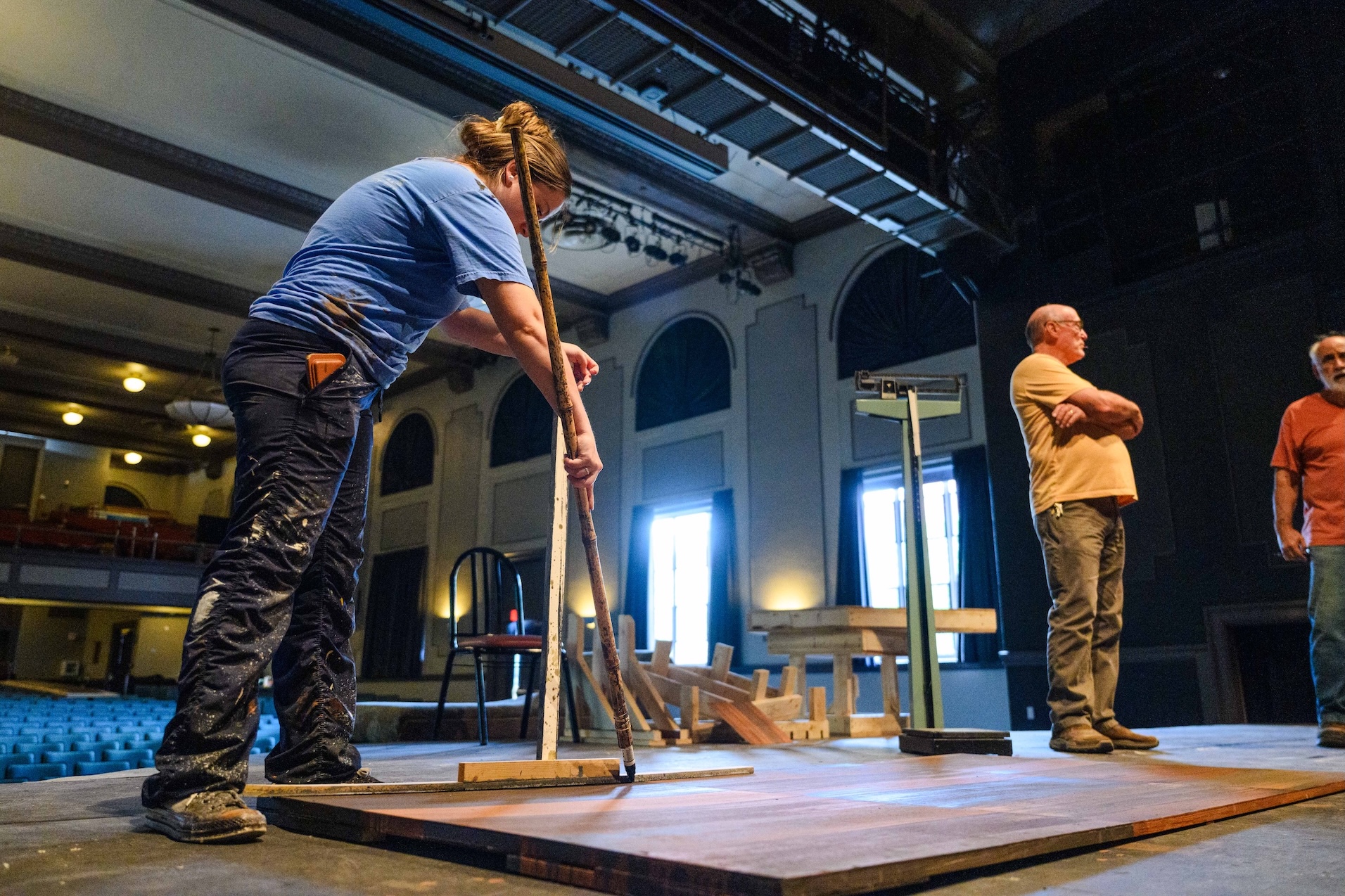
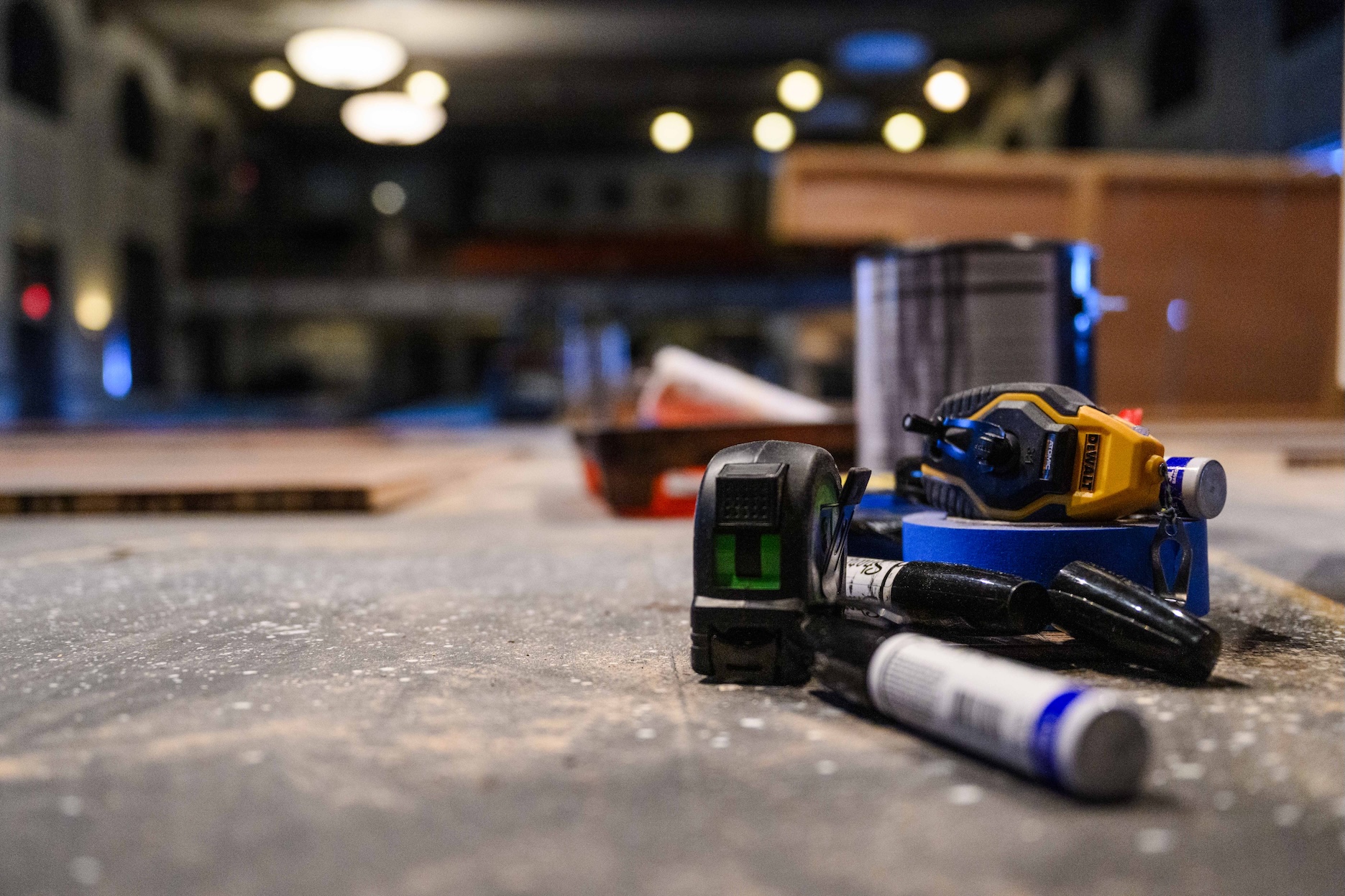
Much of McDonald’s work takes place in the scenic shop, where she works with designers and other students to turn ideas into something audiences will eventually see onstage.
For “Come From Away,” McDonald has been leading a student team to make wooden flats look like wooden planks, a detail that requires careful measuring, painting and layering to create the finished look. It is this kind of detailed work that she has grown to love.
“I love being able to organize and help people do what they love on and off the stage,” McDonald said.
McDonald’s interest in theatre began when she was a sophomore in high school at St. Mary’s Episcopal School in Memphis. As a stage manager for the school’s productions, she developed a love for the production process.
She originally decided to study interior architecture and attended Marist College in Florence, Italy for two years. Still, in the cradle of the Renaissance, she kept seeing posters for shows around the city and realized her heart remained in theatre. McDonald transferred to the University of Mississippi and joined the Department of Theatre and Film, where she was encouraged to pursue scenic design.
“I’m still so grateful that I get to do something I love that provides so much joy for others,” McDonald said.
For both Baker and McDonald, one of the most rewarding parts of the job is watching months of work finally come together.
“My absolute favorite moment while working on a production is during tech week, when a run of the show ties everything we’ve all worked on individually into a final product,” McDonald said.
After spending months working on a character’s appearance, something as small as a missing eyelash can stand out, Baker said.
“I notice the small things like a bad wig or weird makeup placement,” Baker said. “If something is missing that I’ve been working on for a long time, I will notice it immediately.”
McDonald, meanwhile, watches the set.
“When I sit in the audience and watch a show I’ve worked on, I always notice the small details or methods used to paint the set,” McDonald said. “I love being able to see the difference between the paint at a distance and how it combines with all the design elements to create a well-polished set.”
Behind-the-scenes work also requires trust and collaboration. Throughout the process, designers work with directors, actors and other members of the production team.
“We all work together to make the show look the way it needs to, and without us, you wouldn’t have a visual story to tell,” Baker said.
For McDonald, the people behind the scenes are the foundation of any production.
“People behind the scenes are the foundation that the production stands on, and they provide for everyone, from dramaturg’s expertise to directors guiding actors or scenic, lighting and sound creating a unique space,” McDonald said.
By opening night, every set, prop and carefully designed detail has come together to create the world onstage. The audience may never know how much work went into those details, but it is the small touches that make the story come alive.
“The actors, directors, stage managers and producers all make the foundation, but the designers make the show complete,” Baker said. “You wouldn’t have the unity and harmony that a show has without the designers.”